








Based on the Economic Survey of Tamil Nadu 2025–26 (released in February 2026), Chengalpattu district has emerged as one of the most prosperous regions in Tamil Nadu, with a per capita income reportedly around ₹7 lakh, placing it among the top-performing districts in terms of economic well-being..
| Indicator /District | 1 | 2 | 3 | 4 | 5 | 6 | 7 | 8 | 9 | 10 | Composite Score (/100)* |
| Chengalpattu | 7.4 | 8 | 10 | 8 | 8 | 9 | 10 | 4 | 9 | 9 | 85 |
| Kancheepuram | 7.4 | 8 | 9 | 8 | 8 | 9 | 9 | 5 | 9 | 8 | 83 |
| Chennai | 5.8 | 10 | 9 | 9 | 10 | 10 | 10 | 3 | 10 | 10 | 91 |
| Namakkal | 4.5 | 6 | 8 | 8 | 7 | 7 | 7 | 9 | 7 | 8 | 77 |
| Tiruppur | 4.4 | 7 | 10 | 8 | 7 | 7 | 8 | 6 | 8 | 9 | 80 |
| Tiruvallur | 4.3 | 7 | 9 | 8 | 7 | 8 | 9 | 6 | 9 | 8 | 81 |
| Coimbatore | 4.1 | 9 | 9 | 9 | 9 | 8 | 8 | 6 | 8 | 9 | 83 |
| Krishnagiri | 3.7 | 6 | 8 | 7 | 6 | 7 | 8 | 8 | 8 | 7 | 75 |
| Erode | 3.0 | 6 | 8 | 8 | 7 | 7 | 7 | 8 | 7 | 7 | 74 |
| Madurai | 2.7 | 8 | 6 | 7 | 7 | 7 | 6 | 7 | 7 | 7 | 72 |
Indicator 1: GDP Per Capita (₹ lakh)
Indicator 2: Service Sector Strength
Indicator 3: Industrial Development
Indicator 4: Balanced Economy
Indicator 5: Skilled Workforce
Indicator 6: Urbanisation & Infrastructure
Indicator 7: Investment Corridors
Indicator 8: Agricultural Strength
Indicator 9: Connectivity Advantage
Indicator 10: Employment & Income Level
* Note:
Sources:
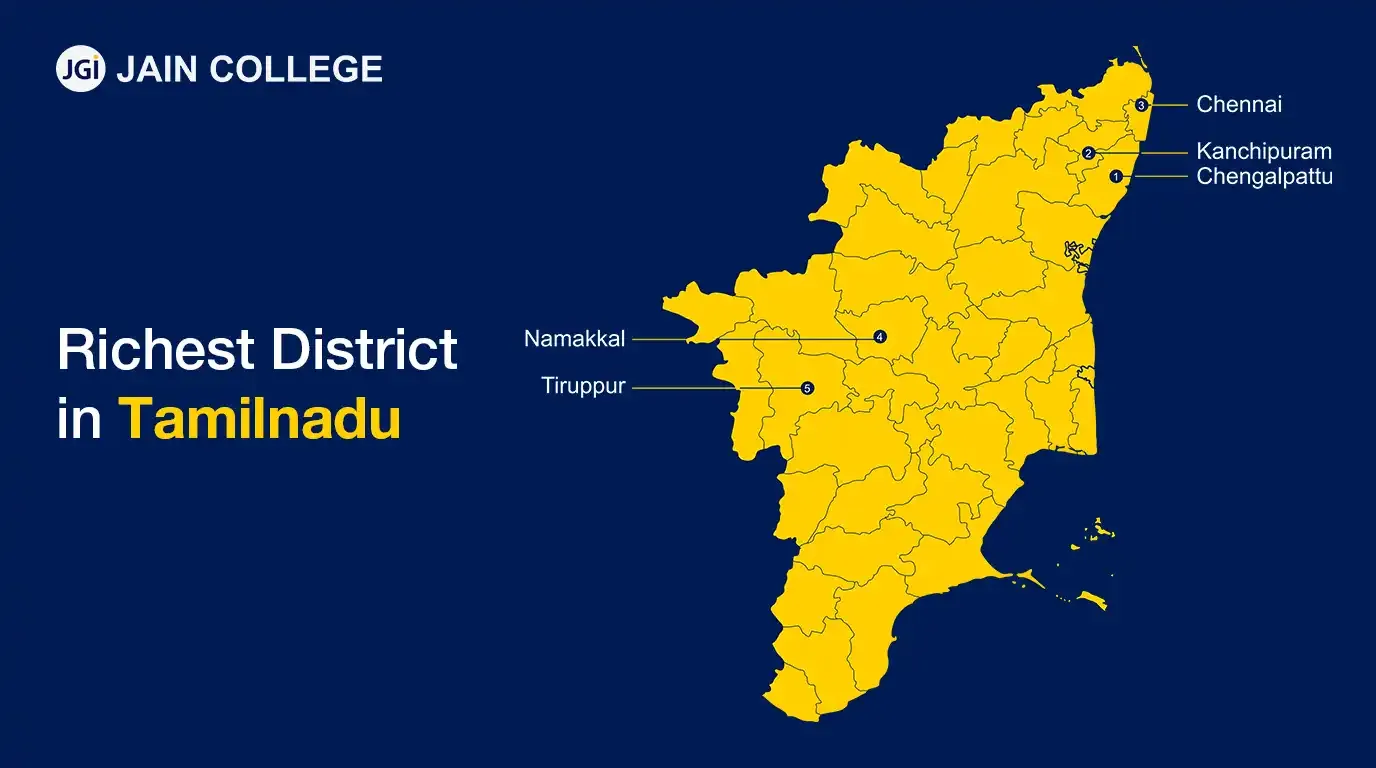
As of early 2026, Chengalpattu has emerged as the richest district in Tamil Nadu, with a per capita income of approximately ₹7.47 – ₹8.54 lakh, followed by Kanchipuram, Chennai, Namakkal, and Tiruppur.
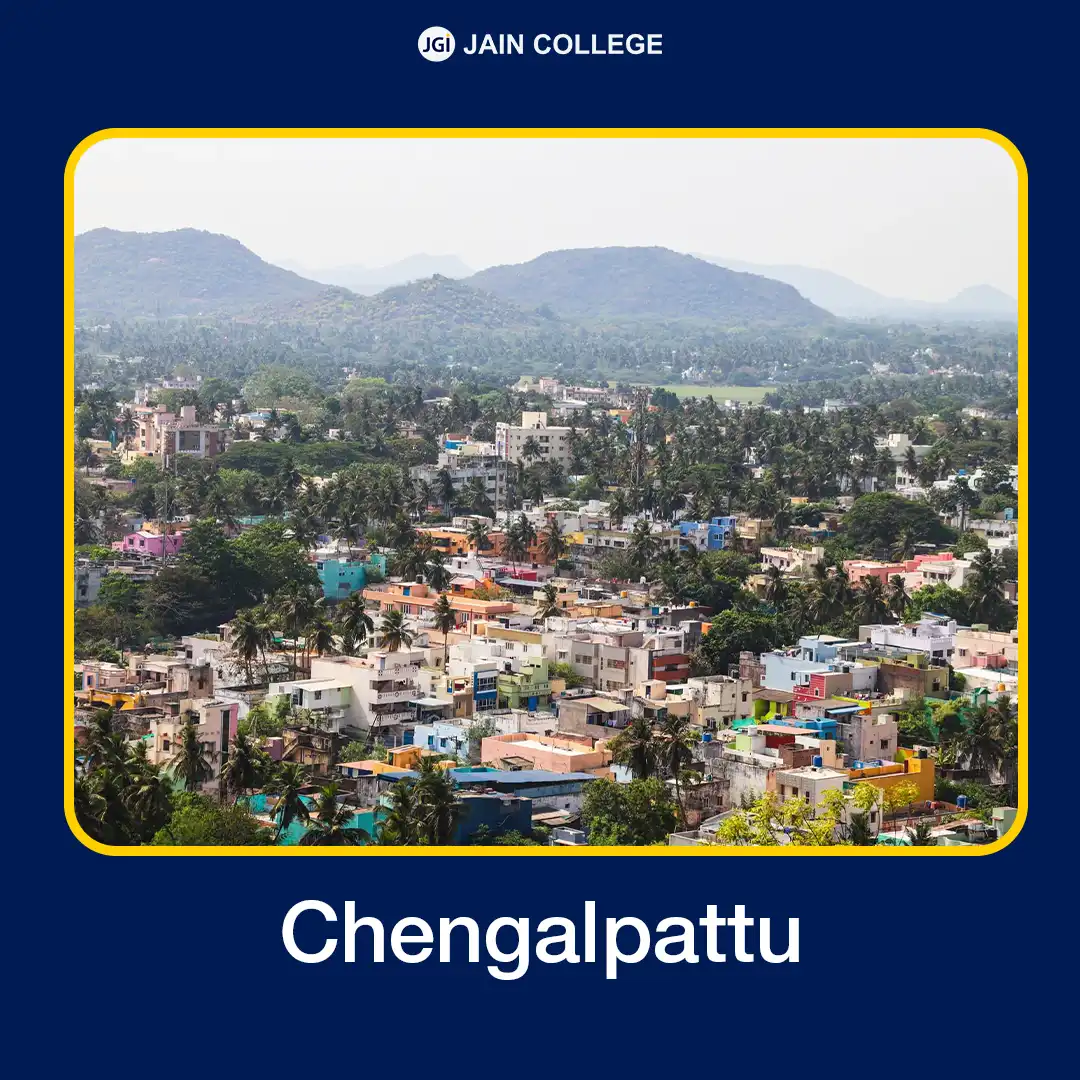
Nature’s beauty enhances the newly formed Chengalpattu district, located on the northeast coast of Tamil Nadu. The district is bordered by Chennai to the north, Kancheepuram and Tiruvannamalai to the west, and Villupuram to the south.
Chengalpattu is home to several major IT companies and also serves as a broad-based manufacturing hub for the automobile sector and its ancillary industries.
Tourism is another important pillar of the district’s economy, with Chengalpattu offering several well-known attractions that draw visitors throughout the year.
Chengalpattu is a coastal district located near the city of Chennai, the capital of Tamil Nadu
As a newly formed district, there is significant potential for further urban and industrial development.
According to the Tamil Nadu Economic Survey 2025–26, Chengalpattu leads all districts, followed closely by Kancheepuram and Chennai.
Several factors contribute to Chengalpattu’s economic dominance.
Other factors include:
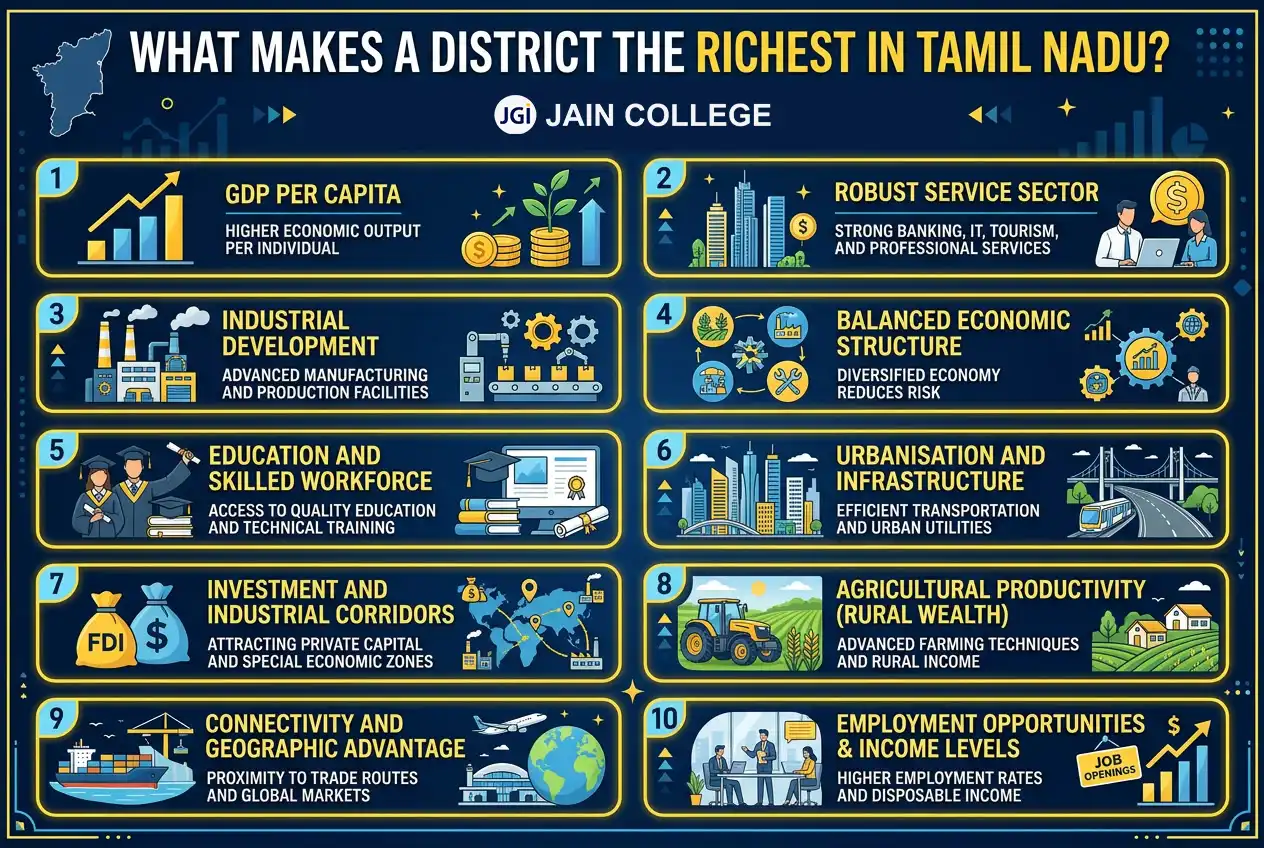
The Top Ten key factors that make a district the richest in Tamil Nadu are:
GDP Per Capital is an economic metric that measures a country's economic output per person. The GDP Per Capita is calculated by dividing a country's Gross Domestic product (GDP) by its total population.
A well-developed economy driven by service sectors such as healthcare, banking, education, and dining out. The service sector is more about interactions and assistance. It is often also known as the tertiary sector.
It refers to the process of expanding industries using technological advancements to enhance productivity, efficiency, and economic output.
The nature of production and employment in these three sectors of the economic system (agriculture, industry, and services) contributes significantly without overdependence on a single sector.
This category encompasses the presence of skilled, educated, and trained professionals ready to support modern industries, business sectors, and innovation.
The expansion of urban areas is supported by housing, utilities, transport systems, quality roads, and civic facilities.
Economic growth is driven by both the domestic and foreign investments along with the planned logistics and industrial development zones.
The efficiency and output of farming activities that generate income and economic stability in rural areas.
Strategic location supported by strong road, rail, port, and airport networks that enhance trade and mobility.
The availability of diverse careers and higher salaries that improve household earnings and economic well-being.
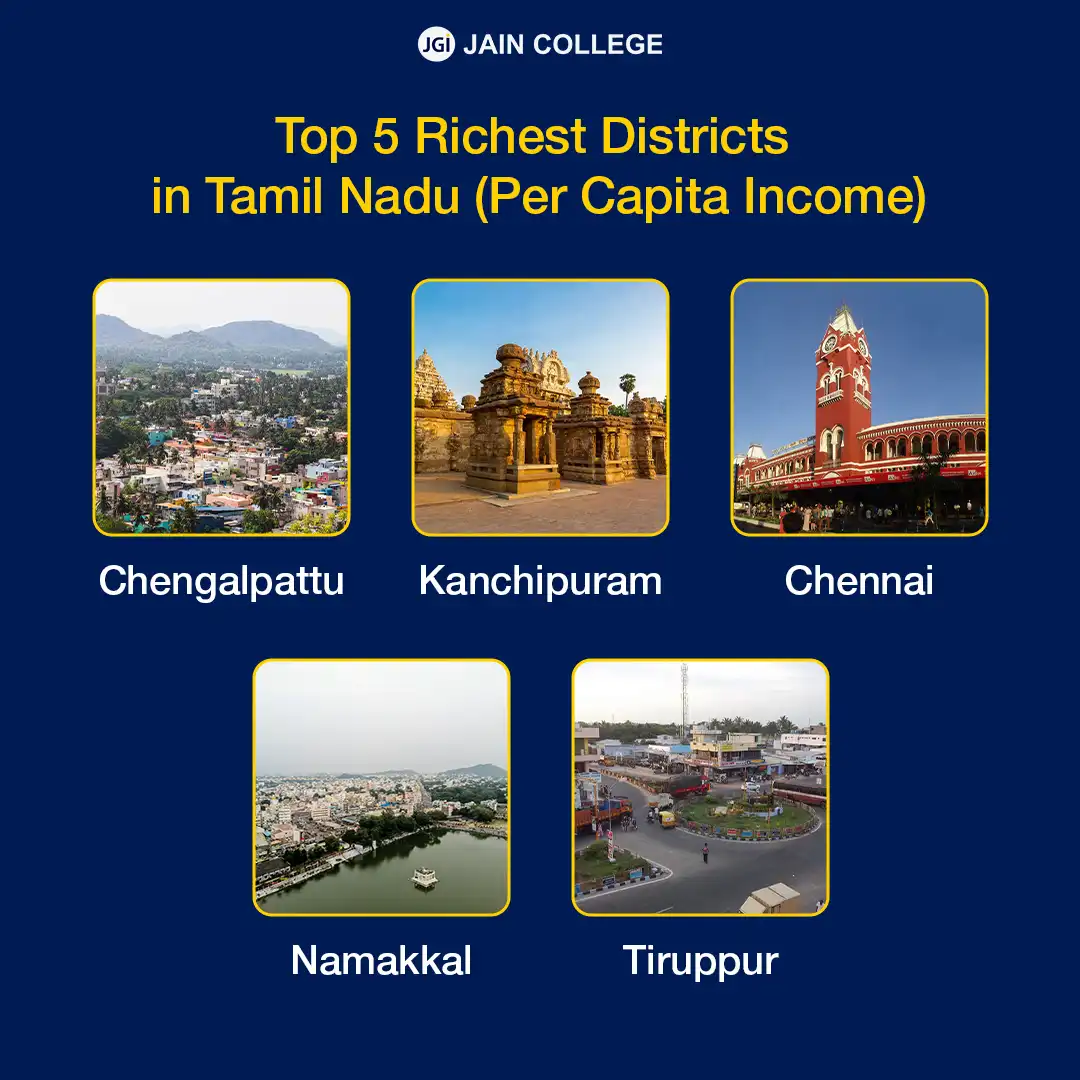
Tamil Nadu’s economy continues to expand rapidly, with GSDP (Gross State Domestic Product) reaching about ₹31 lakh crore in 2024-25.
According to district GDP and income estimates, several districts consistently rank among the richest.
The richest districts in Tamil Nadu by per capita income are:
| Districts | Average Per Capita Income |
| Chengalpattu | Approximately ₹7.47 – ₹8.54 lakh |
| Kanchipuram | Approximately ₹7.39 – ₹8.44 lakh |
| Chennai | Approximately ₹5.77 – ₹6.46 lakh |
| Namakkal | Approximately ₹4.74 – ₹5.05 lakh |
| Tiruppur | Approximately ₹4.34 – ₹4.87 lakh |
These districts exceed the Tamil Nadu average per capita income (approximately ₹3.13 lakh) due to strong industrial and service-sector growth. Many other districts contribute significantly to the State’s economy, helping bridge the urban–rural divide.
The Chennai metropolitan belt (Chennai, Chengalpattu, Kanchipuram, and Tiruvallur) alone contributes over 30% of the state’s economy, showing the concentration of wealth and industry in this region.
Tamil Nadu is characterised by diverse geographical features and varied climatic conditions.
The state features coastal plains that coexist with tropical rain forests, river valleys, and hill stations. The state is divided into five physiographic areas, viz., mountainous area, forest, arid zone, fertile region and coastal area.
| Districts | Economic Strength | Main Economy Drivers |
| Chengalpattu | Very High | Manufacturing, IT, electronics |
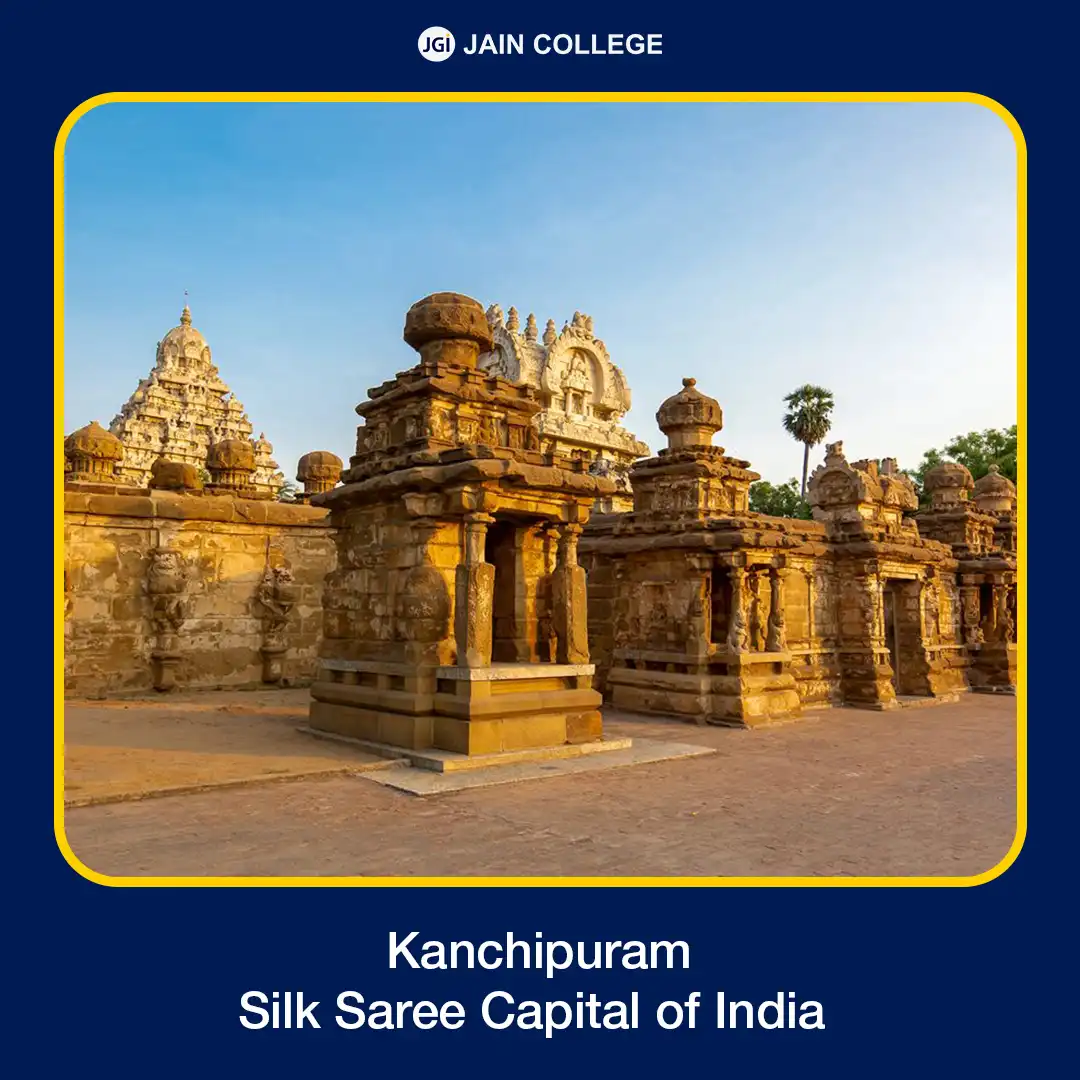
| Kanchipuram | Very High | Electronics, automobile industry |
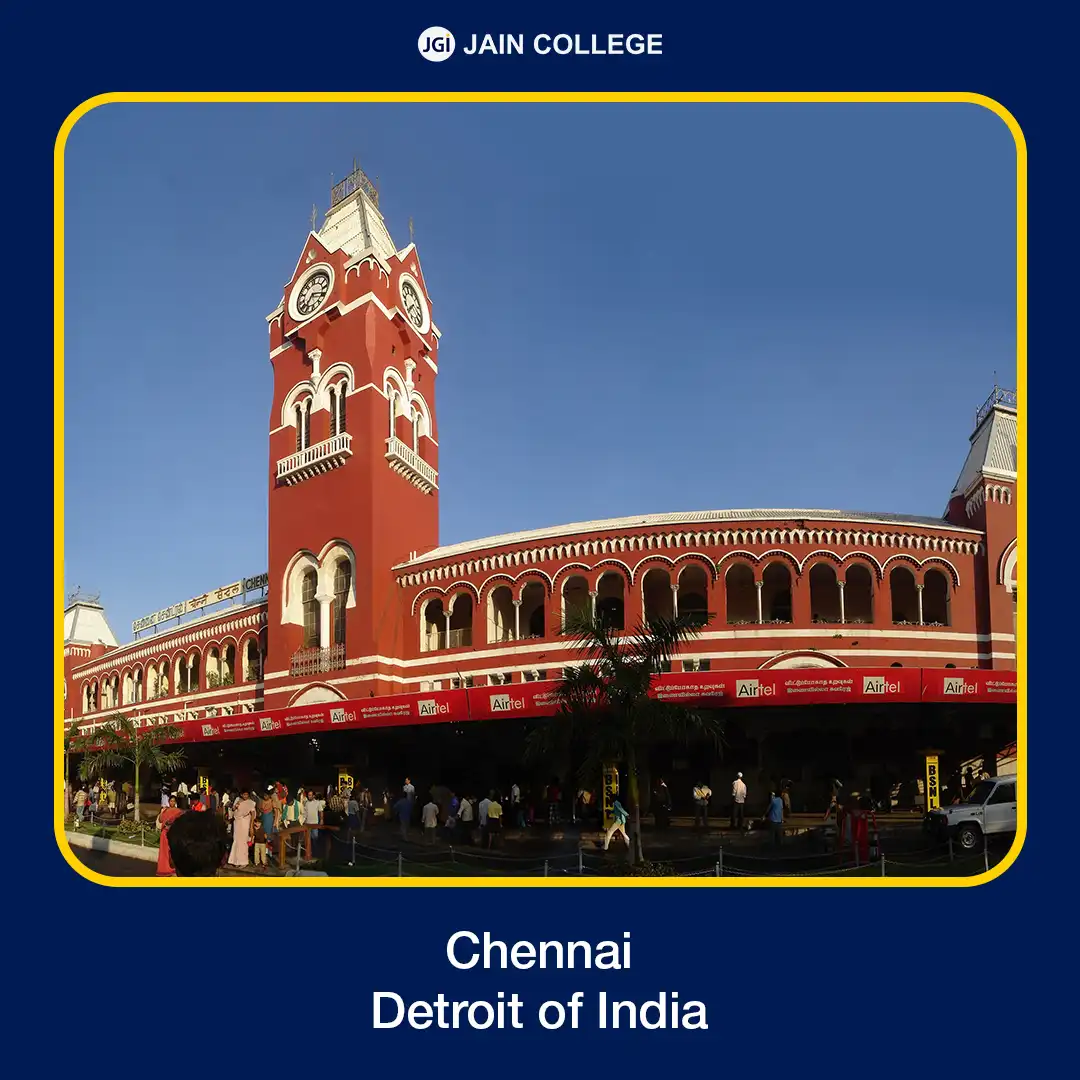
| Chennai | Extremely High Output | IT, automobile, finance, healthcare |
| Tiruppur | High | Knitwear & Textile Exports |
| Tiruvallur | High | Automobile manufacturing & logistics |
Here is a detailed view:
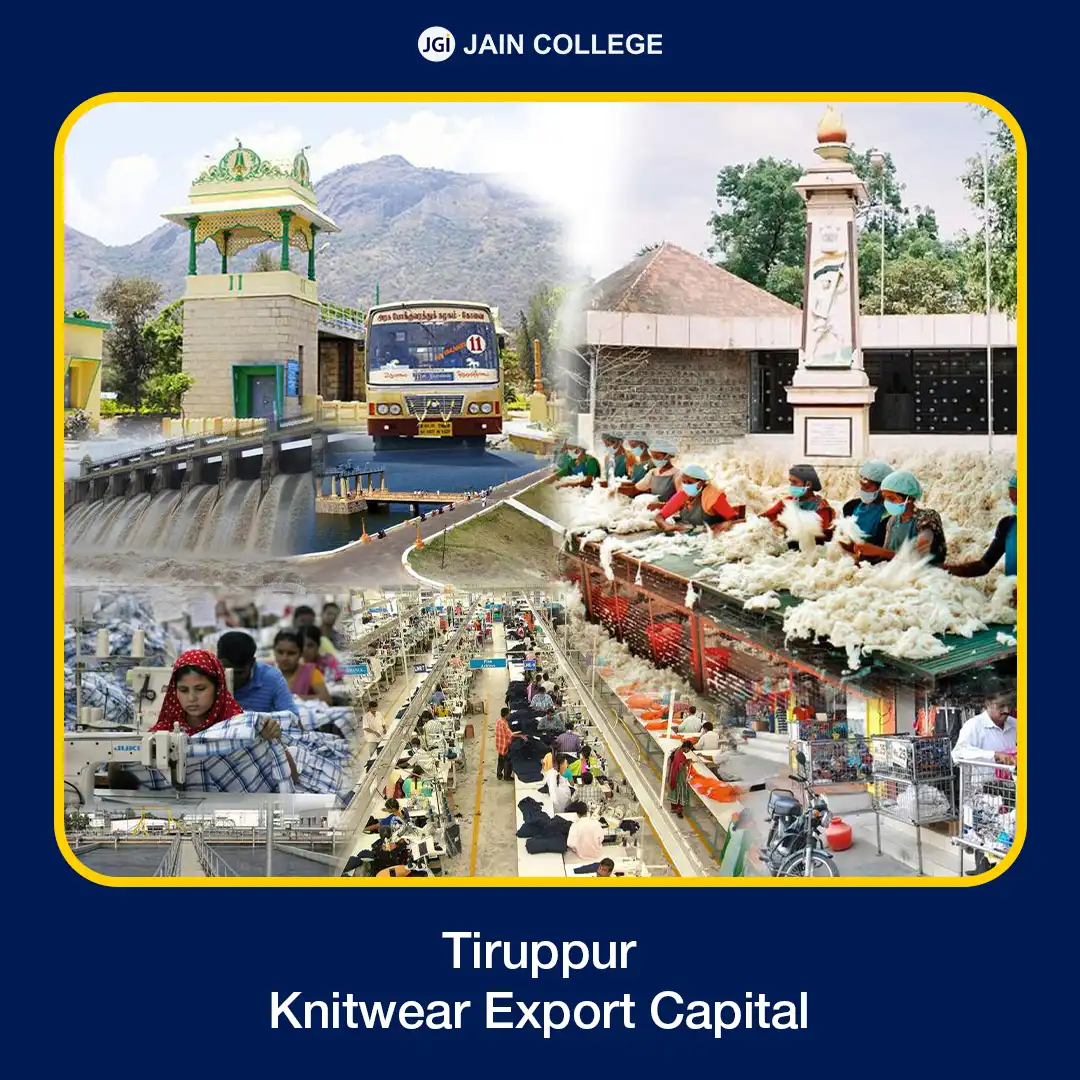

Tamil Nadu state is gifted with 33 river basins, the largest ones being Cauvery, Pennaiaru, Vaigai and Tamaraparani.
Farmers extensively cultivate rice and various pulses in the districts of Tamil Nadu. Of the total area in the state, 59.2% is under cultivation (not including forestlands).
Agriculture contributes ₹1.5 lakh crore (6% of GSVA) and ranks as the fifth largest sector.
Food grains, including paddy, maize, jowar, bajra, ragi, and millets, make up around 62% of the total cropped area.
The remaining 38% is accounted for by non-food crops like oilseeds, sugarcane, and cotton.
Paddy continues to dominate the cropping pattern, with its share in the total cropped area increasing from 32.1% in 2019-20 to 34.4% in 2023-24.
According to the Agricultural Statistics at a Glance (2024), Tamil Nadu ranked first in the productivity of oilseeds, groundnut, and sugarcane, second in maize productivity, and third in paddy productivity.
District-Wise Production Hubs:
| Districts | Agricultural Strength | Major Crops |
| Thanjavur & Delta Region | Rice Bowl of Tamil Nadu | Paddy and Sugarcane |
| Tiruvarur | Delta irrigation farming | Paddy and Pulses |
| Nagapattinam | Coastal agriculture | Paddy and Coconut |
| Erode | Commercial agriculture | Turmeric, Sugarcane and Bananas |
| Salem | Commercial agriculture | Turmeric and Bananas |
The ranking of Tamil Nadu districts challenges common perceptions.
The top five districts, Chengalpattu, Kanchipuram, Chennai, Tripur, Namakkal and Tiruvallur, reflect a mix of industries, agriculture and cultural significance, which contribute to their economic performance and overall ranking in Tamil Nadu.
Stay tuned with JAIN PU College to learn more about the richest district in India, Tamil Nadu, and other states.
Which district do you think is the richest in Tamil Nadu, and why?
Share your thoughts in the comments below.
There are a total of 38 Tamil Nadu districts.
Villupuram is the largest district, with 7194 km².
Chennai is the smallest district, covering an area of 175 km².
Thanjavur and the Delta region are known as the "Rice Bowl of Tamil Nadu".
Tamil Nadu's agriculture uses various irrigation systems, such as wells, tanks, and the Cauvery River.
The Hogenakkal falls, located in the Dharmapuri district of Tamil Nadu state, is popularly known as the Niagara Falls of India.
Mango and banana are the two dominant fruit crops, along with grapes, papaya, jackfruit, and guava. Overall, Tamil Nadu state accounts for over 81% of the state's total fruit production.

JAIN PU College, a part of the renowned JGI Group, is committed to empowering students with quality education.
Beyond academics, the college ensures its online content reflects the same standard of excellence. Every blog and article is meticulously vetted and proofread by subject matter experts to ensure accuracy, relevance, and clarity. From insightful educational topics to engaging discussions, JAIN PU College's content is crafted to inform, inspire, and add value to its readers, reflecting the institution's commitment to intellectual growth and innovation.
View all Blogs