






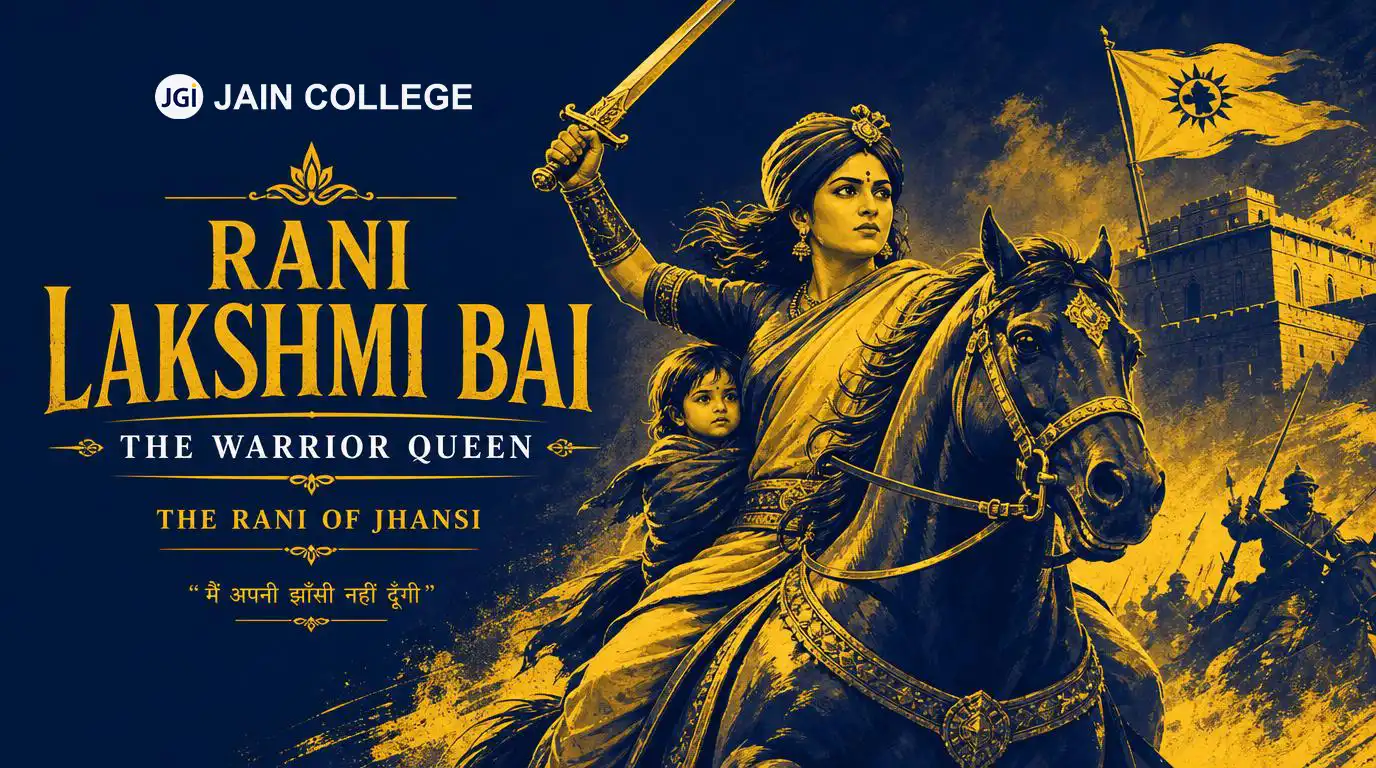
Rani Lakshmi Bai (widely believed to have been born on 19 November 1828) was one of the most prominent leaders of the Indian Rebellion of 1857. Rani Lakshmibai was the Queen of Jhansi. She did not want the British East India Company to take over her kingdom.
The British East India Company had a rule called the Doctrine of Lapse. Rani Lakshmibai opposed this rule. She fought against the forces when they tried to take Jhansi. Rani Lakshmibai led her people in defending Jhansi. Later she had to leave the city and continue fighting.
Rani Lakshmibai died in a battle near Gwalior in 1858. People remember her for being very brave and a remarkable leader. Rani Lakshmibai had a lot of courage and determination. Over time Rani Lakshmibai became a symbol of bravery and resistance in India.
Rani Lakshmibai also showed that women can be leaders. People tell stories about Rani Lakshmibai and her bravery. Historians remember Rani Lakshmibai for defending Jhansi and leading her people during the Indian Rebellion of 1857.
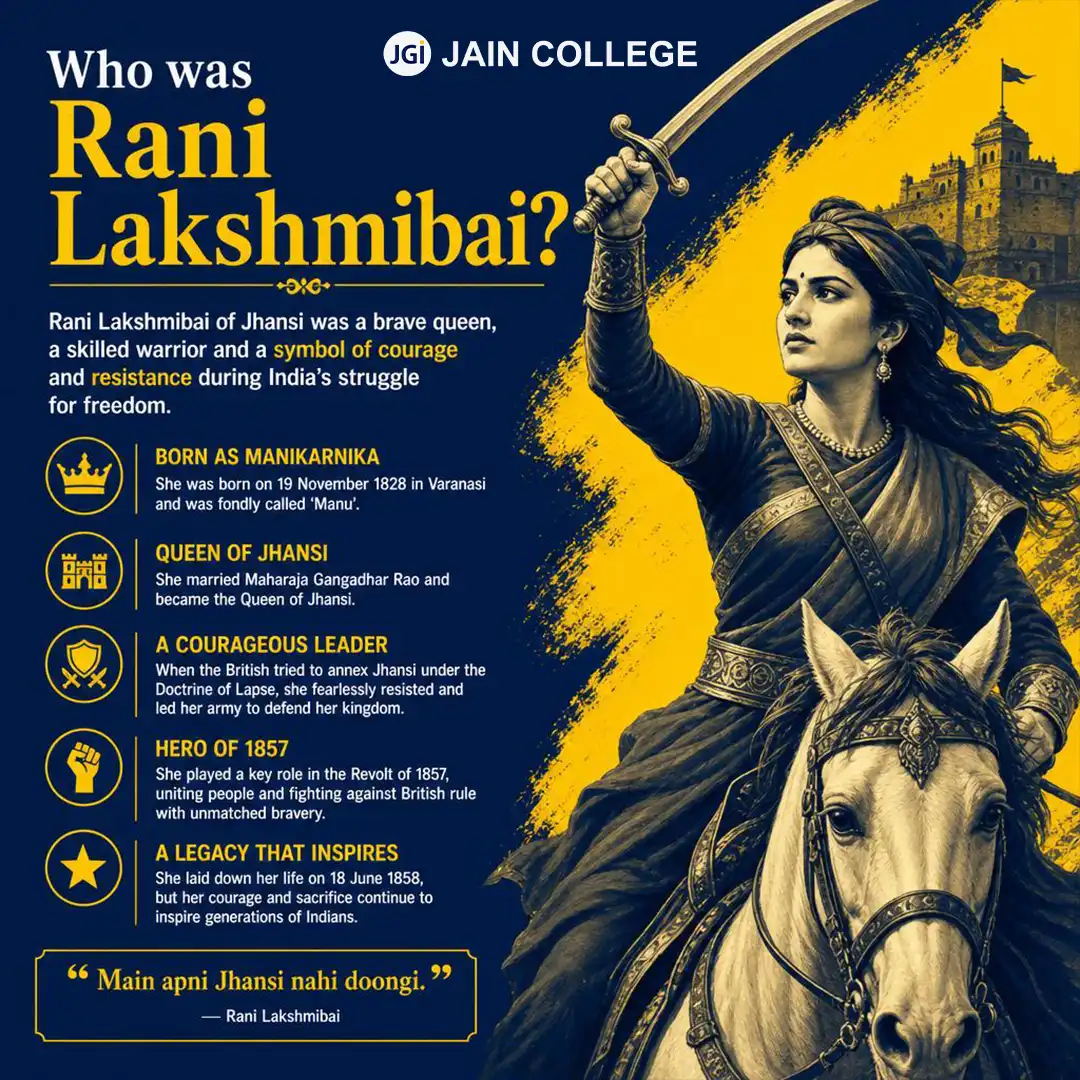
Rani Lakshmibai, the queen of Jhansi, is also known as the Rani of Jhansi. She was a leader in the Indian Rebellion of 1857.
Rani Lakshmibai is remembered for being very brave and strong. She did not like it when the British East India Company took over Jhansi. The British East India Company did this takeover because of the Doctrine of Lapse. In 1858, Rani Lakshmibai led the people of Jhansi during an attack. She kept fighting until she died near Gwalior.
Rani Lakshmibai was a leader and a very brave woman. She is still remembered today as a symbol of courage and strength. Rani Lakshmibai showed everyone what it means to be a leader, especially for women.
| Rani Lakshmi Bai – Queen of Jhansi, A Warrior, and A Symbol of CourageIndia’s Early Woman Freedom Fighter (1828-1858) | |
| Early Life: | |
| Birth Name | Manikarnika Tambe or Manu |
| Birth Date | 19 November 1828 |
| Birthplace | Varanasi, India |
| Marriage | Married Maharaja Gangadhar Rao Newalkar, the ruler of Jhansi |
| Died on | 18 June 1858 |
| Family Details: | |
| Parents | Moropant Tambe and Bhagirathi Bai |
| Spouse | Maharaja Gangadhar Rao Newalkar, the ruler of Jhansi |
| Children | Gave birth to a son who died in infancy. |
| Training | Received education in martial arts, horse riding, sword fighting, and archery during childhood. |
| Honours and Remembrance: | |
| One of the most prominent leaders of the Indian Rebellion of 1857. | |
| Inspired generations of freedom fighters and remains a national icon. | |
| Remembered as a symbol of bravery and women’s empowerment in Indian history. | |
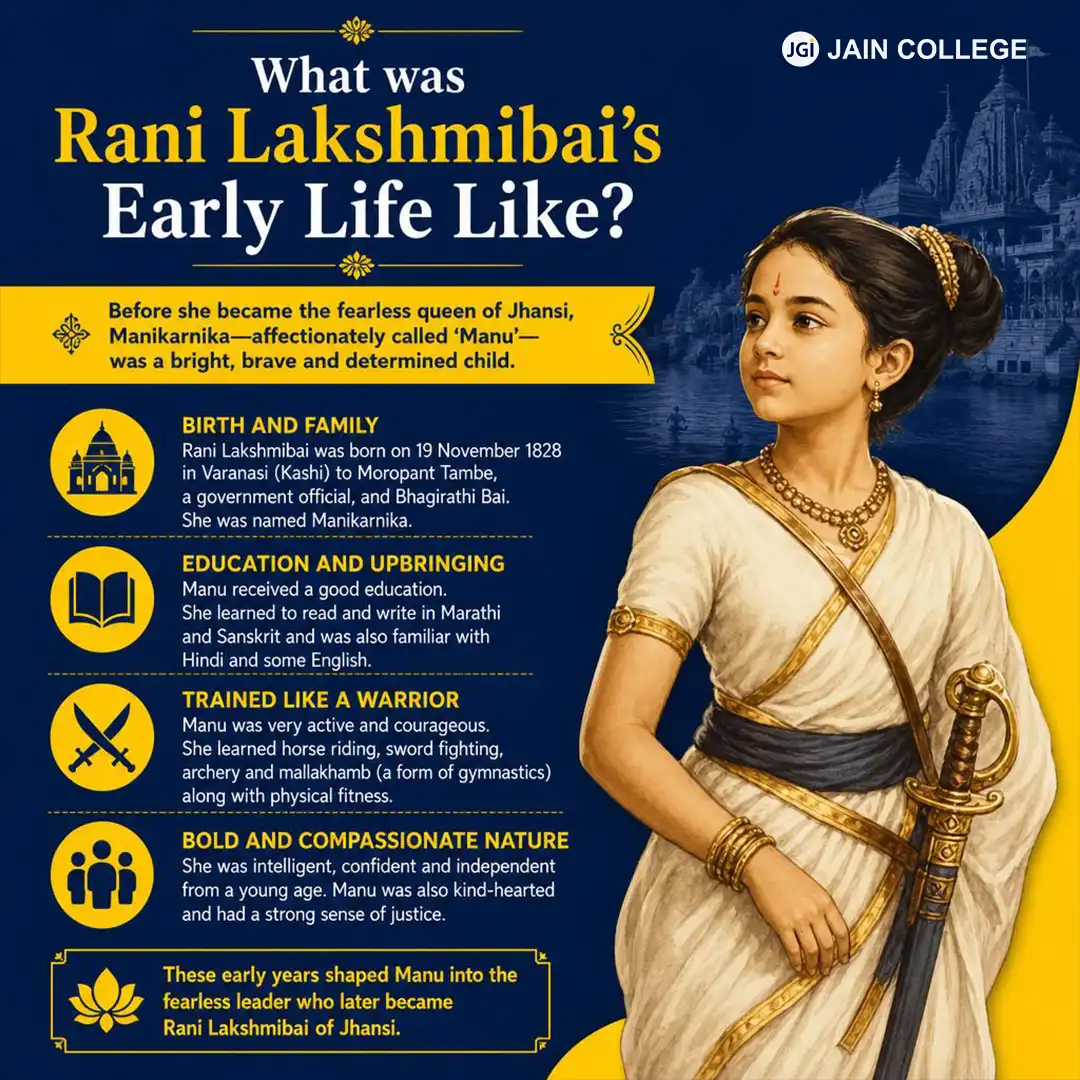
Rani Lakshmi Bai was born as Manikarnika Tambe in 1828 in Varanasi. She grew up in a home that encouraged her to do things her way. Her father, Moropant Tambe, was a close friend and advisor to Chimaji Appa (the younger brother of the deposed Maratha Peshwa, Baji Rao II). He served as an advisor in the court of Peshwa Baji Rao II in Bithoor.
Rani Lakshmi Bai lost her mom when she was young. After losing her mother at a young age, Lakshmi Bai was trained to be strong, independent, and skilled in both academics and warfare.
People loved her because she was so lively and brave. They called her "Chhabili", which means playful and cheerful.
Since her childhood, Manikarnika was a highly intelligent and brave girl who did many things her way. After becoming the queen of Jhansi, Lakshmibai made a big impact. Her skills and personality made her a remarkable leader, and people still remember her today as Rani Lakshmibai.
Rani Lakshmi Bai, born as Manikarnika Tambe in 1828 in Varanasi, was raised in a progressive and empowering environment. Her father, Moropant Tambe, worked under Peshwa Baji Rao II and ensured she received an unconventional upbringing for a girl of her time.
| Birth name: | Manikarnika (Manu) |
| Raised in: | Bithur under the guidance of her father, Moropant Tambe |
| Close companion: | Nana Saheb (the Peshwa's adopted son) |
| Mentored by: | Tantia Tope |
Training and Skills: |
Learned horse riding, sword fighting, and archery at a young age |
| Trained in military tactics and political affairs | |
| Educated in reading, writing, and religious scriptures | |
| Formed a group of women warriors from among her companions |
Rani Lakshmibai was known for her lively and fearless personality; she was fondly called “Chhabili”, which means playful and cheerful.
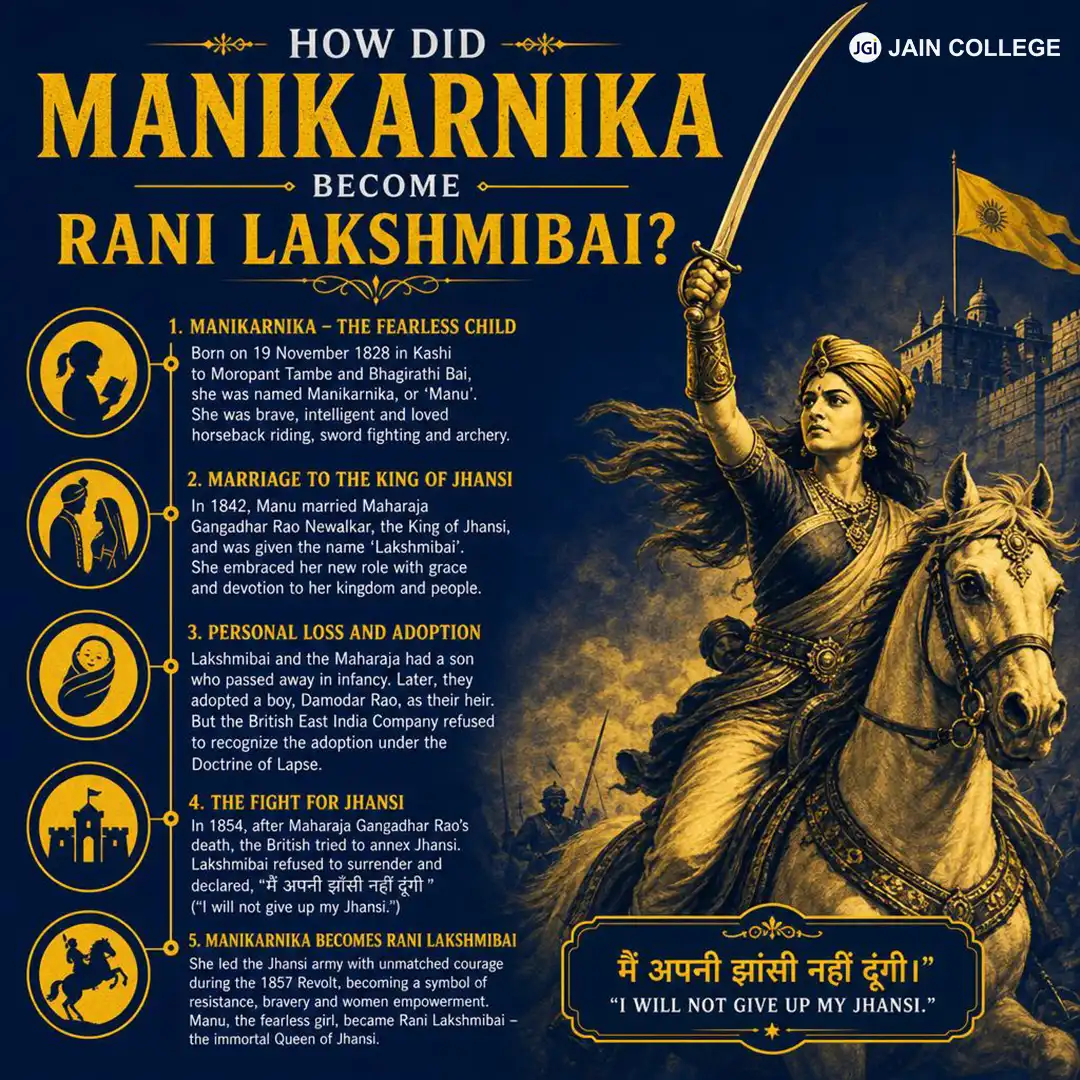
At the age of 14, Manikarnika married Maharaja Gangadhar Rao, becoming the queen consort of Jhansi and adopting the name Rani Lakshmi Bai. (Historical records suggest the marriage took place around 1842.)
After the birth of their son in 1852, tragedy struck when the child died in infancy. The couple later adopted a boy named Damodar Rao as their heir.
However, after the king's death on November 21, 1853, the British East India Company refused to recognise the adopted heir under the Doctrine of Lapse, which posed a direct threat to Jhansi's sovereignty.
| Key Highlights Rani Lakshmibai married into the royal family of Jhansi at a young ageAfter her marriage, she was renamed Lakshmibai upon becoming the Queen of JhansiShe experienced personal tragedy with the death of her infant sonShe later adopted Damodar Rao as her heirShe opposed the British annexation of Jhansi under the Doctrine of Lapse, becoming a leading figure in the Indian Rebellion of 1857 |
| Breaking Social Norms Rani Lakshmibai pposed to the traditional purdah (veil) system followed by many royal women of her timeShe continued her training in horseback riding, swordsmanship, and other martial skills after marriageRani Lakshmibai emerged as a courageous and independent ruler, taking an active role in the administration and defence of Jhansi |
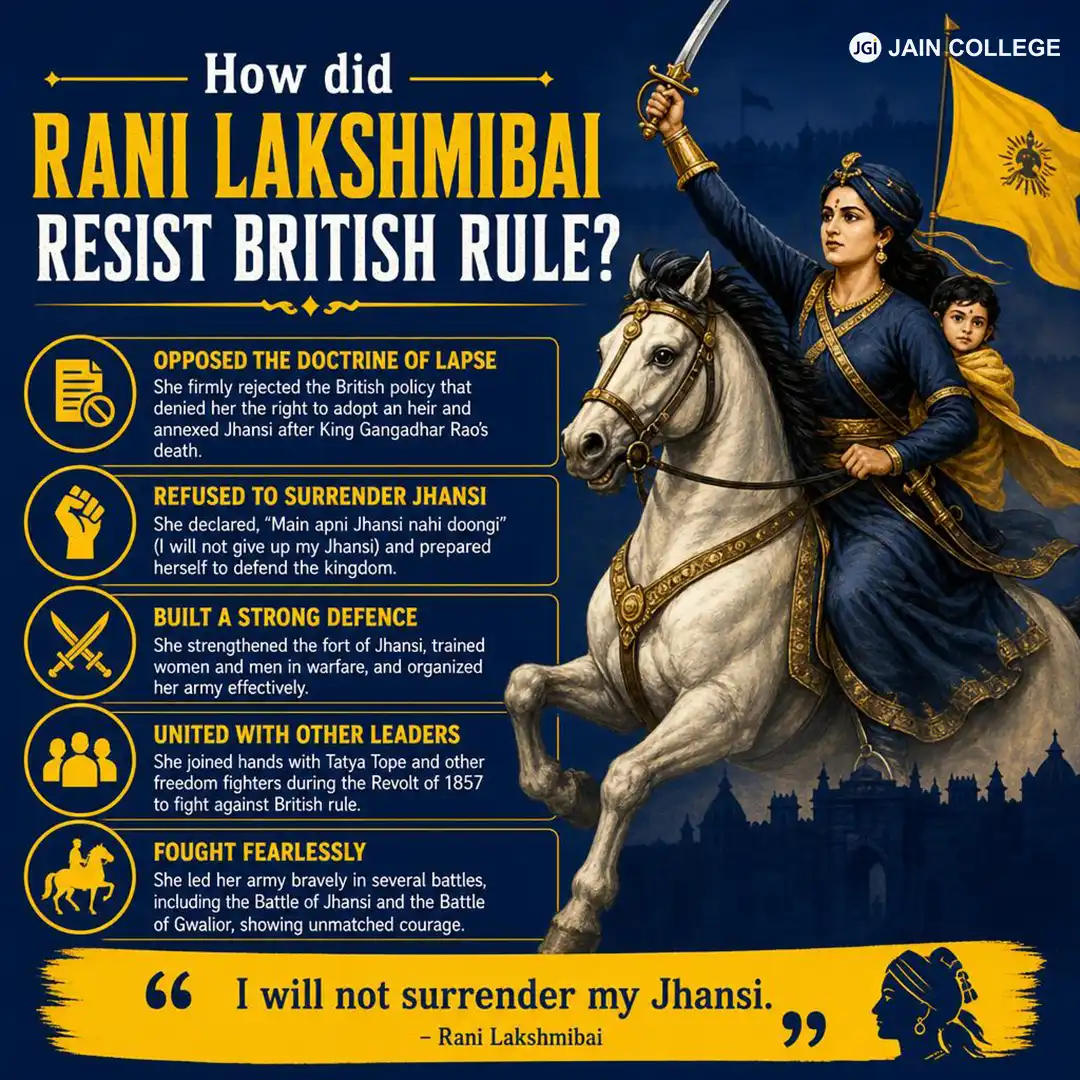
Rani Lakshmi Bai initially focused on maintaining stability and sovereignty in Jhansi rather than directly opposing British rule.
| In 1853, Lord Dalhousie annexed Jhansi under the Doctrine of Lapse, claiming the kingdom had no legitimate biological heir after the death of Maharaja Gangadhar Rao.The British refused to recognise the adopted heir, Damodar RaoThis decision directly threatened Jhansi’s independenceLakshmi Bai appealed to British authorities, but her requests were ignoredRani Lakshmi Bai was faced with injustice; she resolved to defend her kingdom |
| The revolt began in 1857 due to multiple political, economic, and social factors. One major trigger was the introduction of greased cartridges for the Enfield rifle, which offended both Hindu and Muslim soldiers.Sepoys were required to bite cartridges allegedly greased with beef and pork fatThis led to widespread anger and rebellion against the British East India CompanyThe uprising soon spread across northern IndiaInitially cautious, Rani Lakshmi Bai joined the rebellion when British forces, led by Sir Hugh Rose, demanded the surrender of Jhansi. |
| After the British laid siege to Jhansi in March 1858, Rani Lakshmi Bai organised the fort's defence with the support of her forces and allies, including Tatya (Tantia) Tope and Nana SahibDespite determined resistance, Jhansi fell to the British after nearly two weeks of fightingAccording to popular tradition, Rani Lakshmi Bai escaped from the fort on horseback carrying her young sonWhile this account has become an enduring part of her legacy, historians regard some details of the story as uncertain After escaping, she joined her allies at Kalpi and later helped capture the Gwalior fort, gaining control of its treasury and arsenalShe continued to resist British forces until she was killed in battle near Gwalior on 18 June 1858 |
| After the fall of Jhansi:She escaped to Kalpi with her alliesLater captured Gwalior fort, gaining control of its treasury and arsenalContinued resistance against British forcesRani Lakshmi Bai died on 18 June 1858 while fighting in Gwalior, sacrificing her life for her kingdom and becoming a symbol of India’s freedom struggle. |
Rani Lakshmi Bai's courage and leadership earned the respect of both her supporters and her opponents.
Sir Hugh Rose, the British commander who led the campaign against Jhansi, described her as "remarkable for her beauty, cleverness, perseverance, and generosity to her subordinates", adding that these qualities made her one of the most formidable leaders of the 1857 uprising.
Today, she is remembered as a notable figure in India's First War of Independence and a lasting symbol of courage and resistance.
These qualities, combined with her rank, rendered her most dangerous of all the rebel leaders.
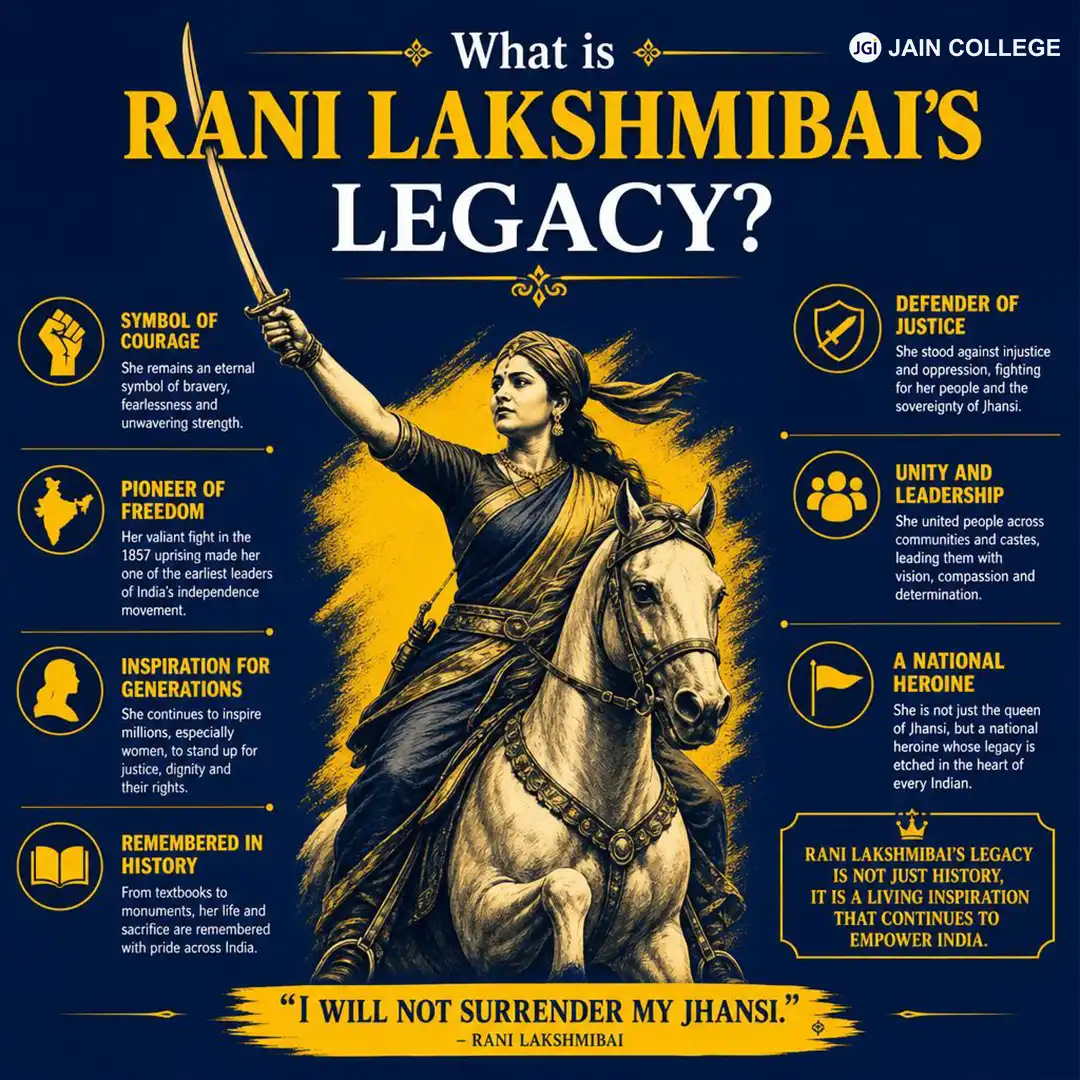
Rani Lakshmi Bai of Jhansi, the queen of the city of Jhansi in Uttar Pradesh.
Rani Lakshmibai, the queen of Jhansi, was an important person during the Indian Rebellion of 1857. She had many problems with the British East India Company because they wanted to take over Jhansi, so she became one of the leaders of the people who were fighting back.
The way Rani Lakshmibai led the people came up with plans for battle. Kept going even when things were tough, making many people notice her and remember her in Indian history. Some people who study history still argue about why Rani Lakshmibai did what she did. Everyone knows she was very brave and did not give up when the British were in charge. Rani Lakshmibai was a legendary figure.
Rani Lakshmibai is still remembered today not just for what she did during the uprising in 1857. People consider her to be a symbol of being brave, strong and a remarkable leader. Her life and what she gave up have inspired many people over the years. We still talk about her in books, poems, movies and other things that people enjoy. Rani Lakshmibai will always be a person in Indian history.
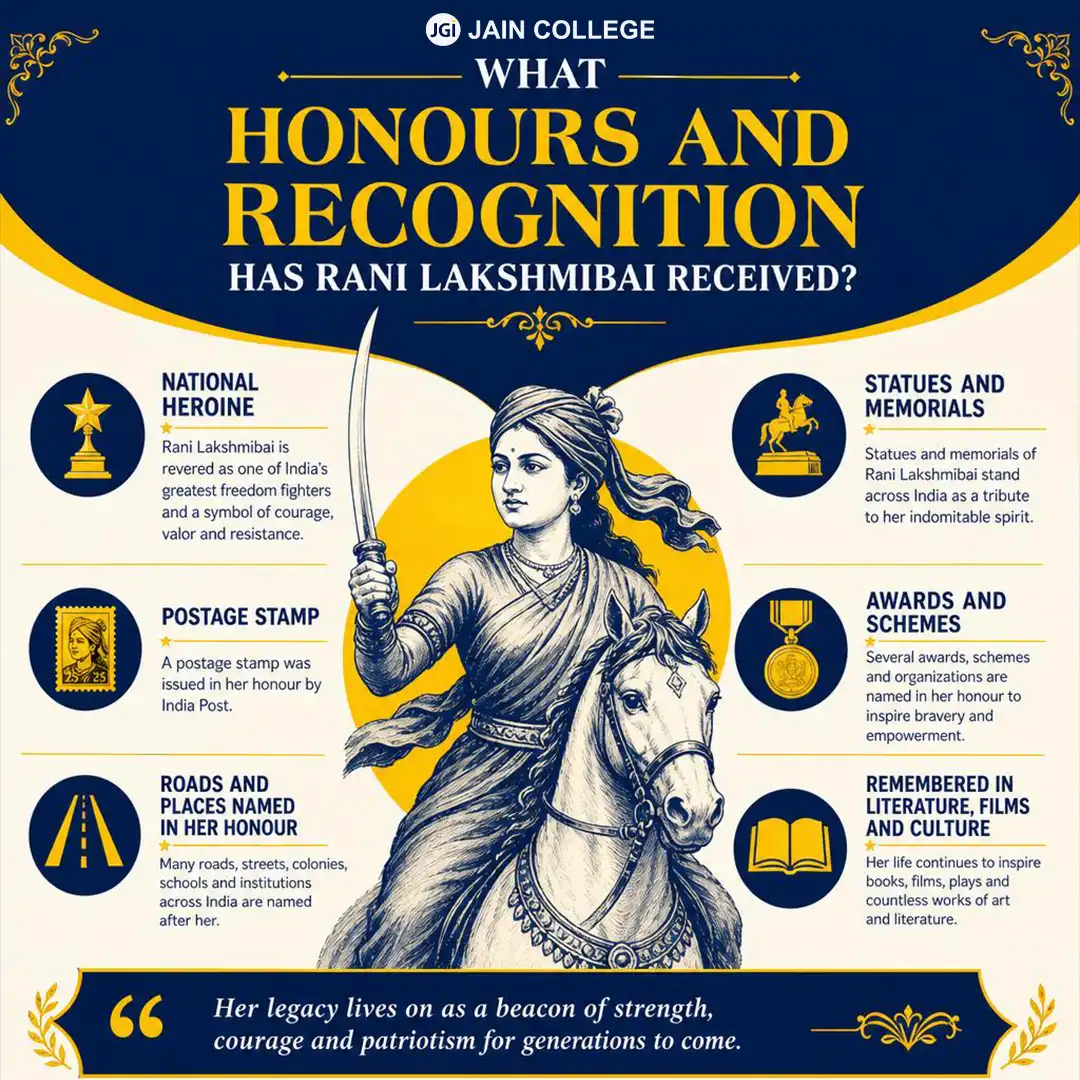
Although Rani Lakshmibai (the Rani of Jhansi) lived during the 19th century and did not receive modern civilian awards during her lifetime, she has been honoured extensively after her death for her extraordinary bravery and role in India's First War of Independence (1857).
| Honour/Recognition | Description |
| National Symbol of Courage and Patriotism | Recognised as one of India's greatest freedom fighters and a lasting symbol of bravery, sacrifice, and women's empowerment for her role in the Revolt of 1857. |
| Statues and Memorials | Numerous statues and memorials have been erected across India, especially in Jhansi, depicting her on horseback with a sword and her adopted son. |
| Educational Institutions Named After Her | Several schools, colleges, universities, and educational institutions have been named in her honour to inspire future generations. |
| Government Awards in Her Name | Awards such as the Rani Lakshmibai Award have been instituted by the Government of India and various state governments to recognise courage and contributions to women's empowerment. |
| Commemorative Postage Stamps | India Post has issued commemorative stamps featuring Rani Lakshmibai to honour her contribution to India's freedom struggle. |
| Commemorative Coins | The Government of India has released commemorative coins celebrating her legacy and role in Indian history. |
| Roads, Parks, and Public Places | Numerous roads, parks, stadiums, public squares, and government institutions across India have been named after her. |
| Literary Recognition | Immortilised in literature, especially through the famous poem "Jhansi Ki Rani" by Subhadra Kumari Chauhan, along with numerous biographies and historical books. |
Films and Television |
Her life has been portrayed in several films, television series, documentaries, and theatrical productions, keeping her legacy alive. |
| Military Recognition | The Rani of Jhansi Regiment of the Indian National Army (INA), formed in 1943 under Netaji Subhas Chandra Bose, was named in her honour as India's first all-women combat regiment. |
| Women's Empowerment Icon | Celebrated as a role model for women's leadership, courage, and resilience, with her legacy commemorated during national events, educational programmes, and cultural celebrations. |
Although Rani Lakshmibai did not receive formal honours during her lifetime, her legacy has been preserved through national memorials, government awards, educational institutions, commemorative stamps and coins, and widespread cultural recognition. Today, she remains one of the most iconic symbols of bravery, patriotism, and the fight for India's independence.
The story of Rani Lakshmi Bai serves as a reminder of the indomitable spirit of those who fought for India's independence, and her name will forever be synonymous with the struggle for freedom and justice.
Discover India's famous women freedom fighters, literary authors and poets and other great personalities at JAIN PU College's blogs.
Why is Rani Lakshmibai considered a symbol of courage and patriotism in India?
Share your thoughts in the comments below.
Rani Lakshmi Bai, also called the Rani of Jhansi, was a pivotal figure in the Indian Revolt of 1857. She is also regarded as one of the greatest freedom fighters of India.
Rani Lakshmi Bai Jayanti is celebrated every year on November 19th. This is the day when Manikarnika, the Rani of Jhansi, was born.
The Indian Rebellion of 1857 started on May 10th, 1857, in the garrison town of Meerut. This Indian rebellion is known as the Sepoy Mutiny or First War of Independence.
Rani Lakshmi Bai Jayanti is celebrated every year on November 19th to honour Rani Lakshmibai, the Queen of Jhansi. This day India celebrates her birth, her bravery and her love for our country.
The famous slogan of Rani Lakshmibai is "I shall not surrender my Jhansi." This slogan shows her bravery and her refusal to give up her kingdom to the British.
During the Revolt of 1857, leaders like Tantia Tope and Nana Sahib helped Rani Lakshmibai.
Rani Lakshmibai fought her last battle in Gwalior. She died fighting the troops in 1858.
She showed that women could be leaders and fight for their country. She broke rules and showed that women could do extraordinary tasks.
She faced challenges, including pressure from the British and the loss of her loved ones. She also had to defend her kingdom without any help from outside.
After Jhansi fell into the hands of the East India Company, Rani Lakshmibai escaped to a place called Kalpi. Here, she gathered her forces. Later, she captured Gwalior before her last battle.
The British took over Jhansi, claiming that the kingdom had no heir after the death of Maharaja Gangadhar Rao.
Rani Lakshmibai led the defense of Jhansi during the siege. She organised an army that included women warriors and fought bravely against the British for days.
Rani Lakshmibai is a national icon or a legendary figure, which is mainly because she was very brave and sacrificed her life for her country.
Rani Lakshmibai is remembered through her monuments, books of literature, and educational textbooks. She is a symbol of courage and love for one's country.
Rani Lakshmibai was one of the leading figures of the Indian Rebellion of 1857. She was a strong leader and one of the leading warriors of India's First War of Independence. Rani Lakshmi Bai was selected as an inspirational leader, as she could think strategically and inspire people to follow her even in difficult times.

JAIN PU College, a part of the renowned JGI Group, is committed to empowering students with quality education.
Beyond academics, the college ensures its online content reflects the same standard of excellence. Every blog and article is meticulously vetted and proofread by subject matter experts to ensure accuracy, relevance, and clarity. From insightful educational topics to engaging discussions, JAIN PU College's content is crafted to inform, inspire, and add value to its readers, reflecting the institution's commitment to intellectual growth and innovation.
View all Blogs