








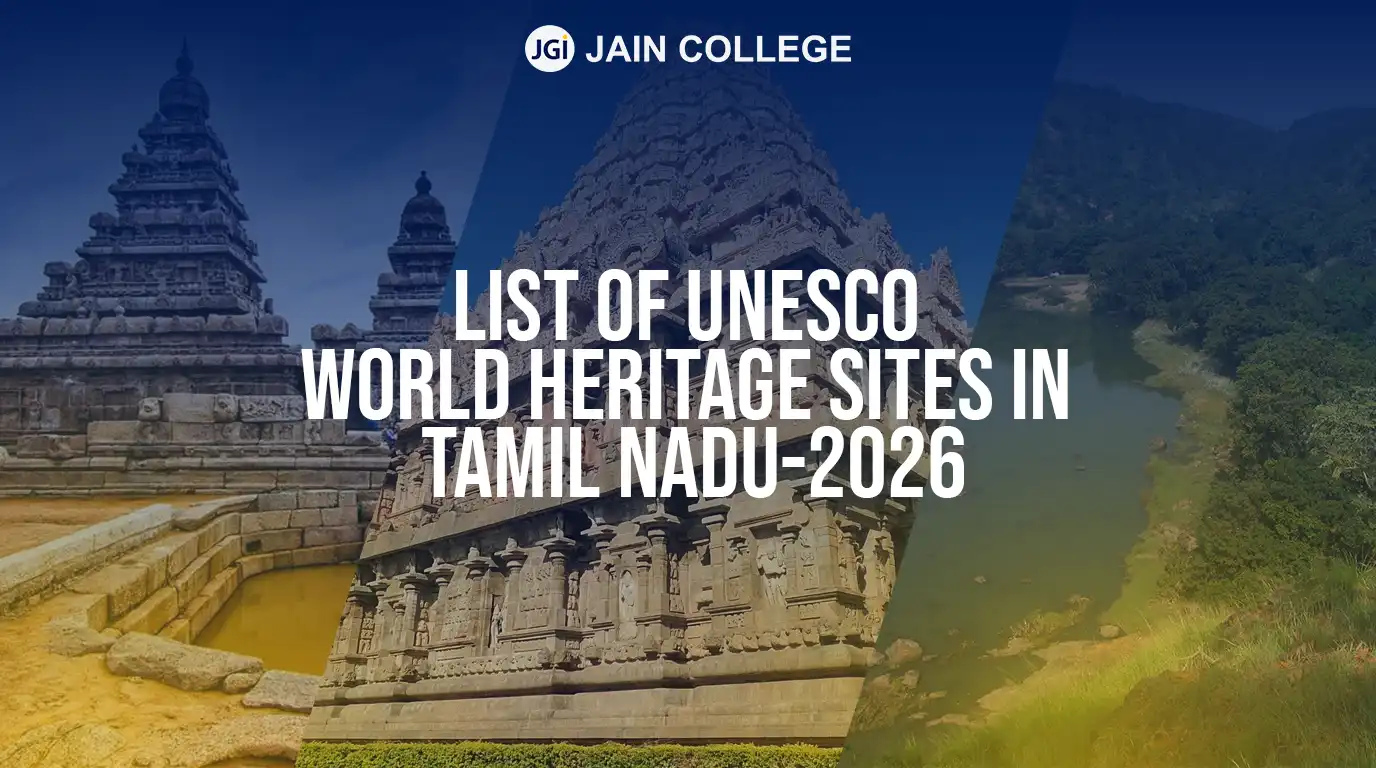
Tamil Nadu has 4 UNESCO World Heritage properties: the Group of Monuments at Mahabalipuram, the Great Living Chola Temples, the Nilgiri Mountain Railway (part of the Mountain Railways of India), and the Western Ghats. Together, they represent Tamil Nadu’s magnificent temple architecture, historic coastal monuments, heritage rail engineering, and biodiversity-rich landscapes.
Let’s get a quick list of categories (cultural/natural), locations, UNESCO inscription years, and practical travel tips and facts to plan your visit.
List of 4 UNESCO World Heritage Properties in Tamil Nadu:
List of UNESCO World Heritage Sites in Tamil Nadu – 2026
| Category | Number of Sites |
| Cultural | 3 |
| Natural | 1 |
| Total | 4 |
Table of Contents
All the peoples of the world own World Heritage sites, irrespective of the territory on which they are located.
Heritage is our legacy from the past, what we live with today, and what we pass on to future generations. Our cultural and natural heritage are both irreplaceable sources of life and inspiration.
UNESCO designates World Heritage sites, and its universal application makes the concept of World Heritage exceptional.
According to the UNESCO World Heritage Centre, India has 44 UNESCO World Heritage Sites, including 36 cultural sites, 7 natural sites, and 1 mixed site
UNESCO natural World Heritage sites are critical for the conservation of ecosystem integrity and biodiversity.
UNESCO World Heritage sites also represent a safe haven for some of the most threatened species on Earth. They are estimated to protect over 20,000 globally threatened species on Earth and are home to some of the last remaining populations of rare and endangered plants and animals.
UNESCO – The United Nations Educational, Scientific, and Cultural Organisation aims to promote the standardised identification, conservation, and safeguarding of the cultural and natural heritage around the world that is considered to be of outstanding value to humanity.
The World Heritage Sites are the world’s most popular places, selected by UNESCO to protect and preserve those sites that stand as globally recognised architectural landmarks of culture and tradition. It may be buildings, architectural temples, cities, deserts, forests, mountains, monuments, lakes, etc.
The sites are judged important to the collective interests of humanity.
According to the UNESCO World Heritage Centre, India has 44 UNESCO World Heritage Sites, and some of them are located in Tamil Nadu. These include heritage sites in Thanjavur, Darasuram, Gangaikondacholapuram, Mahabalipuram, and the Nilgiri region.
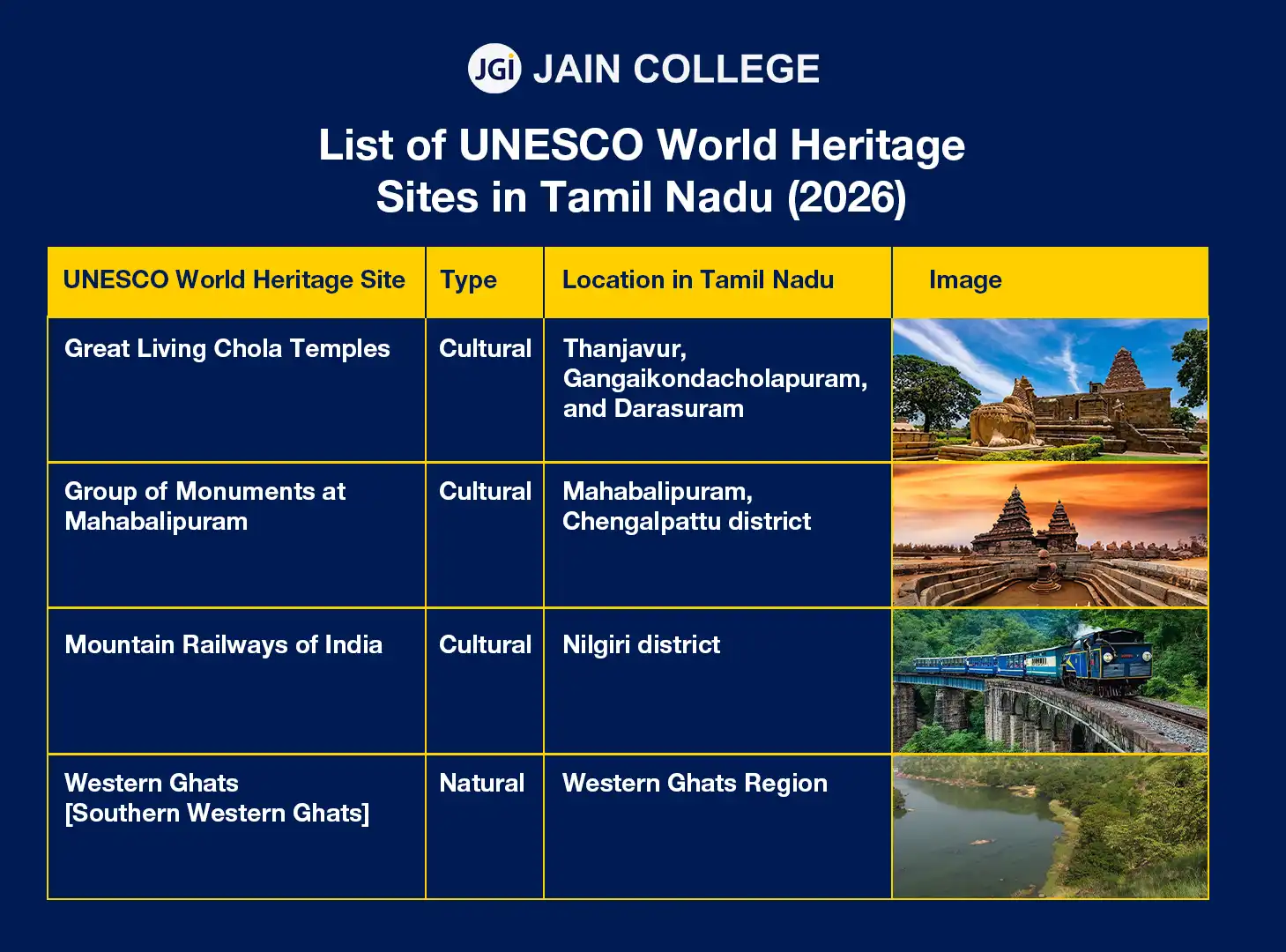
| UNESCO World Heritage Site | Type | Location in Tamil Nadu |
| Great Living Chola Temples | Cultural | Thanjavur, Gangaikondacholapuram, and Darasuram |
| Group of Monuments at Mahabalipuram | Cultural | Mahabalipuram, Chengalpattu district |
| Mountain Railways of India | Cultural | Nilgiri district |
| Western Ghats [Southern Western Ghats] | Natural | Western Ghats Region |
*Source: UNESCO World Heritage Centre
Tamil Nadu has several UNESCO-designated heritage sites of outstanding universal value for their historical temples built by ancient kings or dynasties.
Let us learn in detail about these UNESCO World Heritage Sites:
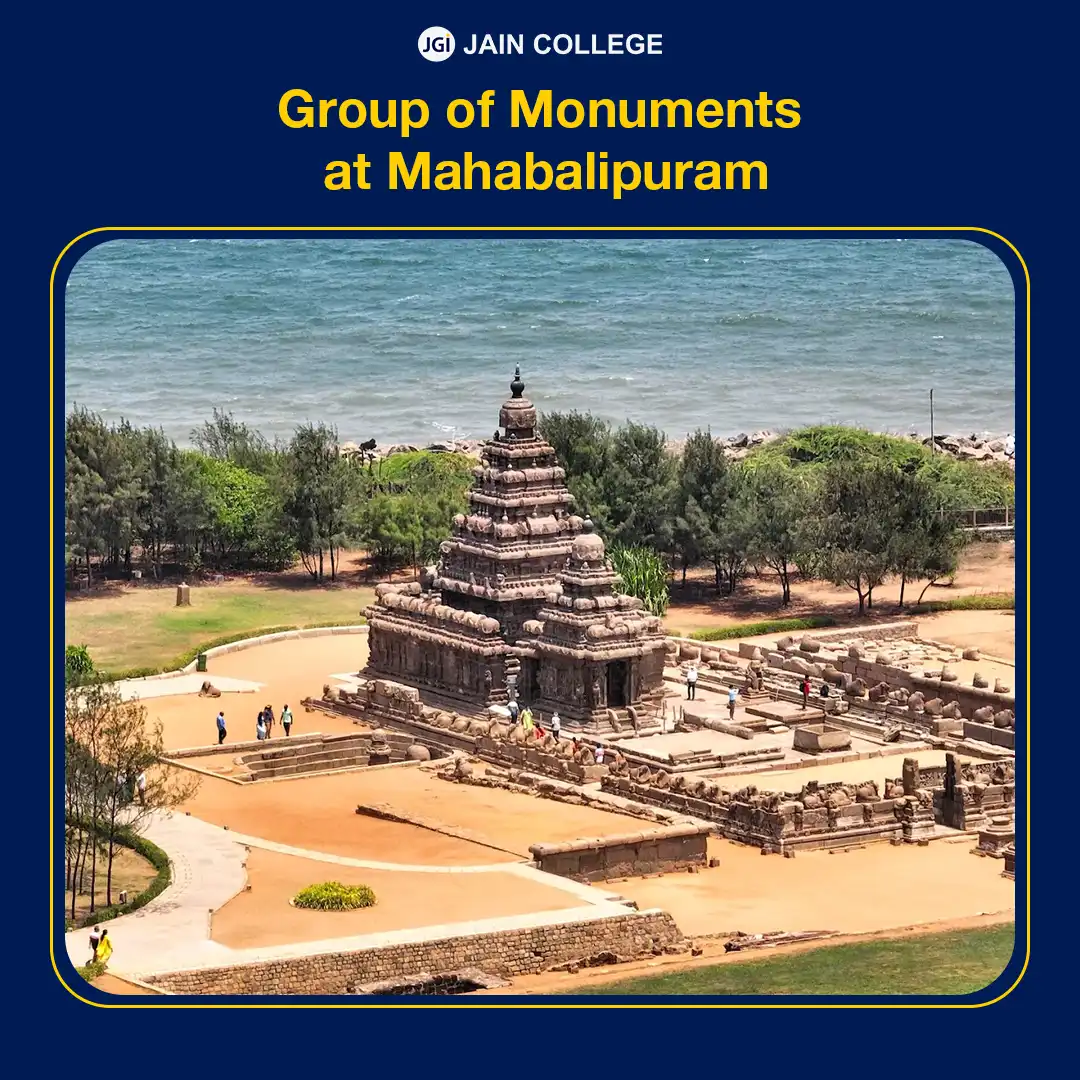
This UNESCO World Heritage site holds a unique position in Indian architectural history for its rock-cut monuments and Pallava-era craftsmanship. The site is also known as Mamallapuram; the site was developed by the Pallava kings during the 7th and 8th centuries.
Mahabalipuram was an important coastal trading centre during the Pallava period and became well known for its temple architecture and stone sculptures.
The site includes:
Some of the most notable features include:
These monuments are recognised for their artistic detail, architectural innovation, and historical significance in the development of Dravidian temple architecture.
The four criteria that acclaim this group of monuments as a UNESCO site include the following:
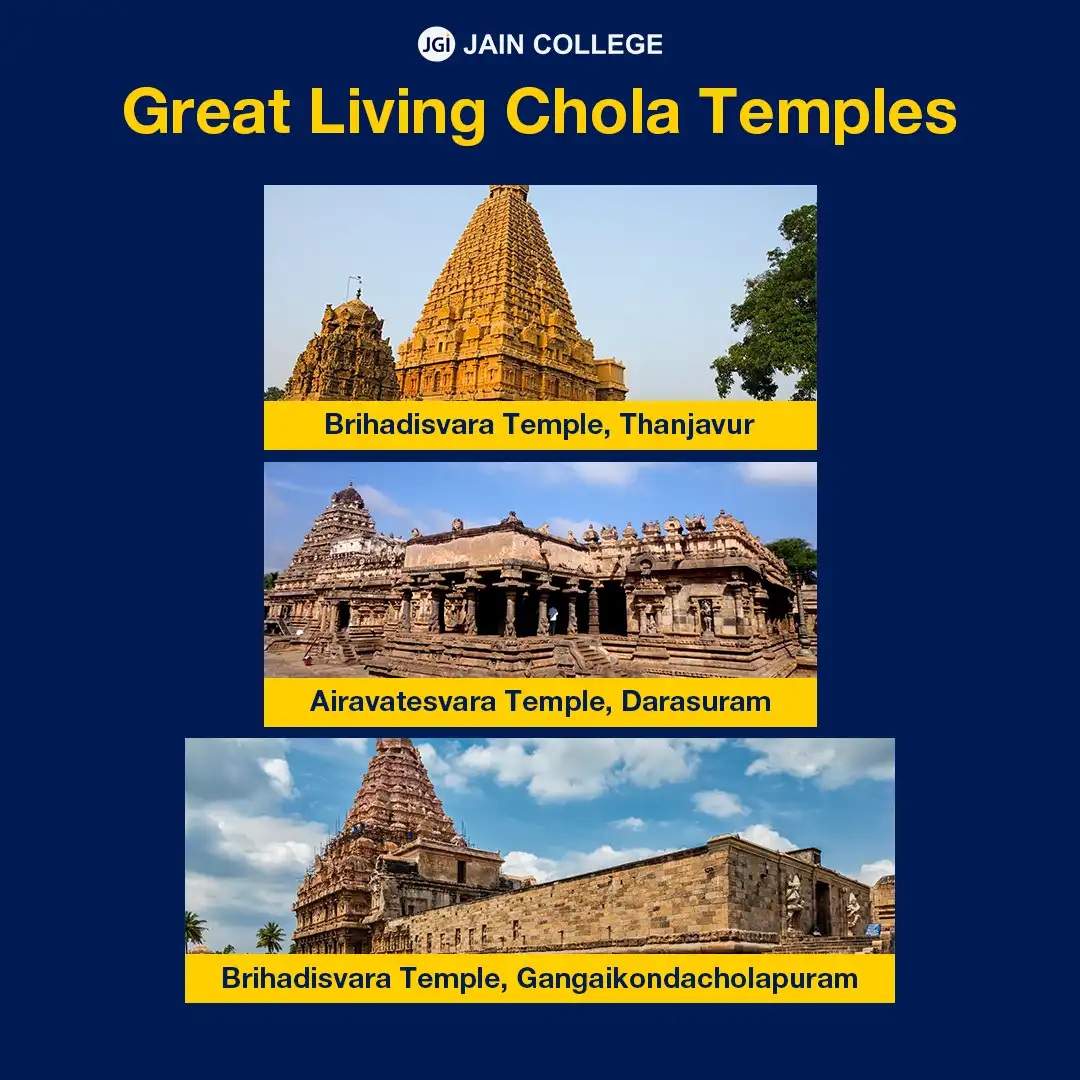
Great Living Chola Temples are among the most magnificent examples of Dravidian temple architecture in South India. These temples reflect the architectural excellence of the Chola dynasty.
The site includes three outstanding 11th- and 12th-century temples. The three beautifully sculpted temples at Thanjavur, Darasuram, and Gangaikondacholapuram are living examples of Chola ideology.
The two criteria for selecting these temples as an exemplary heritage site by UNESCO are as follows:
Brihadisvara Temple, Thanjavur
The Brihadisvara Temple is also known as the “Big Temple”. It is an architectural masterpiece built by Rajaraja Chola I of the Chola dynasty.
This Hindu temple is located on the bank of the Kaveri River in Thanjavur, Tamil Nadu, an inspiring testament to the architectural brilliance of the Chola dynasty, one of South India's most powerful empires.
This temple was built by the Tamil king, Raja Raja Chola I, between 1003 and 1010 AD. The temple is one of the largest South Indian temples and an exemplary example of fully realised Dravidian architecture.
Airavatesvara Temple, Darasuram
The Airavatesvara Temple is smaller in scale but equally magnificent. It is renowned for its finely detailed sculptures and musical steps that produce different notes when tapped.
This temple is dedicated to Lord Shiva and draws its name from the mythical white elephant, Airavata.
Airavatesvara Temple was built in the 12th century during the Chola period and is known for its intricately carved architecture and richly detailed sculptures. The temple complex features a 24-metre vimana and stone sculptures associated with Lord Shiva. Along with other Chola temples, it reflects the dynasty’s achievements in architecture, sculpture, painting, and bronze craftsmanship.
Brihadisvara Temple, Gangaikondacholapuram
The Brihadisvara Temple is a Hindu temple dedicated to Lord Shiva located in Gangaikonda Cholapuram, Jayankondam, in the South Indian state of Tamil Nadu.
The Brihadisvara Temple was completed in 1035 AD by Rajendra Chola I. Its 53m vimana (sanctum tower) has recessed corners and a graceful upward-curving movement, contrasting with the straight and severe tower at Thanjavur.
As part of his new capital, this Chola dynasty-era temple is similar in design and also has a similar name to the older 11th-century Brihadisvara Temple, which is located about 70 kilometres (43 miles) southwest in Thanjavur.
These three UNESCO World Heritage Sites, collectively known as the Great Living Chola Temples, are located in and around Thanjavur, Tamil Nadu.
These heritage sites in Tamil Nadu are known for their extraordinary architecture. In 1987, India inscribed these three main temples from the Chola dynasty as prestigious world heritage sites.
Kings of the Chola Empire built the Great Living Chola Temples, which stretched over all of southern India and the neighbouring islands.
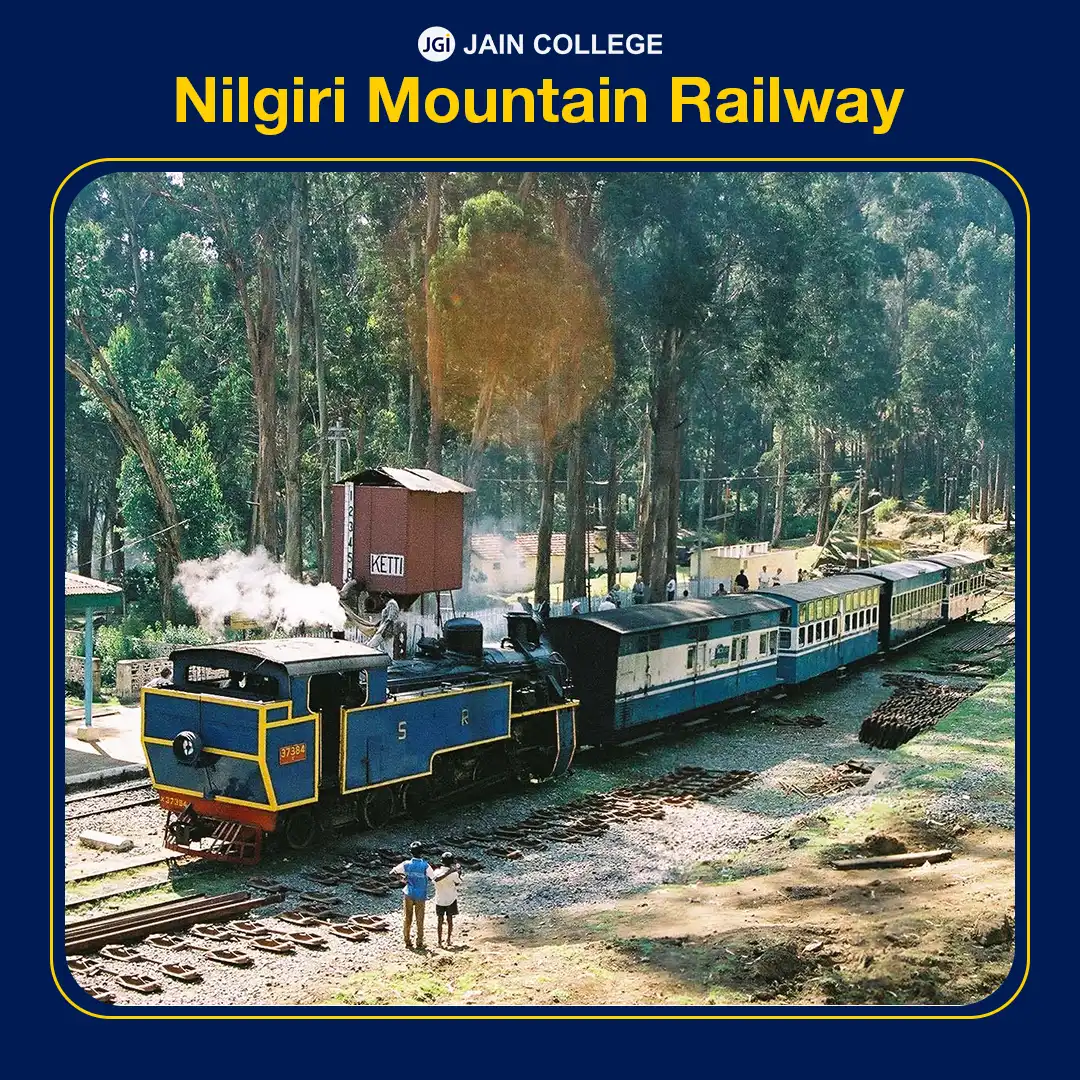
The Nilgiri Mountain Railway (NMR) is categorised as cultural heritage, specifically as an example of industrial heritage.
These mountain railways of India reflect an innovative transportation system and developments in technology that hold universal significance and are a model for other developing countries.
The construction of the Nilgiri Mountain Railway, a 46-km-long metre-gauge, single-track railway in Tamil Nadu State, was first proposed in 1854, but due to the difficulty of the mountainous location, the work only started in 1891 and was completed in 1908.
This railway, scaling an elevation of 326 m to 2,203 m, represented the latest technology of the time.
Location: Spans multiple states
Significance: Natural resources with diverse ecosystems.
History: One of the world's eight "hottest hotspots" of biological diversity.
Home to numerous endemic species.
Additional Facts: Critical for the Indian monsoon and regional climate regulation. Supports numerous rare and threatened species.
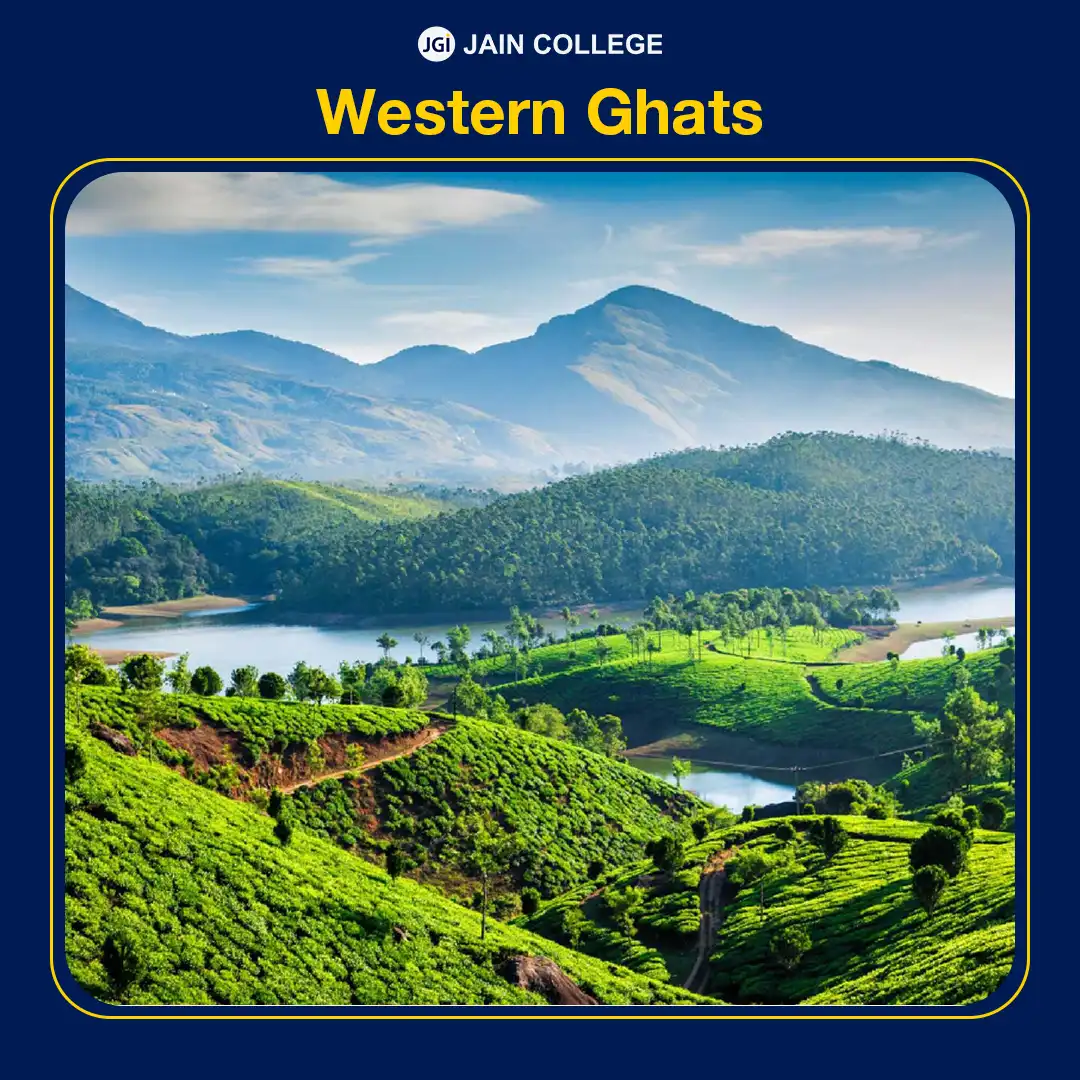
The Western Ghats are internationally recognised as a region of immense global importance for the conservation of biological diversity, and they also contain areas of high geological, cultural, and aesthetic value.
A chain of mountains running parallel to India’s western coast and approximately 30–50 km inland, the Ghats traverse the states of Kerala, Tamil Nadu, Karnataka, Goa, Maharashtra, and Gujarat.
These mountains cover an area of around 140,000 km² in a 1,600 km long stretch that is interrupted only by the 30 km Palghat Gap at around 11°N.
Tamil Nadu is home to several UNESCO World Heritage Sites. These sites reflect the region’s
From the towering temples built during the Chola dynasty to the rock-cut monuments of the Group of Monuments at Mahabalipuram and the scenic Nilgiri Mountain Railway, these sites showcase different aspects of the state’s heritage and craftsmanship.
The recognition of these sites by UNESCO highlights the importance of preserving these historically and culturally significant landmarks for future generations. These heritage sites continue to offer insightful perspectives on South India’s history, architecture, art, and cultural traditions.
Stay tuned to JAIN PU College's blogs and discover more about India's famous historical places, pilgrimages, wildlife sanctuaries, religious sites, hill stations, and other tourist attractions in India.
Have you ever explored the Group of Monuments at Mahabalipuram or any of the Chola temples? Share your experience!
Share your thoughts in the comments below.
UNESCO World Heritage Sites are places recognised by UNESCO for their outstanding cultural, historical, scientific, or natural importance to humanity.
The Group of Monuments at Mahabalipuram mainly represents the Dravidian style of architecture developed during the Pallava dynasty.
The World Heritage Convention is an international agreement that helps identify, protect, and preserve cultural and natural heritage sites of outstanding universal value.
The Group of Monuments at Mahabalipuram in Tamil Nadu was built by the Pallava kings between the 7th and 8th centuries CE.
Biodiversity refers to the variety of life on Earth, including ecosystems, species, and genetic diversity that support the planet's ecological balance.
Mamallapuram, also known as Mahabalipuram, served as the principal port city of the Pallava dynasty.
The Group of Monuments at Mahabalipuram is one of Tamil Nadu's most famous UNESCO World Heritage Sites, renowned for its rock-cut temples, sculptures, and Pallava-era architecture.
The Group of Monuments at Mahabalipuram includes structural temples, sculpted relief panels, rock-cut cave temples, and monolithic rathas (chariot-shaped structures).
Mahabalipuram contains nine monolithic temples, with the famous Five Rathas being the most well-known examples of Pallava rock-cut architecture.
Tamil Nadu has four UNESCO World Heritage Sites: the Group of Monuments at Mahabalipuram, the Great Living Chola Temples, the Nilgiri Mountain Railway, and the Western Ghats.
Natural World Heritage Sites collectively cover more than 3.5 million square kilometres across major ecosystems worldwide, an area larger than India.

JAIN PU College, a part of the renowned JGI Group, is committed to empowering students with quality education.
Beyond academics, the college ensures its online content reflects the same standard of excellence. Every blog and article is meticulously vetted and proofread by subject matter experts to ensure accuracy, relevance, and clarity. From insightful educational topics to engaging discussions, JAIN PU College's content is crafted to inform, inspire, and add value to its readers, reflecting the institution's commitment to intellectual growth and innovation.
View all Blogs











.jpg)