








Karnataka is known for its rich history, cultural diversity, and architectural marvels. The region has been influenced by powerful dynasties like the Chalukyas, Hoysalas, and Vijayanagara Empire, leaving behind a vast collection of monuments, temples, and art forms.
Karnataka is known as the cradle of ancient civilisations. Among India's national monuments, it ranks second highest. Today, the state's cultural legacy continues to shape its identity, making it a rare combination of tradition and modernity.
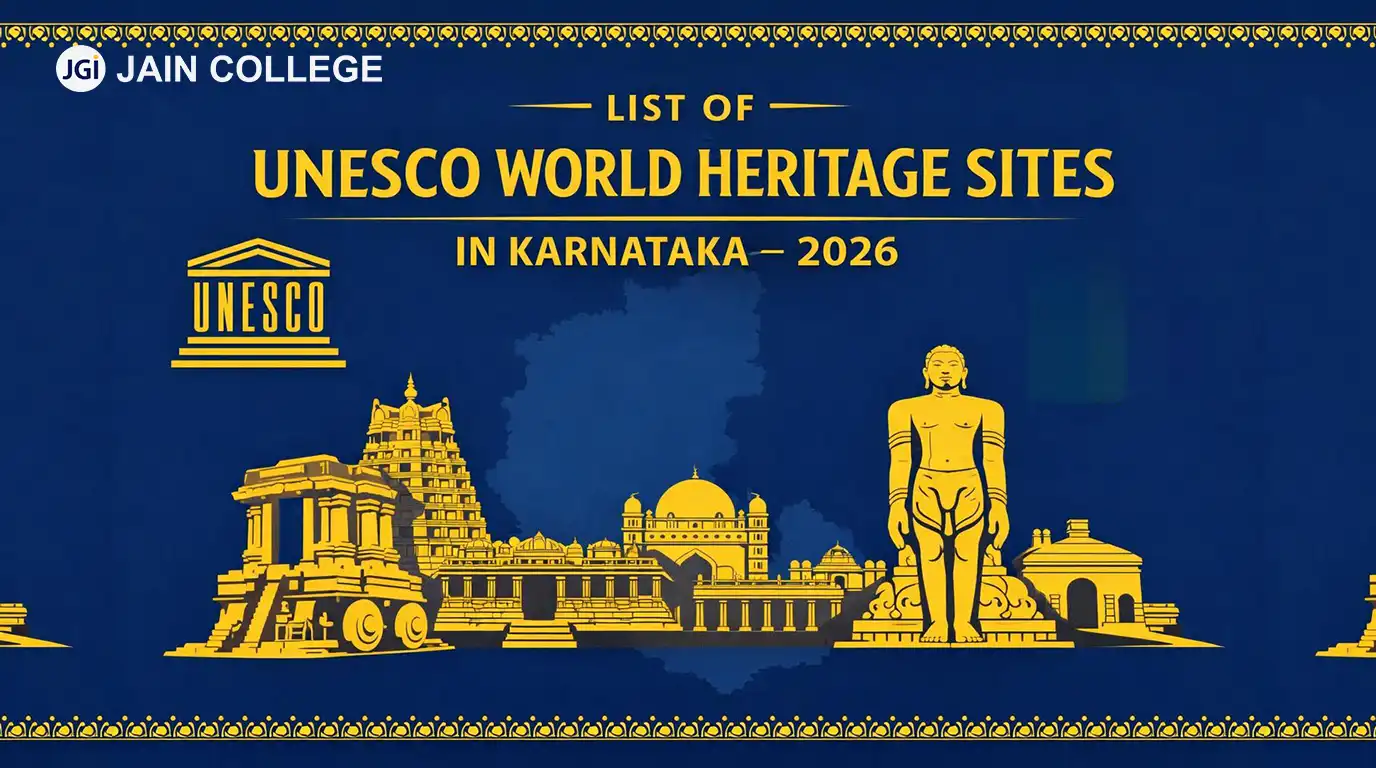
UNESCO World Heritage Sites in Karnataka (2026) include
Tentative World Heritage Sites in Karnataka – 2026 include:
Here is a detailed overview:
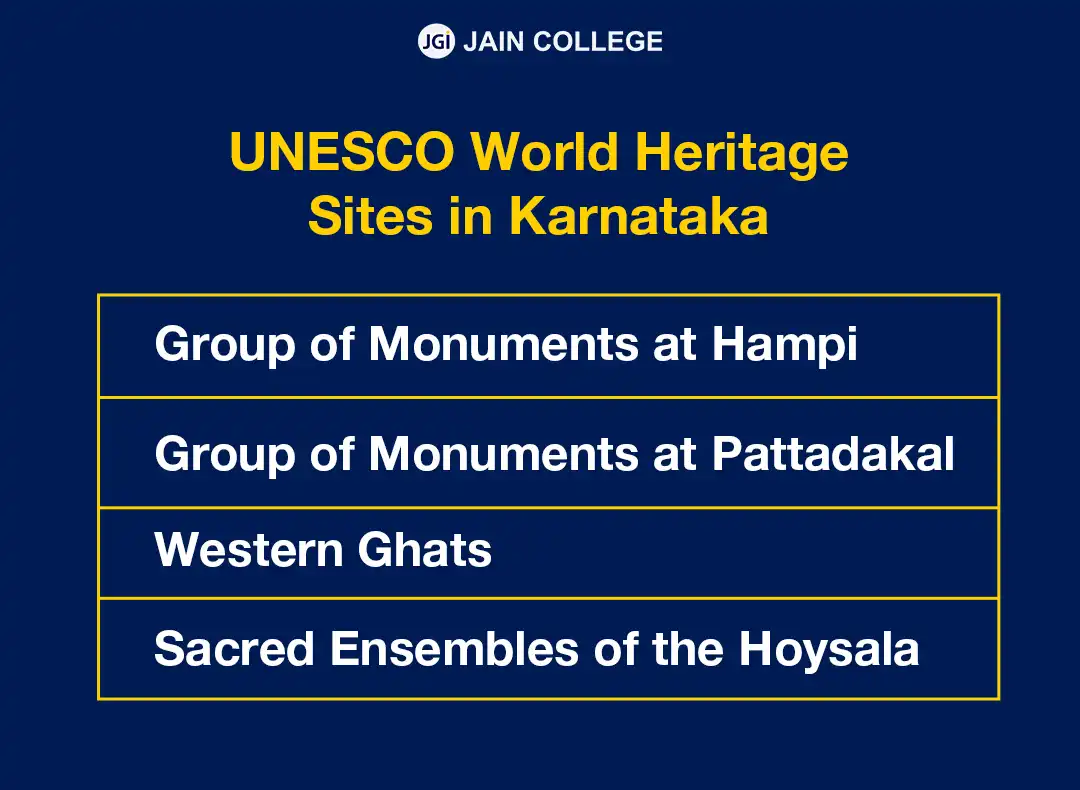
| Property | Year of inscription |
| List of UNESCO World Heritage Sites in Karnataka – 2026 | |
| Group of Monuments at Hampi | 1986 |
| Group of Monuments at Pattadakal | 1987 |
| Western Ghats | 2012 |
| Sacred Ensembles of the Hoysala | 2023 |
| List of Tentative World Heritage Sites in Karnataka – 2026 | |
| Monuments of Srirangapatna Island Town | 2014 |
| Monuments and Forts of the Deccan Sultanate | 2014 |
Karnataka is home to four distinguished UNESCO World Heritage Sites that attract thousands of tourists each year.

Etymologically, the word "Karnataka" is derived from the Kannada word "Karu Nadu", which is estimated to have two meanings:
This state is home to some of the most powerful empires of the ancient and medieval periods.
The state is known as the cradle of ancient civilisations and has the second-highest number of national monuments in India.
Today, Karnataka's cultural legacy continues to shape its identity, making it a rare combination of tradition and modernity.
The state's historical and cultural landmarks have gained international recognition, with several designated UNESCO World Heritage Sites.
Among India’s UNESCO World Heritage Sites, one notable region is the southern state of Karnataka. The Vijayanagara Empire, the Hoysalas, and the Chalukya dynasty governed the region, making it famous for its remarkable historical sites.
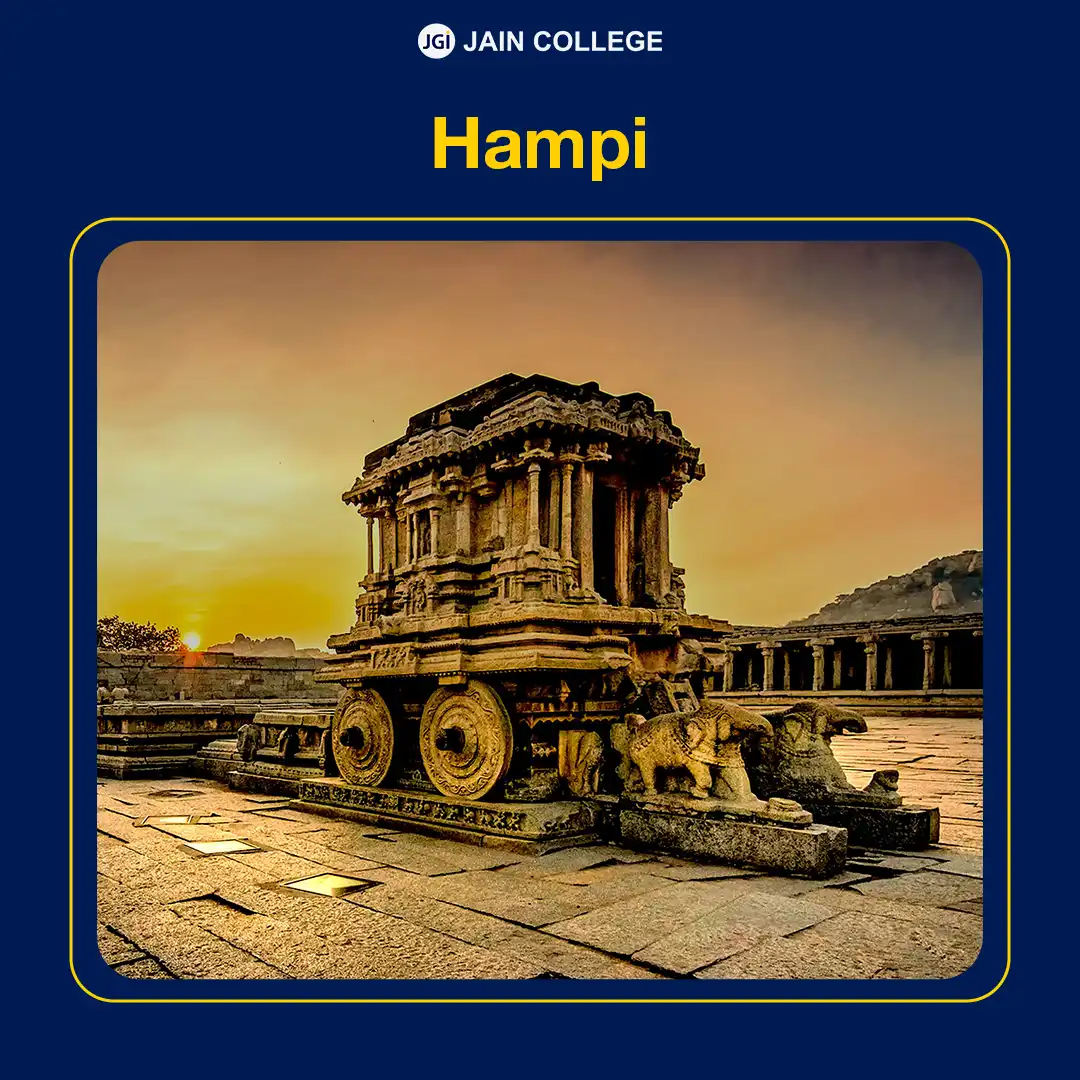
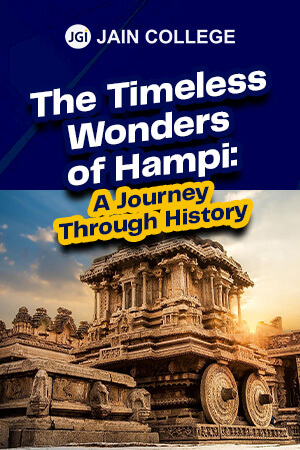
Hampi lies just 12 kilometres from the sedate town of Hospet, in the district of Ballari. The city was once adorned with massive palaces, magnificent temples, fortifications, baths, markets, aqueducts, pavilions, stables for royal elephants, and elegantly carved pillars.
The spectacular rocky landscape of Hampi sits on the banks of the River Tungabhadra. Harihara and Bukka founded the powerful Vijayanagara Empire in 1336, with Hampi serving as its capital city. After the decisive defeat at the Battle of Talikota in 1565, Hampi gradually declined and lost its political importance.
One Portuguese traveller described Hampi as a city that provided a wide variety of goods, such as diamonds, pearls, fine silks, brocades, and horses.
Today, Hampi is a renowned historical site, celebrated for its architectural splendour and its role as the former capital of the Vijayanagara Empire. This significant Indian location offers a wealth of knowledge about one of the grandest and most austere empires of the medieval era.
The site of Hampi showcases sophisticated urban planning, with distinct royal, urban, and sacred systems. This meticulous design is still evident in over 1,600 surviving structures, which include
| Attractions in Hampi: | ||
| Pushkarni | Lotus Mahal | Badavilinga |
| King’s Palace | Queen’s Bath | Elephant Stables |
| Mahanavami Dibba | Virupaksha Temple | Lakshmi Narasimha |
| Hazara Rama Temple | Vijaya Vittala Temple | Kadlekalu and Sasivekalu Ganesha |
There are plenty of monuments in Hampi as well. Listed below are some of the best Monuments in Hampi:
| Monuments at the Sacred Centre | Monuments at the Royal Center |
| Hampi Bazaar | Granaries |
| Virupaksha Temple | Mahanavami Dibba |
| Courtesans’ Street | Zenana Enclosure |
| Sasivekalu Ganesha | Hazara Rama Temple |
| Achyuta Raya’s Temple | Palace of Vira Harihara |
How to Get Here:
| By Road:Hospet - 12 km Hubballi - 210 km Bengaluru - 315 km | By Rail:Hospet - 12 kmDabolim (Goa) - 300 km | By Air:Ballari - 74 km Bengaluru - 360 km |
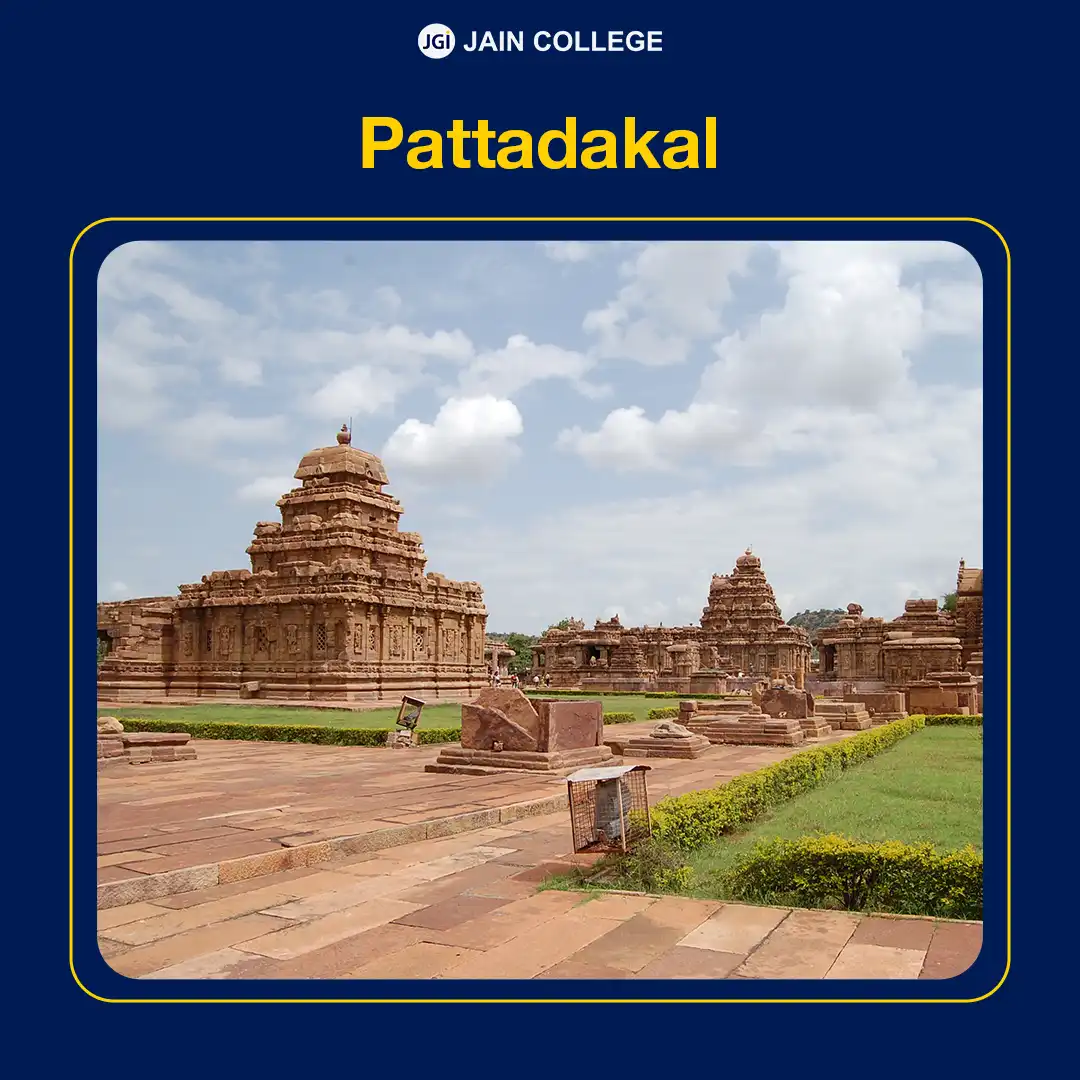
Situated on the banks of the Malaprabha River, this UNESCO World Heritage Site is a testament to the richness of Chalukyan architecture.
With its beautifully chiselled temples, Pattadakal reached the pinnacle of its glory during the reign of the Chalukyan kings.
Pattadakal was even used as a ceremonial centre, where kings were crowned and commemorated. Pattadakal has a cluster of 10 major temples, each displaying intriguing Chalukyan architectural styles.
| Attractions in Pattadakal | ||
| Jambulinga Temple | Kadasiddeshvara Temple | Galaganatha Temple |
| Mallikarjuna Temple | Papanatha Temple | Sangamesvara Temple |
Most of the temples in Pattadakal are covered with beautifully crafted friezes, pillared main halls, intricately chiselled ceiling adornments, and huge gateways that date back to the era of the Kadamba Dynasty (345-525 CE), the Early Chalukyas (543-753 CE), and the Vijayanagara Empire (14th to 17th century CE).
Listed below are some of the top monuments in Pattadakal
How to Get Here:
| By Road:Aihole: 22 km Badami: 22 km Bengaluru: 495 km | By Rail:Badami: 22 km | By Air:Hubballi: 122 km Dabolim (Goa): 290 km |
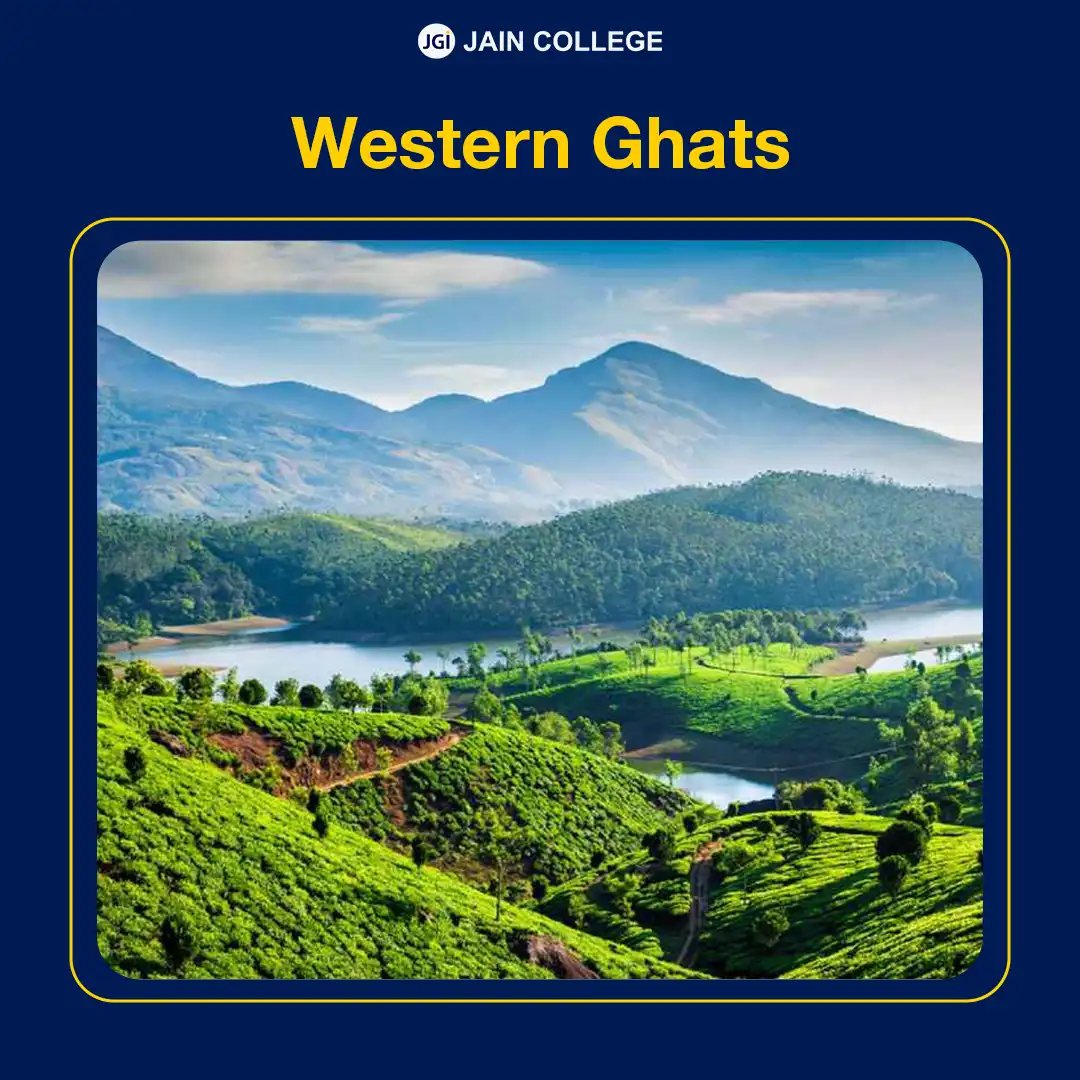
The Western Ghats, also known as the Sahyadri Mountains, are a UNESCO-listed serial World Heritage Site that runs parallel to the western coast of India. This mountain range spans approximately 160,000 square kilometres, and it extends across the states of Gujarat, Maharashtra, Goa, Karnataka, Kerala, and Tamil Nadu.
Recognised as one of the world's most important biodiversity hotspots, the Western Ghats comprise numerous national parks, wildlife sanctuaries, and forest reserves. They are home to over 7,400 species of flowering plants and 139 species of mammals, along with a wide variety of reptiles, birds, and amphibians.
Attractions in Western Ghats
| Location: | West of Deccan Plateau |
| Ideal Time to Explore: | October to March. It is ideal for sightseeingMonsoon (June–September) offers lush scenery but may involve road closures in some areas. |
How to Get Here:
The Western Ghats stretch across several Indian states, including Karnataka, Kerala, Tamil Nadu, Maharashtra, and Goa. National and state highways provide excellent connections to Ghats destinations.
| By AirMajor nearby airports include:Goa International Airport (for northern Western Ghats)Bengaluru International Airport (for Coorg, Chikmagalur)Mangaluru International Airport (for Kudremukh, Agumbe)From the airport, taxis and buses are available to hill regions. |
| By TrainKey railway stations near the Western Ghats:UdupiHassanShimogaMangaluruMadgaon (Goa) |
| By RoadPopular road routes:Goa → Chorla GhatsMangaluru → Agumbe / KudremukhBengaluru → Coorg / Chikmagalur / SakleshpurKSRTC and private buses operate regularly, along with taxis. |
*Note:
From the railway stations, local transport or taxis connect to Ghats destinations.
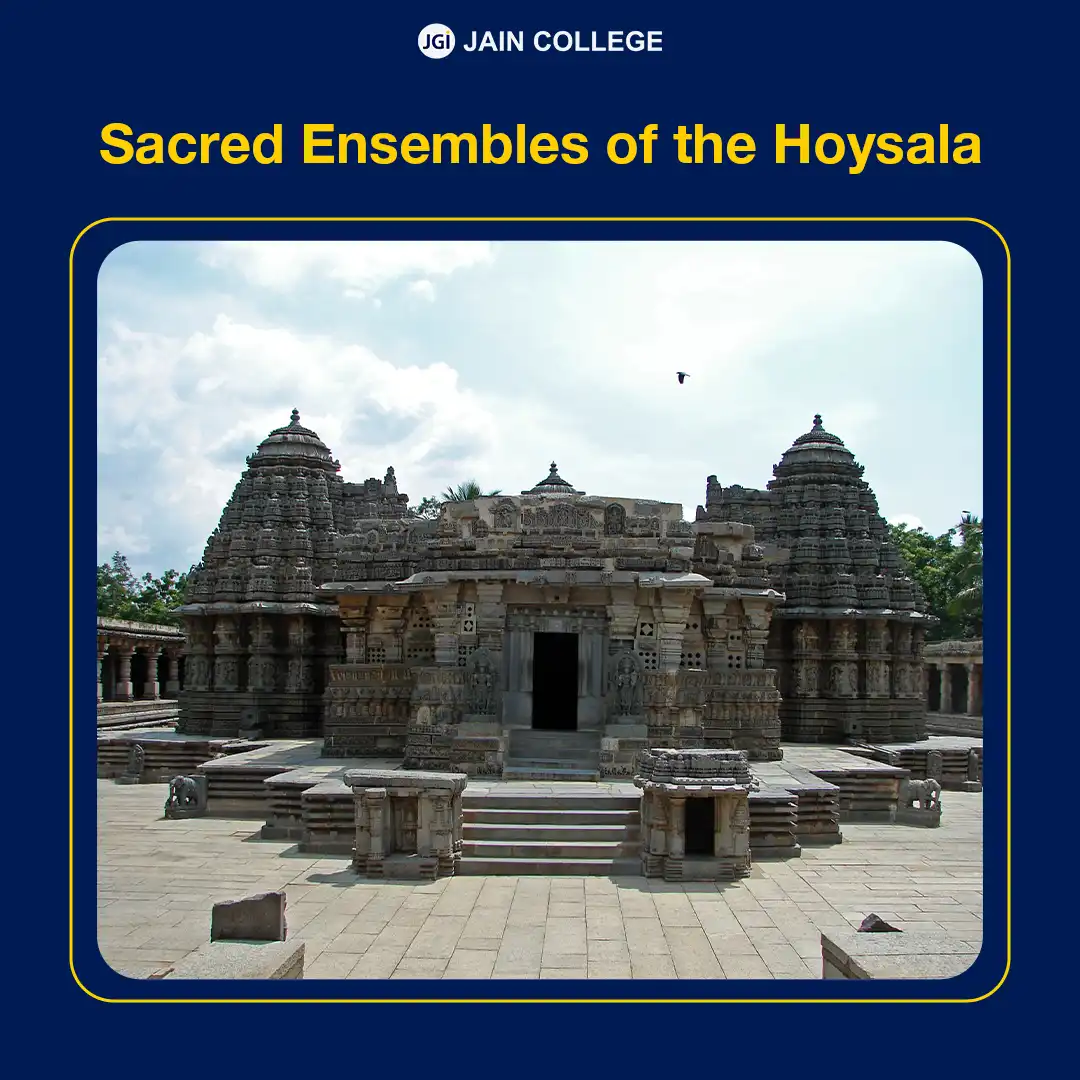
The Sacred Ensembles of the Hoysalas comprise three iconic temple complexes in Karnataka, India, dating from the 11th to 14th centuries. These temples, built under the patronage of the Hoysala dynasty, were inscribed as a UNESCO World Heritage Site in recognition of their exceptional cultural and architectural significance.
Scattered across the state of Karnataka, these temple designs reflect the artistic excellence of Hoysala temple architecture, which is characterised by:
The temples demonstrate a refined combination of Nagara and Dravidian architectural styles. Thus, these temples rank among the finest examples of medieval South Indian temple art.
Sacred Ensembles of the Hoysala include:
| Chennakeshava Temple, Belur – Renowned for its elaborate sculptures and architectural detailing |
| Hoysaleshwara Temple, Halebidu – Celebrated for its exceptional stone carvings and sculptural panels |
| Keshava Temple, Somanathapura – Known for its symmetrical design and intricate ornamentation |
These Hoysala-style temples present in South India are outstanding in their architectural elegance. These temples exhibit unique Hoysala features, including:
All three Hoysala-style temples in South India are admired for their:
The Group of Monuments of the Sacred Ensembles of the Hoysala includes:
| Chennakeshava Temple, Belur and Hoysaleshwara Temple, Halebidu | |
| Location: | Hassan District |
| Ideal Time to Explore: | Early mornings or late afternoons |
How to Get Here:
Major cities like Bengaluru, Mysuru, and Hassan can reach Belur and Halebidu through well-connected roads. The temples at Belur and Halebidu are just 16 km apart, making them ideal to visit on the same day.
| By AirKempegowda International Airport, Bengaluru *Note: From the airport, taxis and buses are available to reach the temples.This is approx. 220 km from Belur, 210 km from Halebidu, and 145 km from Somanathapura. |
| By TrainMysuru Junction is the nearest major station for Somanathapura (35 km)Hassan Railway Station is the closest railhead for Belur (40 km) and Halebidu (31 km)*Note: Local buses, taxis, and auto-rickshaws connect these stations to the temples. |
| By RoadPopular road routes:Halebidu: ~210 km from Bengaluru via HassanSomanathapura: ~145 km from Bengaluru via MysuruBelur: ~220 km from Bengaluru via NH 75 (Bengaluru–Hassan)*Note:Taxis and self-drive options are widely available.KSRTC and private buses operate frequently from Bengaluru, Mysuru, and Hassan. |
| Keshava Temple, Somanathapura, Mysore | |
| Location: | Mysore District |
| Ideal Time to Explore: | Early mornings or late afternoons |
How to Get Here:
One can reach Somanathapura through well-connected roads.
| By AirKempegowda International Airport, BengaluruApprox. 145 km from Somanathapura*Note: Taxis and buses are available from the airport. |
| By TrainMysuru JunctionSomanathapura: ~35 km*Note: Local buses, taxis, and auto-rickshaws connect stations to the temples. |
| By RoadSomanathapura: ~145 km from Bengaluru via Mysuru*Note: KSRTC and private buses operate frequently from Bengaluru and Mysuru. Taxis and self-drive options are also widely available. |
There are several locations in Karnataka currently in the UNESCO World Heritage tentative list, highlighting the state's rich architectural and historical heritage.
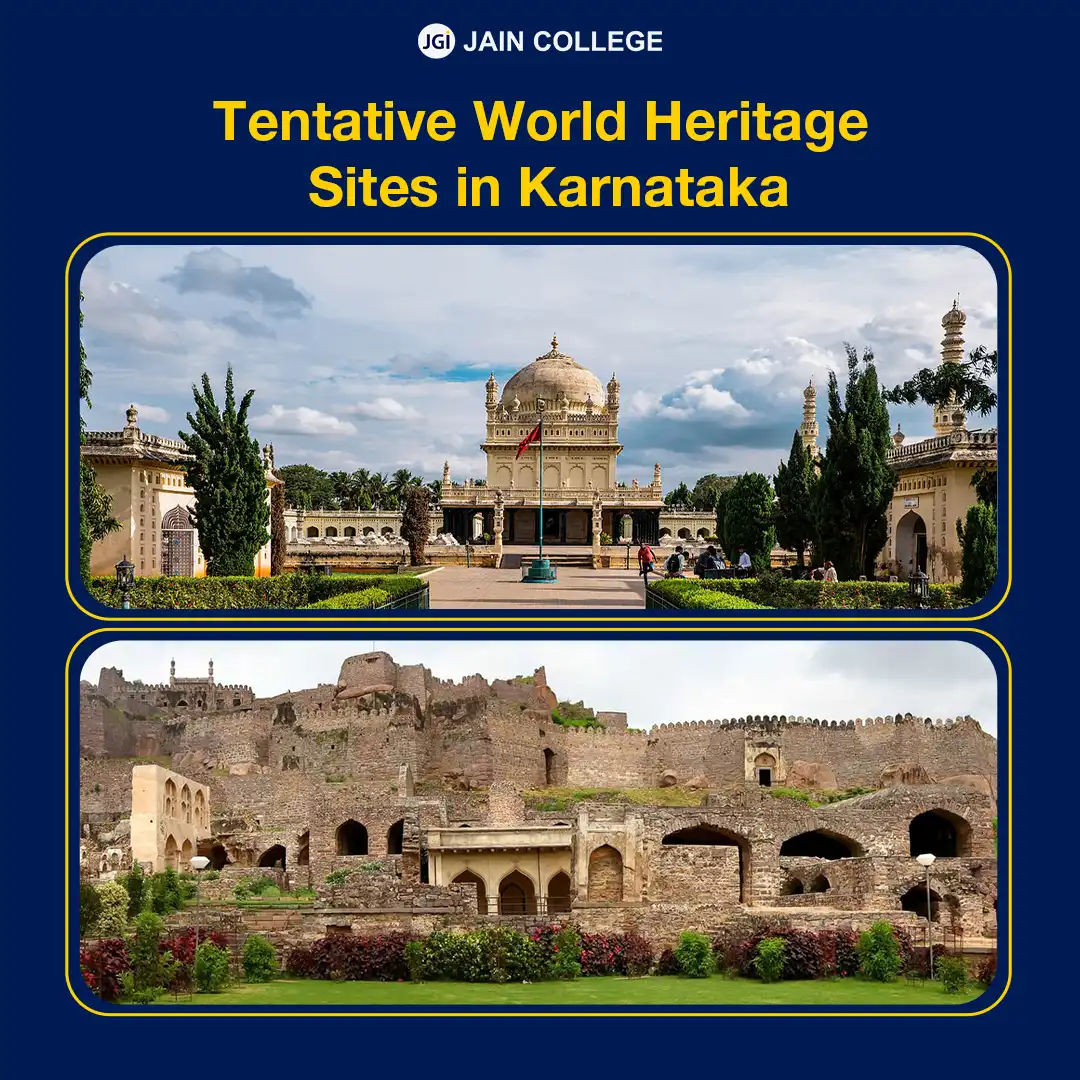
Prominent among them are the Badami Cave Temples, the temples at Aihole, the Megalithic Burial Site at Hire Benkal, the monuments of the Deccan Sultanate, and the historic town of Srirangapatna.
Srirangapatna is an island fortress and the capital of the Wadiyar kings, located near Mysuru in Karnataka province.
It is associated with several historical figures, including the Vyasaraja Swami, Tippu Sultan, and the Wadiyar kings of Mysuru.
Fortunately, the majority of its historical sites remain well preserved. Other significant features of this heritage site are:
| Attractions in Srirangapatna Island Town | ||
| Dungeons | Wellesley Bridge | Ranganatha Swamy Temple |
| White-domed Gumbaz | Tipu’s Summer Palace | Tipu’s mosque with its twin minarets |
How to Get Here:
| By Road:Mysuru - 16 km Bengaluru - 122 km | By Rail:Srirangapatna Mysuru - 16 km | By Air:Bengaluru - 122 km |
The Monuments and Forts of the Deccan Sultanate are located in the Indian states of Karnataka and Telangana.
The contributions of the Deccan Sultanate to India's arts and architecture are impressive, with iconic Indo-Islamic monuments constructed in Gulbarga, Bidar, Bijapur, and Hyderabad.
The monuments and forts of the Deccan Sultanate boast an elaborate mosaic that reflects the rich architectural landscape or network of monuments.
These sites include:
How to Get Here:
Bangalore, Hyderabad, and other major cities in India provide easy access to all these monuments and forts of the Deccan Sultanate.
*Note: A new train service operates from Kerala to Vijayapura.
The acknowledgement of these sites by UNESCO operates as a significant reminder of the need for preservation and conservation. It is a societal duty to safeguard these cultural treasures for future generations to come.
The Heritage Sites in Karnataka are not just markers of history. They are also a repository of wisdom, offering invaluable insights into the region's past glory, cultural heritage, and architectural genius that still evoke awe worldwide.
Stay tuned to JAIN PU College's blogs and discover more about India's famous historical places, pilgrimages, wildlife sanctuaries, religious sites, hill stations, and other tourist attractions in both Karnataka and India.
Which UNESCO World Heritage Site in Karnataka impressed you the most?
Let us know in the comments!
The Nilgiri Biosphere Reserve encompasses a rich and diverse ecosystem that includes Bandipur, Nagarhole, Mudumalai National Parks; Mukurthi and Silent Valley National Parks, along with Wayanad and Sathyamangalam Wildlife Sanctuaries.
The UNESCO World Heritage Site, Pattadakal, is called the living museum of ancient Indian art and craftsmanship. This is because of the intricate carvings and structural brilliance.
The Hoysala architectural style stands as a testament to the rich cultural heritage in Southern India.
It is located within the main hall of the Vijaya Vittala Temple in Hampi, Karnataka, India.
UNESCO has inscribed the following three Hoysala temples in Karnataka as World Heritage sites:
These sites are recognised as UNESCO World Heritage Sites because they demonstrate intricate stone carving, exceptional craftsmanship, and exquisite temple architecture.

JAIN PU College, a part of the renowned JGI Group, is committed to empowering students with quality education.
Beyond academics, the college ensures its online content reflects the same standard of excellence. Every blog and article is meticulously vetted and proofread by subject matter experts to ensure accuracy, relevance, and clarity. From insightful educational topics to engaging discussions, JAIN PU College's content is crafted to inform, inspire, and add value to its readers, reflecting the institution's commitment to intellectual growth and innovation.
View all Blogs