







If we look around us, we can find a wide variety of living organisms, including plants in gardens, insects, birds, domestic animals, and trees along roadsides. Furthermore, countless microscopic organisms remain invisible to the human eye.
Scientists have identified and described approximately 1.7 to 1.8 million species to date, and this number continues to increase as new species are discovered. All these living creatures need food (nutrition) for their growth, development, repair, and survival.
Biology is the branch of science that studies life forms and living processes. The living world comprises an amazing diversity of living organisms, ranging from microscopic forms of life to giant trees and animals.
Biology is the science of life forms and living processes. It deals with the studies of living organisms, including their structure, growth, functions, life process including:
Biology is also a foundation for other biology-based professions such as medicine, nursing and allied health, pharmacy and pharmacology, dentistry, and veterinary medicine.
Other fields within biology focus on specific types of organisms, such as bacteria and other microbes (microbiology), viruses (virology), plants (botany), animals (zoology), wildlife biology and marine biology. And often, biologists focus on both a particular scale and a particular organism, such as plant cell biology.
There are millions to trillions of living organisms on this planet. These living organisms vary greatly in size, colour, texture, lifespan and more.
All these living beings need food to perform several basic activities to survive. Find a new passion for all living organisms, from animal behaviour to plant adaptations.
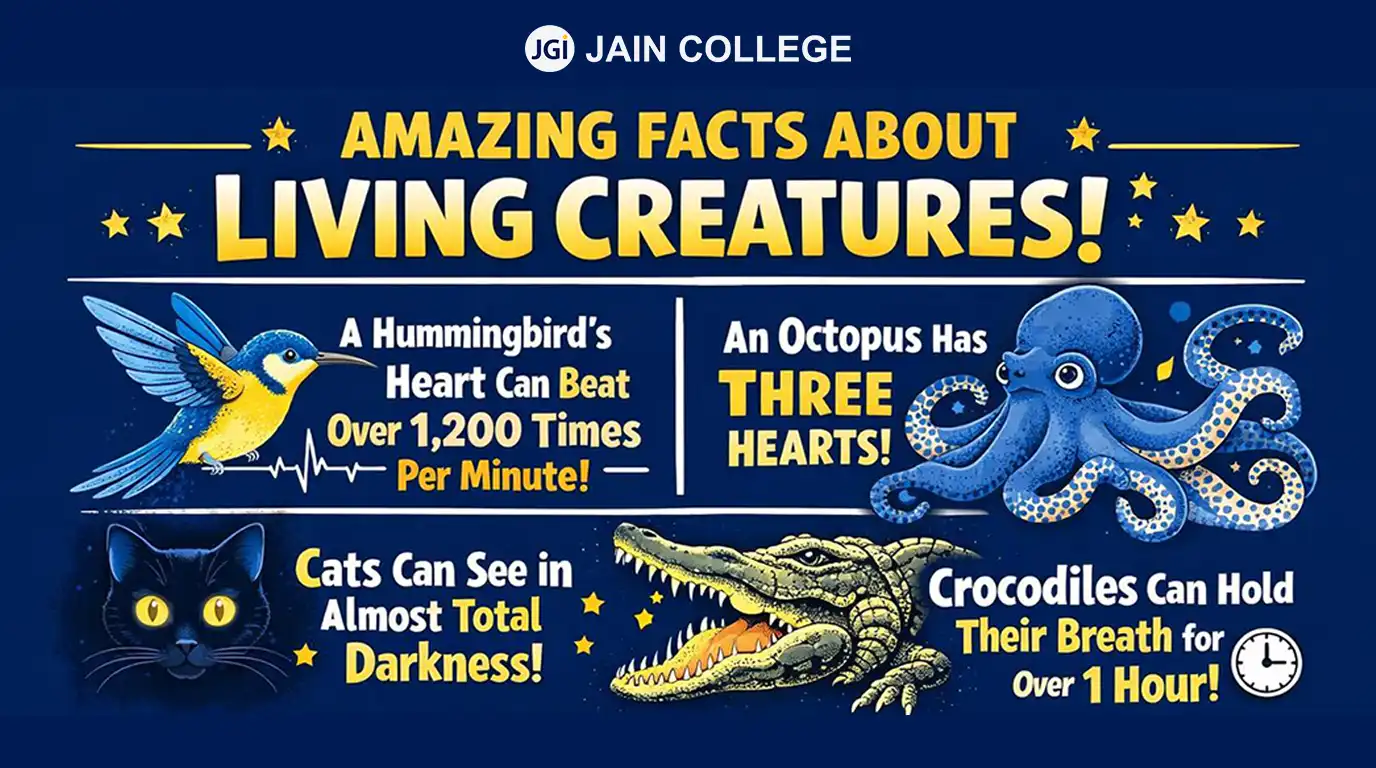
Let's learn some incredible facts about living creatures and about the most amazing species.
For example, touch-me-not (mimosa, chhui-mui, lajjalu) plants fold their leaves when we touch them
All living creatures existing on this planet Earth have special characteristics or features in order to survive in their habitat.
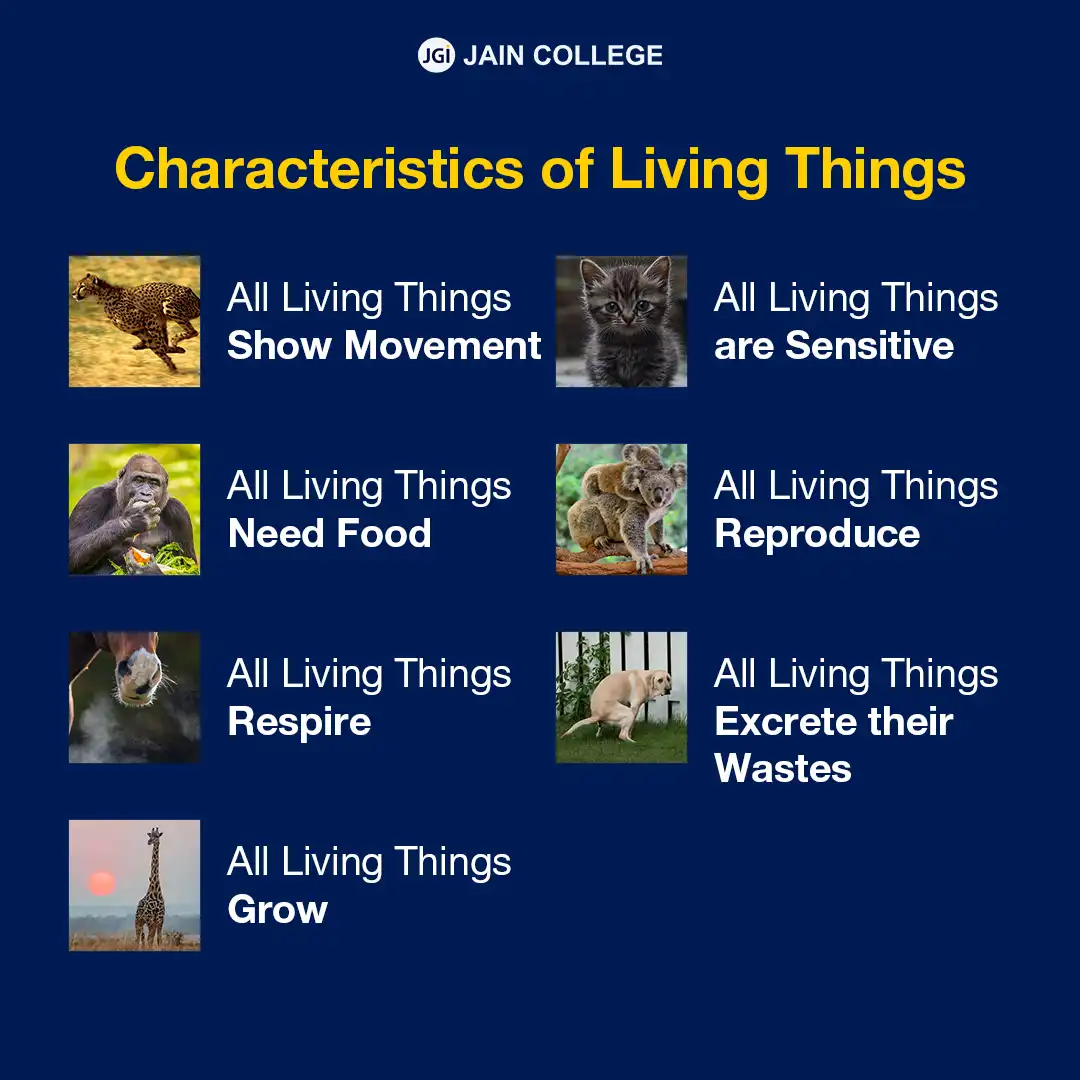
Key characteristics of living things include:
Living organisms move by themselves.
For example, the sundew plant closes its sticky leaves to trap insects, and the sunflower plant bends towards sunlight.
Every living being, including animals, birds, humans and plants, needs food for growth and development.
Respiration is the process by which living organisms release energy from the food they consume. Breathing is a part of the broader process known as respiration. In the process of breathing:
Growth refers to a permanent increase in size and body mass. All living things grow.
All living creatures respond to stimuli such as light, heat, sound, and touch.
For example, sunflower plants move toward the sun.
Animals also respond to stimuli and are sensitive to pain
For example: Frogs withdraw their limbs when exposed to painful stimuli.
*Note: Plants respond to stimuli but do not feel pain like animals.
Reproduction is the process by which living organisms produce new individuals of the same species. This biological process may be sexual or asexual, depending on the organism.
There are some living organisms, such as mules, worker bees and worker ants, sterile humans and certain hybrid animals, that cannot reproduce individually.
Removal of waste products from the body is called excretion. All living beings excrete.
| Do you know that plants also excrete? Yes. Plants excrete excess amounts of water and minerals in the form of small droplets on leaves. This biological process is called guttation |
Our ecosystem consists of biotic components, which include living organisms, and abiotic components, which include physical factors such as temperature, rainfall, wind, soil, and minerals.
The ecosystem is rich in variety. Researchers have identified and described millions of plants and animals, yet many remain unknown. The wide range of organisms in terms of size, colour, habitat, and physiological and morphological features. The diversity in morphological features leads us to seek the defining characteristics of living organisms.
Stay tuned to https://www.jaincollege.ac.in/blogs and explore more amazing facts about living creatures, animals, plants and more.
What new thing did you learn about living organisms today?
Share your thoughts in the comments below.
Anything or any event that prompts living beings to respond is called a stimulus.
Yes, plants also respond to stimuli.
Removal of waste products from the body is called excretion.
The essential conditions needed for a seed to germinate include air, water and a suitable temperature. Some seeds require specific light conditions to germinate, while some seeds germinate in dark conditions.
Some of the common characteristics shared by all living beings include:

JAIN PU College, a part of the renowned JGI Group, is committed to empowering students with quality education.
Beyond academics, the college ensures its online content reflects the same standard of excellence. Every blog and article is meticulously vetted and proofread by subject matter experts to ensure accuracy, relevance, and clarity. From insightful educational topics to engaging discussions, JAIN PU College's content is crafted to inform, inspire, and add value to its readers, reflecting the institution's commitment to intellectual growth and innovation.
View all Blogs