








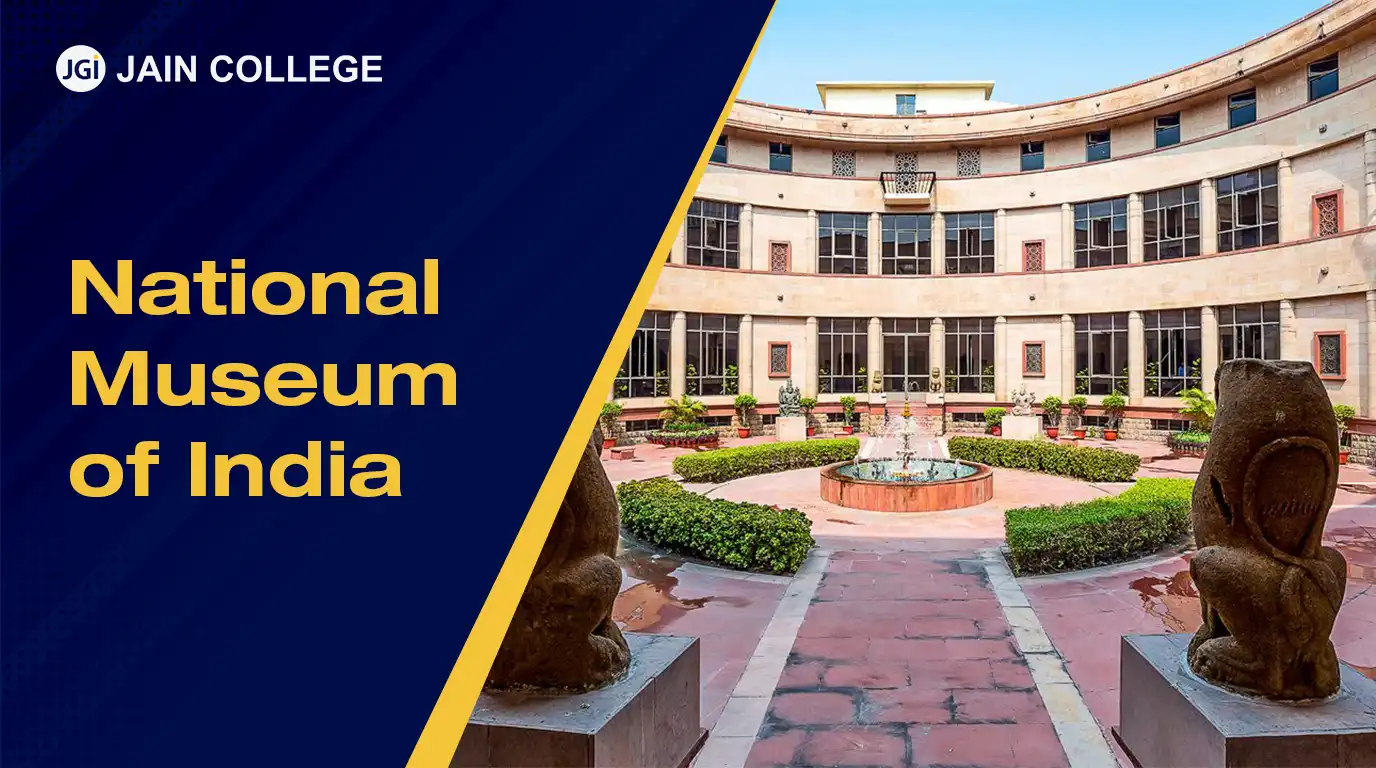
Established in 1949, the National Museum in New Delhi is one of India’s leading cultural institutions and operates under the Ministry of Culture.
Considered the premier museum in the country, it preserves more than 200,000 artefacts that represent nearly 5,000 years of history, art, and civilisation. Its origins are linked to the collection displayed at the Exhibition of Indian Art in London during 1947–48, which later became the foundation of the museum’s collection.
Key Highlights of the National Museum
Extensive Collections:
The museum houses more than 200,000 artefacts spanning nearly 5,000 years of Indian history. Its collection includes Harappan objects, Gupta-period sculptures, miniature paintings, manuscripts, textiles, coins, and decorative arts.
Galleries and Exhibitions:
The museum features galleries that showcase archaeology, inscriptions, paintings, manuscripts, and classical sculpture, offering visitors a broad view of India’s artistic and cultural heritage.
Historical Background:
The museum was inaugurated in 1949 at Rashtrapati Bhawan by C. Rajagopalachari. Its present building on Janpath, New Delhi, was opened in 1960.
Visitor Facilities:
The museum offers several facilities to ensure a comfortable visit, including accessible entry, wheelchair accessibility for elderly and differently abled visitors, seating areas, storage services, and designated spaces for food and beverages.
The National museum is one of India’s most important cultural institutions. It preserves the country’s heritage and helps visitors understand India’s rich history from ancient to modern times.
| Location: | Janpath, New Delhi |
| Timings | 10am–6pm (Tue–Fri), 10am–8pm (Sat–Sun) |
| Tickets: | ₹20 for adults ₹500 for foreign visitorsFree for students up to Class 12 with ID |
| Holiday: | Museum is usually closed Mondays |
| Best for: | Harappan artefacts, sculpture, manuscripts, decorative arts, anthropology collections |
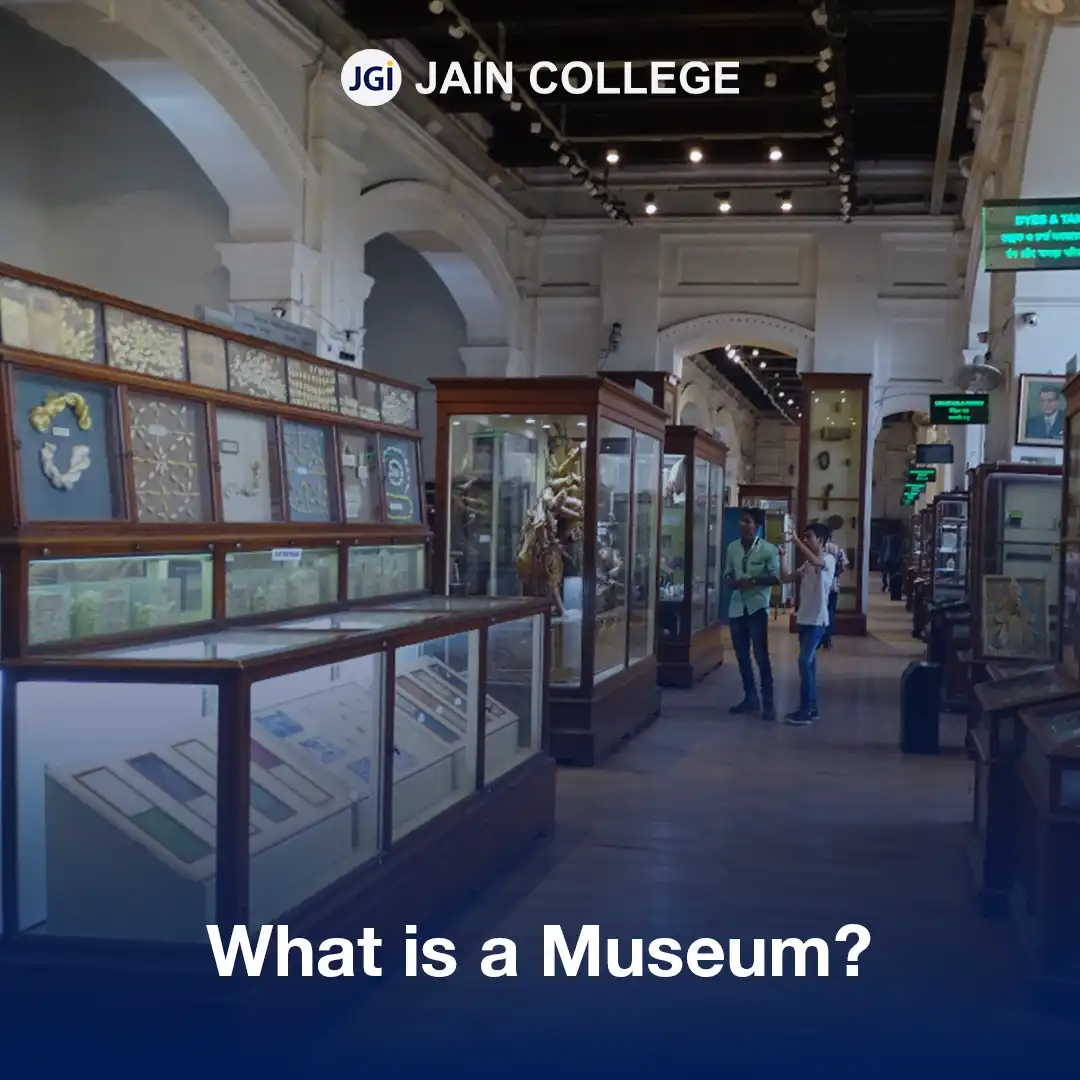
A museum can be defined as a permanent institution that collects, preserves, and makes available artefacts and other objects of scientific, artistic, or historical importance. These objects are displayed for public viewing in exhibitions that may be permanent or temporary.
A museum also conserves, researches, exhibits, and interprets objects of lasting value for study, education, and enjoyment.
There are different types of museums:
The word 'museum' has classical roots. It is derived from the Greek word "mouseion", which refers to the “seat of the Muses”.
The Muses were the nine Greek goddesses associated with the arts, learning, and inspiration. Originally, the term referred to a place of study, reflection, or philosophical discussion.
The Latin form of "mouseion" is museum, and in Roman times, the term was mainly associated with places for philosophical discussion.
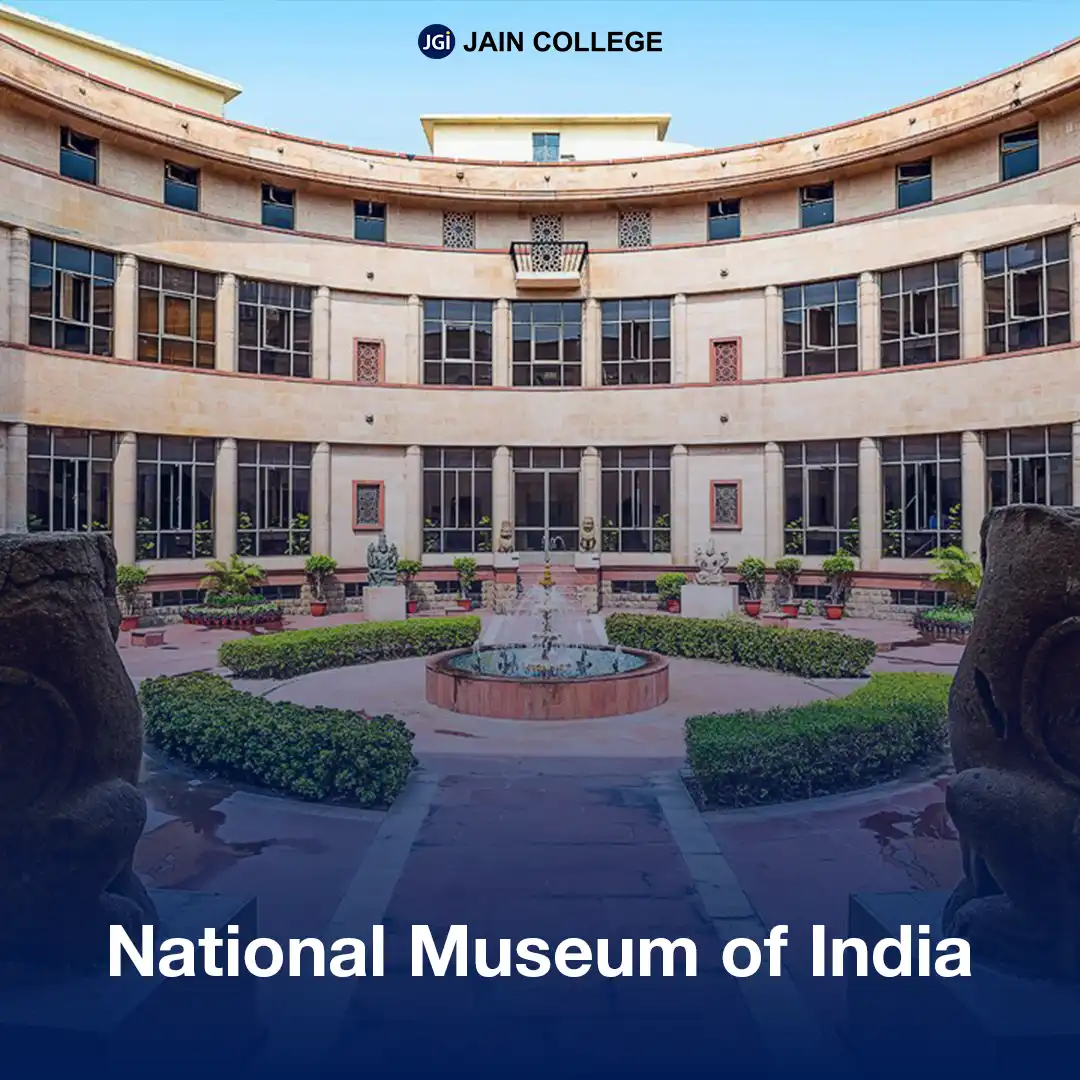
The National Museum of India, New Delhi, is one of the largest museums in the country, showcasing more than 200,000 artefacts spanning more than 5,000 years of history, including Harappan, Buddhist, Mughal, and tribal collections.
The National Museum, New Delhi, is directly under the administrative control of the Ministry of Culture, Government of India. The museum is financed by the Union Government of India.
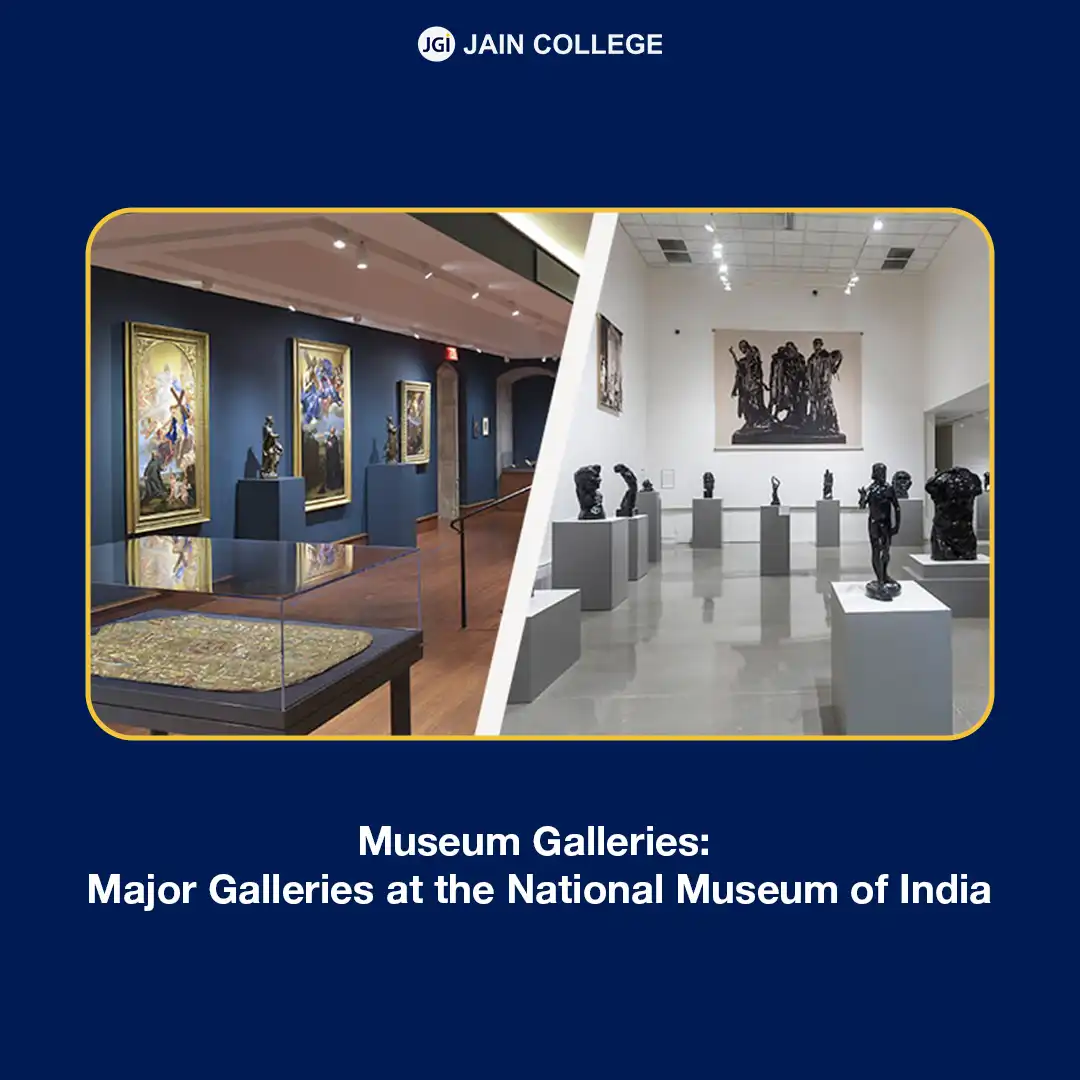
All the collections are displayed in several galleries. These galleries include:
| Ancient & Archaeological Collections: | Gupta ArtHarappan CivilisationSunga & Satavahana ArtKushan Art (Gandhara & Mathura, including Ikshavaku) |
| Medieval & Historical Art: | Buddhist ArtLate Medieval ArtEarly Medieval Art |
| Paintings & Manuscripts: | Indian Miniature Paintings |
| Decorative & Material Culture: | BronzesWood Carving GalleryDecorative Arts and Textiles |
| Specialised Collections: | Arms and ArmourMaritime HeritageEpigraphy and Numismatics |
| Cultural & Regional Exhibits: | Tradition, Art and ContinuityCentral Asian Antiquities (Part I)Tribal Lifestyle in North-East India |
| International Collections: | Pre-Columbian and Western Art |
| 10am to 6pm (Tuesday to Friday) |
| 10am to 8pm (Saturday and Sunday) |
| Adults: ₹20 |
| Students (up to Class 12 with ID cards): Free |
| Foreign visitors: ₹500 |
*Note: Ticket prices may change
The museum houses extensive collections spanning thousands of years, so visitors should plan their time based on their level of interest.
Nearby Attractions:
The museum is located in the heart of New Delhi, close to several iconic landmarks:
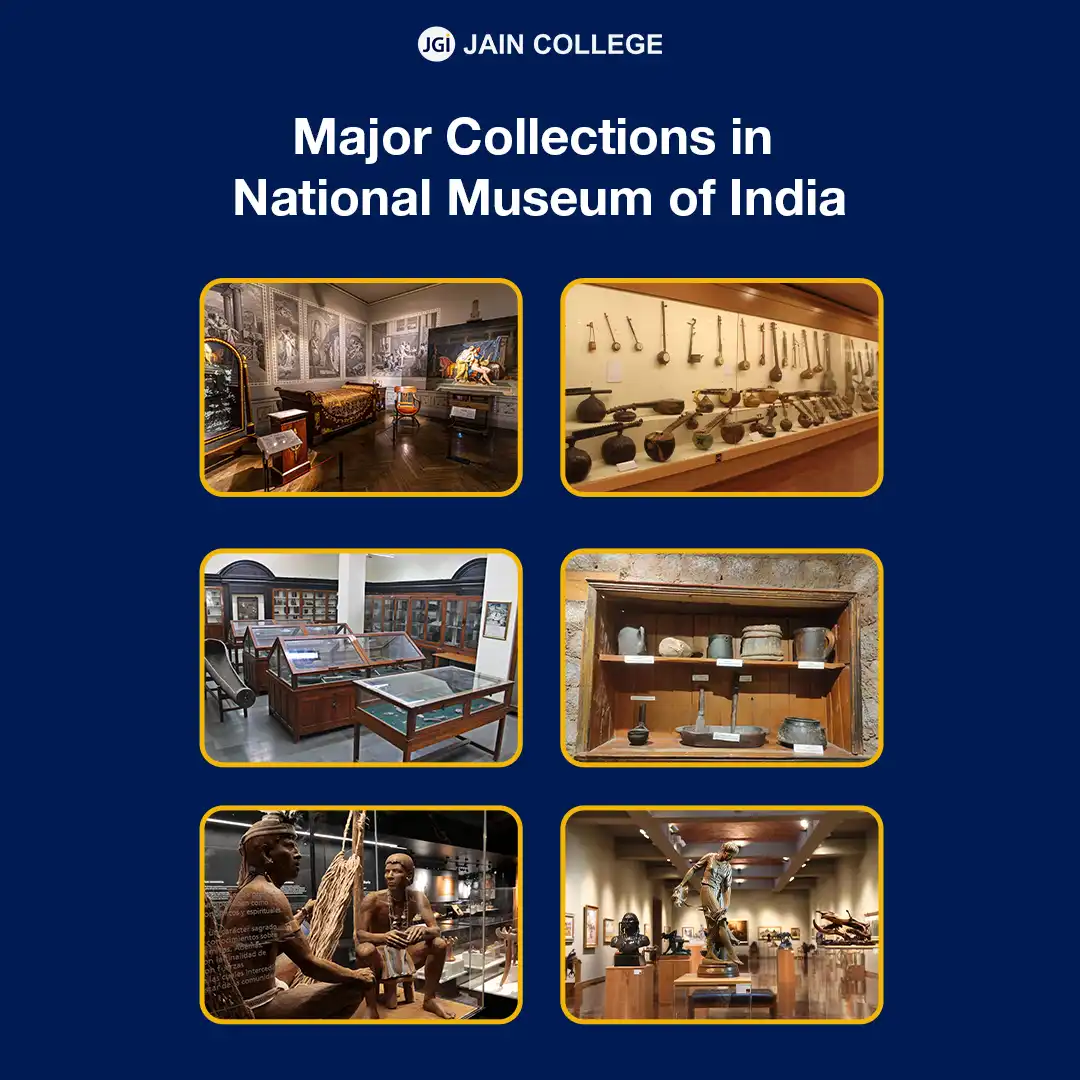
The National museum houses one of the world’s most significant collections of Harappan antiquities, with over 3,500 objects on permanent loan from the Archaeological Survey of India.
The collection includes artefacts from major Indus Valley sites, such as Harappa, Mohenjo-Daro, and Chanhudaro, offering valuable insights into urban life, craftsmanship, and the material culture of the Harappan civilisation.
This represents India’s age-old craft traditions in different materials. The collection includes wood, metal, ivory, glass, ceramic, and precious stones.
Other artistic techniques include carving, damascening, filigree, repoussé, enamel, inlay, and others.
The section also displays 1669 coins, along with five replicas, five measuring vessels, and some coins and rattees that were used in ancient times as weights and measures.
Shri P.N. Luthra, Smt. Indira Luthra, and Padmashri Smt. Sharan Rani Bakliwal, the leading sarod maestro in the country, were the donors who donated invaluable pieces to the museum.
The Luthra family contributed some rare tribal art objects, especially those from the North East, and Smt Bakliwal bestowed a part of her collection of musical instruments, first in 1980, then in 1982 and 2003.
The National museum has in its collection about 10,000 objects artistically conceived and related to the following:
These astonishingly colourful, exotic artefacts range from headgear, footwear, costumes, jewellery, paintings and statues pertaining to various tribes from the ‘region of the seven sisters’:
These are part of the masterpieces, mainly from the Elwin collection.
Among the non-Indian collections, the museum’s Central Asian Arts Collection is the richest, both qualitatively and quantitatively.
The chain of oases provided ideal conditions for the opening of two transcontinental trade routes, popularly known as the southern and northern Silk Routes, from around the 2nd century BC.
These routes connected China with parts of the eastern Mediterranean and the cities of India through several feeder routes.
Mrs Alice and Mr Nasli Heeramaneck gifted this fabulous collection to the National Museum in memory of the latter’s father, Mr Munchersha Heeramaneck. It includes works of art from the pre-Columbian period (pre-1492) in Central America and Latin America, especially Peru, Mexico, and Honduras. It offers visitors a chance to see the art of another early civilisation before colonisation.
Along with all these collections, the treasures of Indian museums also include the findings of Terracotta figurines at various sites of the Harappan Civilisation.
Some of these figurines include
Overall, the railing stone, the image with an inscription on the pedestal, and other collections display a remarkable achievement of the artists of this ancient culture.
The National Museum, located in the heart of New Delhi, the capital of India, brings to you objects of great aesthetic quality and historic significance from collections of major Indian museums.
The National museum was initially established with the objective of creating a lasting interest in Indian art and inspiring more visitors to enjoy the wonders of India’s great cultural legacy.
Today the museum holds approximately 2,00,000 objects representative of Indian and world history. The objects cover a time span of more than 5,000 years of Indian cultural heritage. The museum has several collections related to specialised fields.
Stay tunes to JAIN PU College Blogs to explore the beauty and depth of the National Museum of India and other related articles
Have you ever visited the National Museum of India? Share your experience in the comments below.
Museums are institutions that collect, preserve, study, and display objects of historical, cultural, artistic, or scientific significance.
The different types of museums are
'Treasures' are the objects of great aesthetic quality and historic value. In some instances an object is considered a ‘treasure’ in a particular museum.
The Treasures of Indian museums is a series that reflects the aesthetic sensibility of Indian artists and their patrons through the ages.
The anthropology collection of the National museum of India includes the following:
The National museum houses an extensive numismatic collection, including:

JAIN PU College, a part of the renowned JGI Group, is committed to empowering students with quality education.
Beyond academics, the college ensures its online content reflects the same standard of excellence. Every blog and article is meticulously vetted and proofread by subject matter experts to ensure accuracy, relevance, and clarity. From insightful educational topics to engaging discussions, JAIN PU College's content is crafted to inform, inspire, and add value to its readers, reflecting the institution's commitment to intellectual growth and innovation.
View all Blogs