









Blog Summary:
India has 44 UNESCO World Heritage sites (as of 2026), including 36 cultural, seven natural, and one mixed site recognised for their global historical, cultural, or ecological importance.
UNESCO recognition highlights the importance of preserving India’s cultural and natural treasures for future generations while promoting tourism, education, and global cultural awareness.
India ranks among the countries with the highest number of UNESCO World Heritage sites, reflecting its diverse history, architecture, biodiversity, and traditions.
| Category | Number of Sites |
| Cultural | 36 |
| Natural | 7 |
| Mixed | 1 |
| Total | 44 |
India has one of the highest numbers of UNESCO World Heritage Sites in the world, reflecting its deep-rooted cultural legacy and rich ecological diversity.
India is renowned worldwide for its rich cultural heritage.
With a history spanning over 5,000 years or more, India is a globally renowned tourist destination, making it ideal for learning about ancient and medieval civilisations.
Every era and dynasty has left behind architectural heritage, resulting in scores of fabulous World Heritage sites.
Heritage tourism is an important segment of tourism in India, focusing on the cultural heritage of the destinations and historical places. Heritage tourism includes cultural, historical, and natural resources that reflect India’s legacy.
There are several UNESCO-recognised heritage sites in India.
India’s authentic wealth and influence in crafts, culture, art, philosophy, mysticism, music, architecture, and tradition attracts tourists, history buffs, and scholars from all over the world.
From ancient temples to impressive Mughal forts and rock-cut Buddhist caves, these sites showcase India’s rich cultural and historical heritage. These monuments represent the country’s complex and diverse culture.
As of February 2026, India boasts 44 inscribed UNESCO World Heritage sites. These include:
Key sites range from the iconic Taj Mahal to the Western Ghats and the recent addition of Santiniketan. Additionally, India's tentative list includes 69 properties, with 7 new natural sites added in September 2025.
As of June 2010, 195 States Parties (current UNESCO membership) have approved the World Heritage Convention.
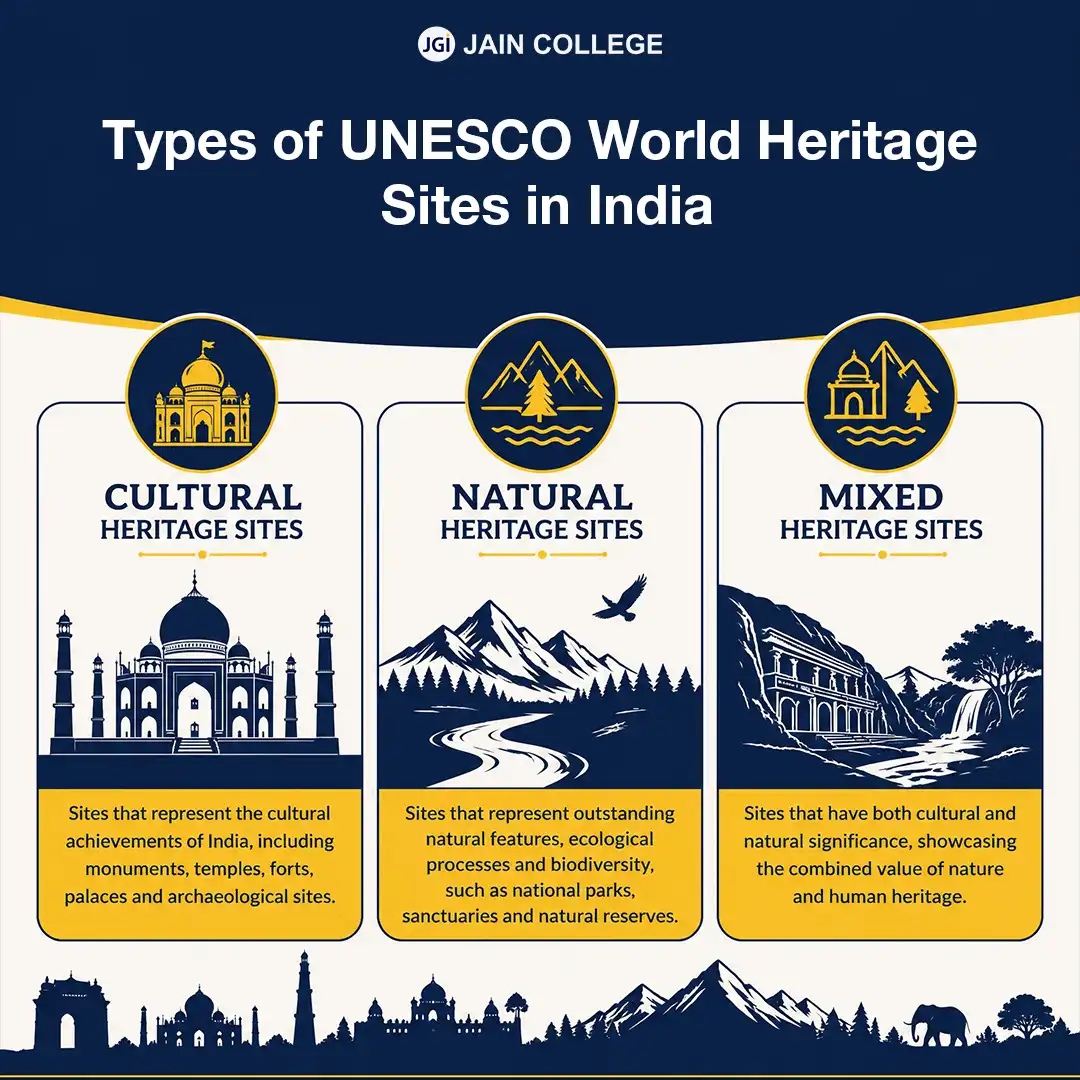
These sites are the essence of India’s history. Cultural sites include monuments, temples, forts, and cities that reflect architectural brilliance and human creativity. From Mughal masterpieces to ancient cave paintings, these sites span thousands of years.
Natural sites highlight India’s biodiversity. These include forests, mountains, rivers, and wildlife reserves that are crucial for ecological balance.
India has just one mixed site, combining both cultural and natural significance. This makes it especially unique and rare.
Here is the complete list of India’s 44 UNESCO World Heritage sites 2026
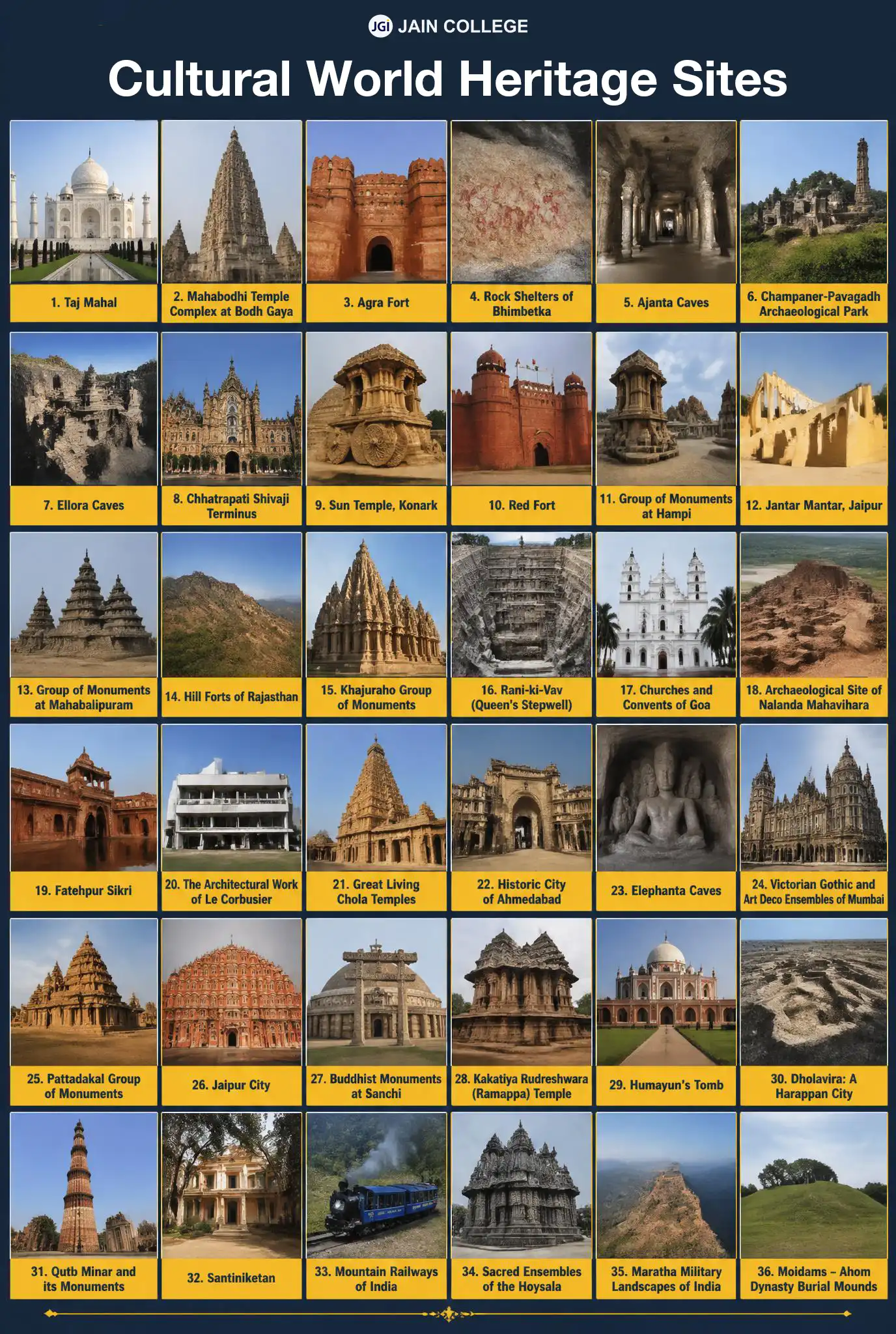
| Taj Mahal | Mahabodhi Temple Complex at Bodh Gaya |
| Agra Fort | Rock Shelters of Bhimbetka |
| Ajanta Caves | Champaner-Pavagadh Archaeological Park |
| Ellora Caves | Chhatrapati Shivaji Terminus |
| Sun Temple, Konark | Red Fort |
| Group of Monuments at Hampi | Jantar Mantar, Jaipur |
| Group of Monuments at Mahabalipuram | Hill Forts of Rajasthan |
| Khajuraho Group of Monuments | Rani-ki-Vav (Queen’s Stepwell) |
| Churches and Convents of Goa | Archaeological Site of Nalanda Mahavihara |
| Fatehpur Sikri | The Architectural Work of Le Corbusier |
| Great Living Chola Temples | Historic City of Ahmedabad |
| Elephanta Caves | Victorian Gothic and Art Deco Ensembles of Mumbai |
| Pattadakal Group of Monuments | Jaipur City |
| Buddhist Monuments at Sanchi | Kakatiya Rudreshwara (Ramappa) Temple |
| Humayun’s Tomb | Dholavira: A Harappan City |
| Qutb Minar and its Monuments | Santiniketan |
| Mountain Railways of India | Sacred Ensembles of the Hoysala |
| Maratha Military Landscapes of India | Moidams – Ahom Dynasty Burial Mounds |
| Western Ghats |
| Keoladeo National Park |
| Kaziranga National Park |
| Manas Wildlife Sanctuary |
| Sundarbans National Park |
| Nanda Devi and Valley of Flowers National Parks |
| Great Himalayan National Park Conservation Area |
| Khangchendzonga National Park is recognised for its cultural and natural significance. |
Here is a state-wise list of World Heritage sites in India, recognised by UNESCO for their outstanding cultural and natural importance.
| State / Region | UNESCO Sites | Type |
| Assam | Kaziranga National ParkManas Wildlife Sanctuary | Natural |
| Bihar | Mahabodhi TempleNalanda Mahavihara | Cultural |
| Chandigarh (UT) | Le Corbusier Architectural Work | Cultural |
| Delhi (UT) | Red FortQutb MinarHumayun’s Tomb | Cultural |
| Goa | Churches and Convents of Goa | Cultural |
| Gujarat | DholaviraRani ki VavAhmedabad CityChampaner-Pavagadh | Cultural |
| Himachal Pradesh | Great Himalayan National Park | Natural |
Karnataka | HampiPattadakalSacred Ensembles of the Hoysala | Cultural |
| Madhya Pradesh | SanchiKhajurahoBhimbetka | Cultural |
| Maharashtra | ElephantaAjanta & ElloraMumbai Art DecoChhatrapati Shivaji Terminus (Mumbai) | Cultural |
| Odisha | Sun Temple, Konark | Cultural |
| Rajasthan | Hill FortsJaipur CityJantar MantarKeoladeo Park | Natural site |
| Sikkim | Khangchendzonga National Park | Mixed |
| Tamil Nadu | Chola TemplesMahabalipuram | Cultural |
| Telangana | Kakatiya Rudreshwara (Ramappa) Temple | Cultural |
| Uttarakhand | Nanda Devi & Valley of Flowers | Natural |
| Uttar Pradesh | Taj MahalAgra Fort | Natural site |
| West Bengal | SantiniketanSundarbans | Natural site |
Multi-State | Mountain Railways | Cultural |
| The Western Ghats mountain range | Natural |
UNESCO recognises World Heritage sites as cultural or natural places that hold outstanding universal value for humanity.
As of 2026, India has 44 UNESCO World Heritage sites, including 36 cultural, 7 natural, and 1 mixed site.
Here is a detailed overview of some of the UNESCO World Heritage sites in India
Taj Mahal
Location: Agra, Uttar Pradesh, India.
Significance: Symbol of love, built by Emperor Shah Jahan for his wife Mumtaz Mahal.
History: Construction began in 1632 and was completed in 1653, showcasing Mughal architecture.
Additional Facts: The Taj Mahal, one of the New Seven Wonders of the World, attracts millions of visitors annually.
Agra Fort
Location: Agra, Uttar Pradesh, India
Significance: It stands as the important 16th-century Mughal monument known as the Red Fort of Agra.
This powerful fortress of red sandstone encompasses, within its 2.5-km-long enclosure walls, the imperial city of the Mughal rulers. It comprises many fairy-tale palaces, such as the Jahangir Palace and the Khas Mahal, built by Shah Jahan; audience halls, such as the Diwan-i-Khas; and two stunning mosques.
Ajanta Caves
Location: Aurangabad district of Maharashtra, India
Significance: The first Buddhist cave monuments at Ajanta date from the 2nd and 1st centuries B.C. During the Gupta period (5th and 6th centuries A.D.), many more richly decorated caves were added to the original group. The paintings and sculptures of Ajanta, considered masterpieces of Buddhist religious art, have had a considerable artistic influence.
Ellora Caves
Location: Aurangabad district of Maharashtra, India
Significance: These 34 monasteries and temples, extending over more than 2 km, were dug side by side in the wall of a high basalt cliff, not far from Aurangabad, in Maharashtra.
Ellora, with its uninterrupted sequence of monuments dating from A.D. 600 to 1000, brings the civilisation of ancient India to life. The Ellora complex is not only a unique artistic creation but also a technological achievement. However, with its sanctuaries devoted to Buddhism, Hinduism and Jainism, it demonstrates the spirit of tolerance that was characteristic of ancient India.
Sun Temple, Konark
Location: Eastern shores of the Indian subcontinent, Konark, Odisha
Significance: Built in the 13th century. The Sun temple at Konark is one of India's most famous Brahman sanctuaries.
On the shores of the Bay of Bengal, bathed in the rays of the rising sun, the temple at Konark is a monumental representation of the sun god Surya's chariot; its 24 wheels are decorated with symbolic designs, and it is led by a team of six horses.
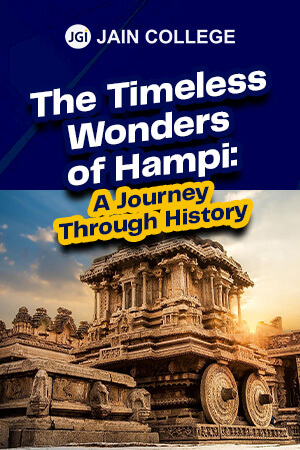
Group of Monuments at Hampi
Location: Tungabhadra basin in Central Karnataka, Bellary District.
Significance: Located in the heart of the country, the modest and monumental Hampi was the last capital of the Vijayanagara Empire.
Its wealthy princes built Dravidian temples and palaces, which won the admiration of tourists between the 14th and 16th centuries.
Conquered by the Deccan Muslim confederacy in 1565, the city was pillaged over a period of six months before being abandoned.
Group of Monuments at Mahabalipuram
Location: Mahabalipuram, Tamil Nadu
Significance: This group of sanctuaries, founded by the Pallava kings, was carved out of rock along the Coromandel coast in the 7th and 8th centuries.
It is known especially for its rathas (temples in the form of chariots), mandapas (cave sanctuaries), giant open-air reliefs such as the famous 'Descent of the Ganges', and the ‘Shore Temple’ (Temple du Rivage), with thousands of sculptures to the glory of Shiva.
Khajuraho Group of Monuments
Location: Chhatarpur, Madhya Pradesh
Significance: The temples at Khajuraho were built during the Chandella dynasty, which reached its apogee between 950 and 1050.
Only about 20 temples remain; they fall into three distinct groups and belong to two different religions – Hinduism and Jainism.
The temples at Khajuraho achieve a harmonious blend of architecture and sculpture.
The Temple of Kandariya is decorated with a profusion of sculptures that are among the greatest masterpieces of Indian art.
Churches and Convents of Goa
Location: Old Goa, Goa
Significance: The churches and convents of Goa, the former capital of the Portuguese Indies, particularly the Church of Bom Jesus, which contains the tomb of St Francis Xavier, illustrate the evangelisation of Asia. These monuments were influential in spreading the forms of Manueline, Mannerist, and Baroque art in all the countries of Asia where missions were established.
Fatehpur Sikri
Location: Agra district of Uttar Pradesh, India
Significance: Built during the second half of the 16th century by the Emperor Akbar
Fatehpur Sikri (the City of Victory) was the capital of the Mughal Empire for only some 10 years.
The complex of monuments and temples, all in a uniform architectural style, includes one of the largest mosques in India, the Jama Masjid.
Great Living Chola Temples
Location: Various locations in Tamil Nadu, India.
Significance: Three major temples representing the Chola dynasty's architecture and artistic achievements.
History: The Brihadeeswarar Temple (Thanjavur), Gangaikonda Cholapuram, and Airavatesvara Temple (Darasuram) built during the Chola period (between the 11th and 12th centuries). Additional Facts: Brihadeeswarar Temple has one of the tallest vimanas (temple towers) in the world. Reflects the Chola's grandeur in temple
Elephanta Caves
Location: Elephanta Island, Mumbai, Maharashtra, India.
Significance: Ancient rock-cut caves housing Primarily Hindu sculptures (Shaivite tradition).
History: Created between the 5th and 7th centuries. Represents primarily shaivite (Hindu) art and culture.
Additional Facts: The main cave features a colossal sculpture representing three aspects of Shiva, not the Hindu trinity.
Pattadakal Group of Monuments
Location: Bagalkot district of northern Karnataka, India.
Significance: Pattadakal reached the pinnacle of its glory during the reign of the Chalukyan kings. Pattadakal was even used as a ceremonial centre, where kings were crowned and commemorated.
Additional Facts: Pattadakal has a cluster of 10 major temples, each displaying intriguing Chalukyan architectural styles.
Qutb Minar and its Monuments
Location: Delhi, India.
History: •Qutub Minar was built by Qutb-ud-din Aibak in 1193.
Significance: Iconic Islamic architectural complex, featuring the Qutub Minar and surrounding monuments.
Other structures, like Quwwat-ul-Islam Mosque and the Iron Pillar, were added by successive rulers.
Additional Facts: Qutub Minar is a UNESCO World Heritage Site. • Represents early Indo-Islamic architecture in India.
Red Fort
Location:Delhi, India
History: Built by Emperor Shah Jahan in the 17th century.
Significance: The historic fort served as the main residence of Mughal emperors
The fort witnessed significant historical events, including India's Independence Day celebrations.

Western Ghats
Location: Along the western edge of India.
Significance: Biodiversity hotspot with diverse ecosystems.
History: One of the world's eight "hottest hotspots" of biological diversity.
Home to numerous endemic species.
Additional Facts: Critical for the Indian monsoon and regional climate regulation. Supports numerous rare and threatened species.
Keoladeo National Park
Location: Bharatpur, Rajasthan, India.
Significance: Renowned avifauna sanctuary, formerly known as Bharatpur Bird Sanctuary.
History: Created by Maharaja Suraj Mal in the 18th century as a waterfowl hunting ground.
Declared a national park in 1982
Additional Facts: A Ramsar Wetland Site and a UNESCO World Heritage Site.
Home to over 370 bird species, including the rare Siberian Crane.
Kaziranga National Park
Location: Assam, India.
Significance: Conservation success for the Indian one-horned rhinoceros.
History: Established in 1905 as a reserve forest. Home to diverse wildlife, including elephants and tigers.
Additional Facts: It is a UNESCO site known for its unique biodiversity and successful conservation efforts. It is also a Tiger Reserve and Important Bird Area.
Manas Wildlife Sanctuary
Location: Assam, India.
Significance: Home to the rare Assam-roofed turtle and the Bengal florican.
History: Designated a sanctuary in 1928, a UNESCO site in 1985.
Poaching and human encroachment pose a threat to these species.
Additional Facts: A Project Tiger reserve and Elephant Reserve. These reserves are crucial for the conservation of endangered species.
Sundarbans National Park
Location: West Bengal, India
Significance: Largest mangrove forest, home to the Bengal tiger
History: Formed by the delta of the Ganges, Brahmaputra, and Meghna rivers.
Rich biodiversity with unique flora and fauna.
Additional Facts: • Habitat for the endangered Bengal tiger. • Unique ecosystem with a complex network of tidal waterways.
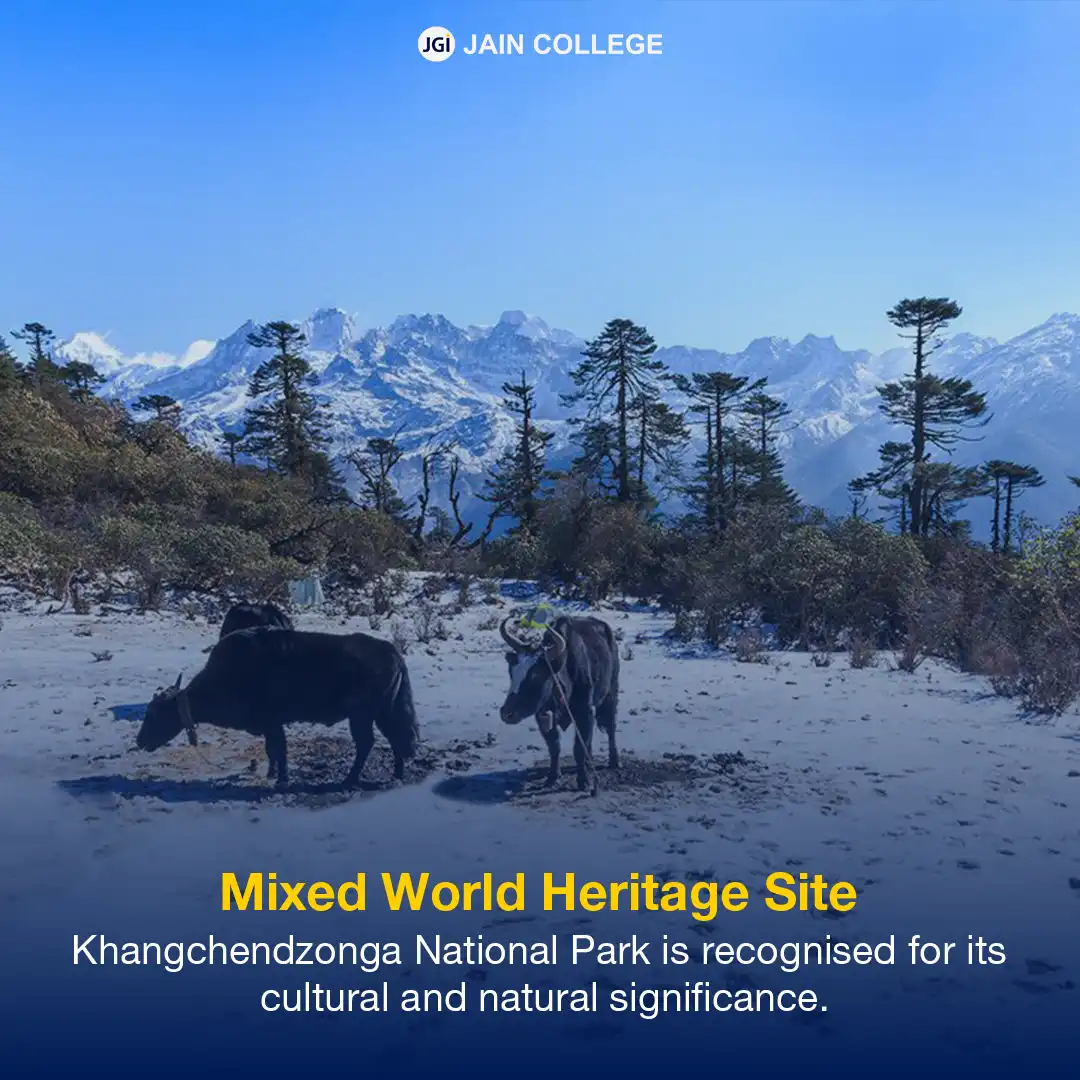
Khangchendzonga National Park
Location: Sikkim, India.
Significance: Holding immense cultural significance as a sacred landscape, or Beyul, for Tibetan Buddhists and Mayel Lyang for the Lepcha people. Features glaciers, alpine meadows, valleys, lakes, and dense forests. Sacred landscape for the Musk deer, numerous rare bird species, the red panda, and the snow leopard.

A UNESCO World Heritage Site is more than just a tourist attraction—it’s a global treasure recognised for its outstanding cultural, historical, or natural value. Think of it like a hall of fame for places that define human civilisation and Earth’s natural beauty. These sites are protected under an international agreement to ensure they are preserved for future generations.
In India, this concept becomes even more fascinating because the country is like a living museum. From ancient temples carved out of mountains to dense forests teeming with wildlife, every site tells a story. When a place earns UNESCO status, it’s not just India celebrating—it’s the entire world acknowledging its importance.
The World Heritage Convention, adopted in 1972, is the foundation behind these recognitions. Countries nominate sites, and expert bodies evaluate them based on strict criteria. Only those with “Outstanding Universal Value” make it to the list.
India has embraced this mission wholeheartedly. With centuries of history and unmatched biodiversity, it has become one of the most prominent contributors to the UNESCO list globally.
The recognition of these sites by UNESCO serves as a significant reminder of the need for preservation and conservation. It is a societal duty to safeguard these cultural treasures for future generations to come.
The Heritage sites in India are not just markers of history. They are also a repository of wisdom, offering invaluable insights into the region's past glory, cultural heritage, and architectural genius that still evoke awe worldwide.
Stay tuned to JAIN PU College's blogs and discover more about India's famous historical places, pilgrimages, wildlife sanctuaries, religious sites, hill stations, and other tourist attractions in India.
Have you visited any World Heritage sites, such as the Taj Mahal or Hampi? Share your travel experience with us!
Share your thoughts in the comments below.
Kaziranga National Park, located in the northeastern state of Assam, is known for its wildlife conservation efforts; the park is home to two-thirds of the world’s population of endangered one-horned rhinoceroses.
Nanda Devi and Valley of Flowers National Parks, located in the Northern Indian state of Uttarakhand, are rich in biodiversity and dominated by rugged Nanda Devi. It is called the second-highest mountain, at 7,817 metres.
The Great Living Chola temples, located in the state of Tamil Nadu, comprise three temples:
The old walled City of Jaipur – known as the Pink City. This city includes nine city gates, royal palaces, havelis, temples, and other exceptional architectural sites
The Red Fort, located in old Delhi, is also known as Lal Qila.
It is one of three UNESCO World Heritage sites in Delhi, and this fort is named the Red Fort or Lal Qila due to the presence of huge red sandstone boundary walls.

JAIN PU College, a part of the renowned JGI Group, is committed to empowering students with quality education.
Beyond academics, the college ensures its online content reflects the same standard of excellence. Every blog and article is meticulously vetted and proofread by subject matter experts to ensure accuracy, relevance, and clarity. From insightful educational topics to engaging discussions, JAIN PU College's content is crafted to inform, inspire, and add value to its readers, reflecting the institution's commitment to intellectual growth and innovation.
View all Blogs