









(Ref)
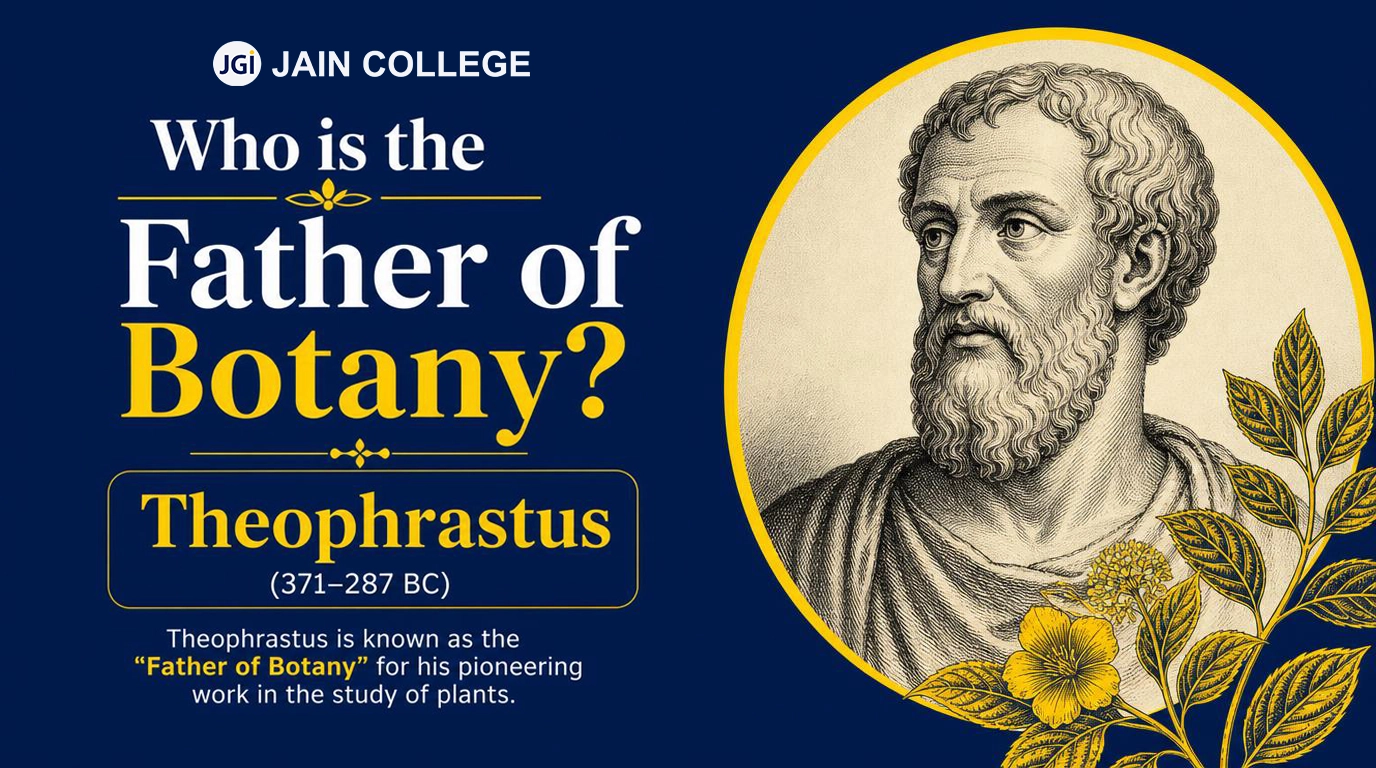
The Father of Botany is Theophrastus (371–287 BC), a Greek philosopher and scientist who was the first to systematically study and classify plants. His landmark works, Historia Plantarum and De Causis Plantarum, documented plant structure, growth, reproduction, and classification, laying the foundation of modern botany and influencing botanical research for more than 1,500 years
| Topic | Details |
| Full Name | Theophrastus |
| Birth | 371 BC |
| Death | 287 BC |
| Nationality | Greek |
| Known As | Father of Botany |
| Teacher | Aristotle |
| Major Books | Historia Plantarum, De Causis Plantarum |
| Contribution | Scientific study and classification of plants |
Here is a detailed overview:
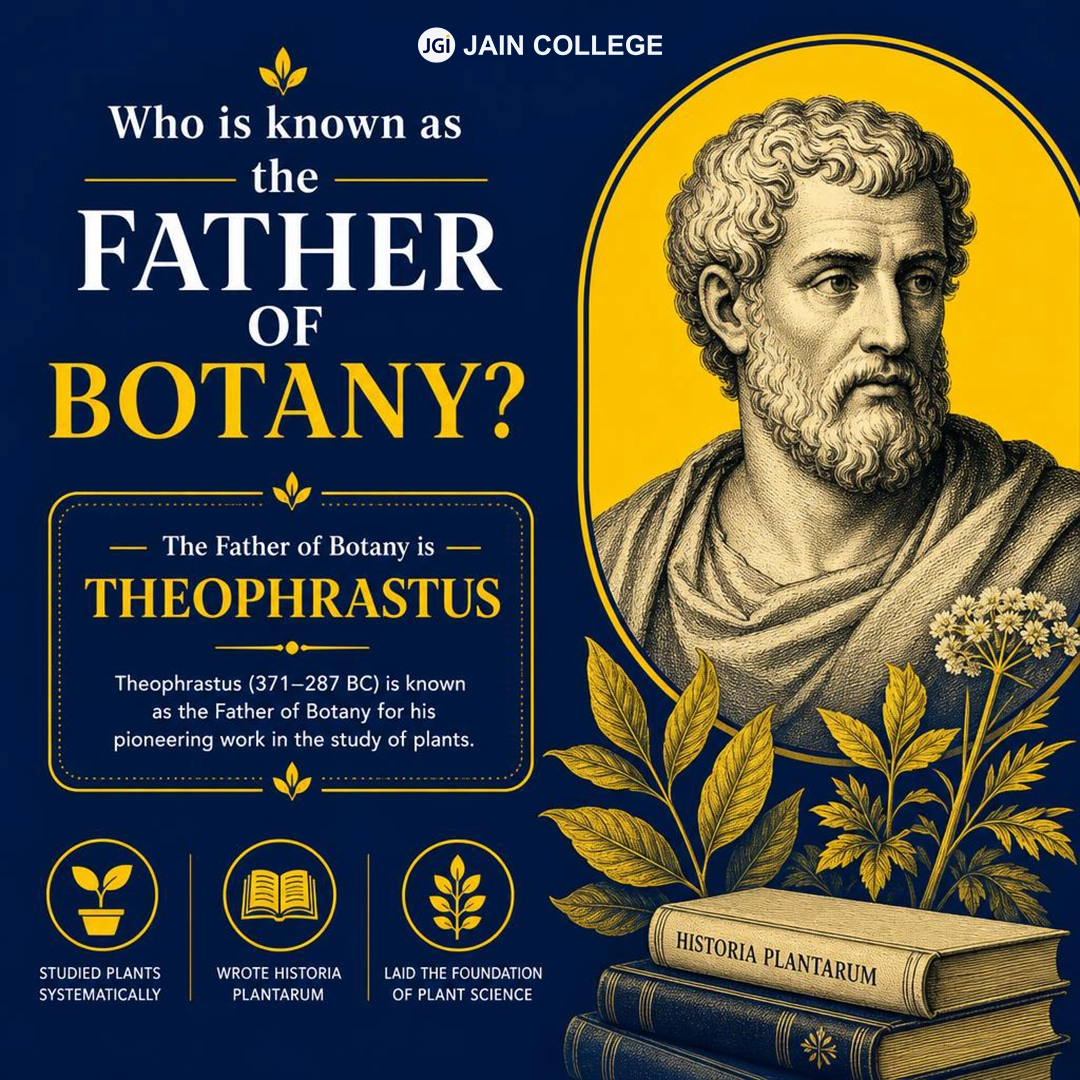
Theophrastus is known as the Father of Botany because he was the first scientist to systematically study and classify plants based on their characteristics.
A Greek philosopher and student of Aristotle, he wrote important botanical works such as Historia Plantarum and De Causis Plantarum, which laid the foundation for modern plant science.
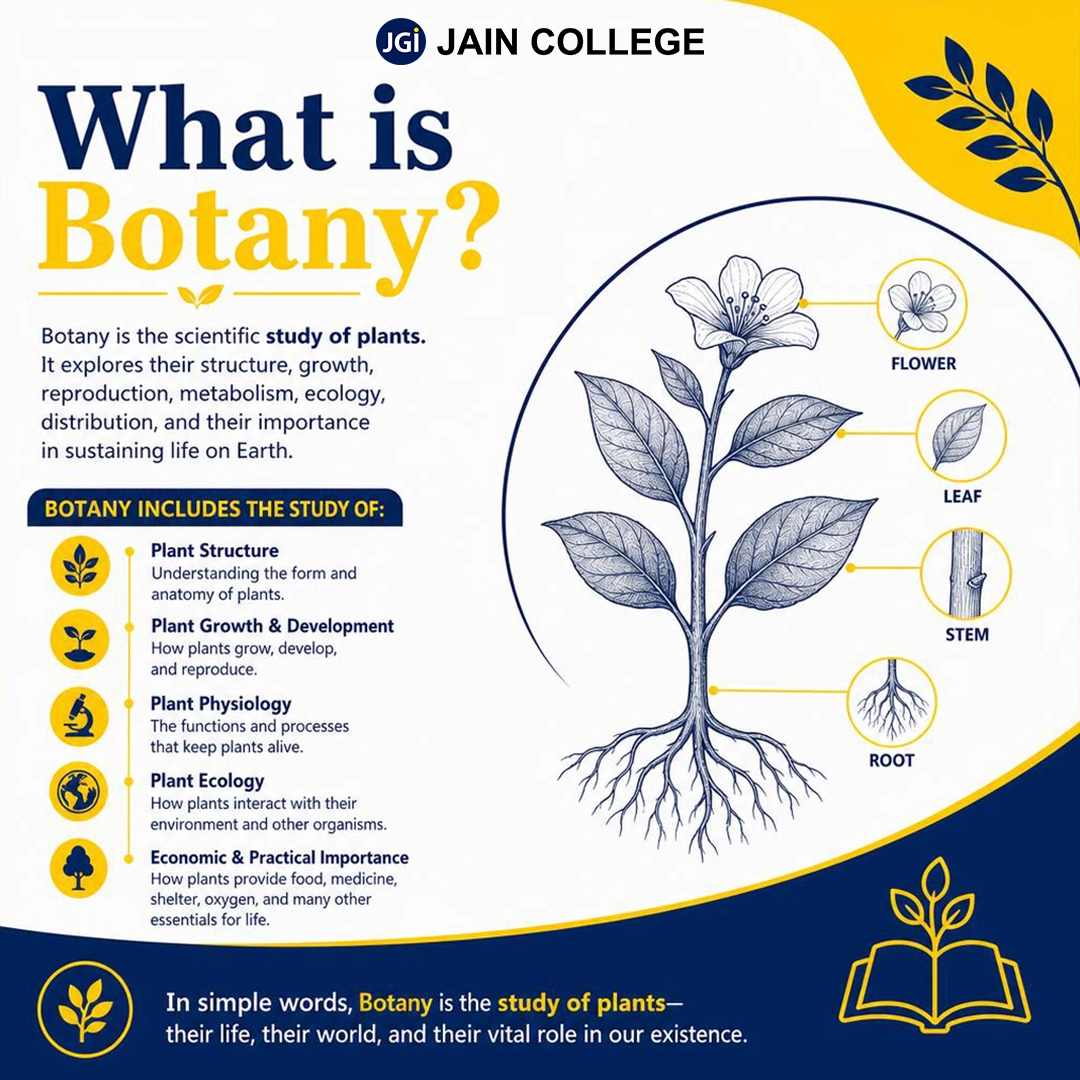
Botany is the scientific study of plants and a major branch of biology. It encompasses related disciplines such as mycology (the study of fungi) and phycology (the study of algae). Botanists study approximately between 350,000 and 410,000 known species of land plants, exploring their structure, function, growth, genetics, distribution, and interactions with other organisms. Botany plays a vital role in agriculture, food production, environmental conservation, and food security, and it also helps us understand the complex relationship between plants and human societies.
The term "botany" comes from the Ancient Greek word:
The study of Botany focuses on plant life and is important to ecosystems and agriculture.
Botany is also known as:
Importance of Botany:
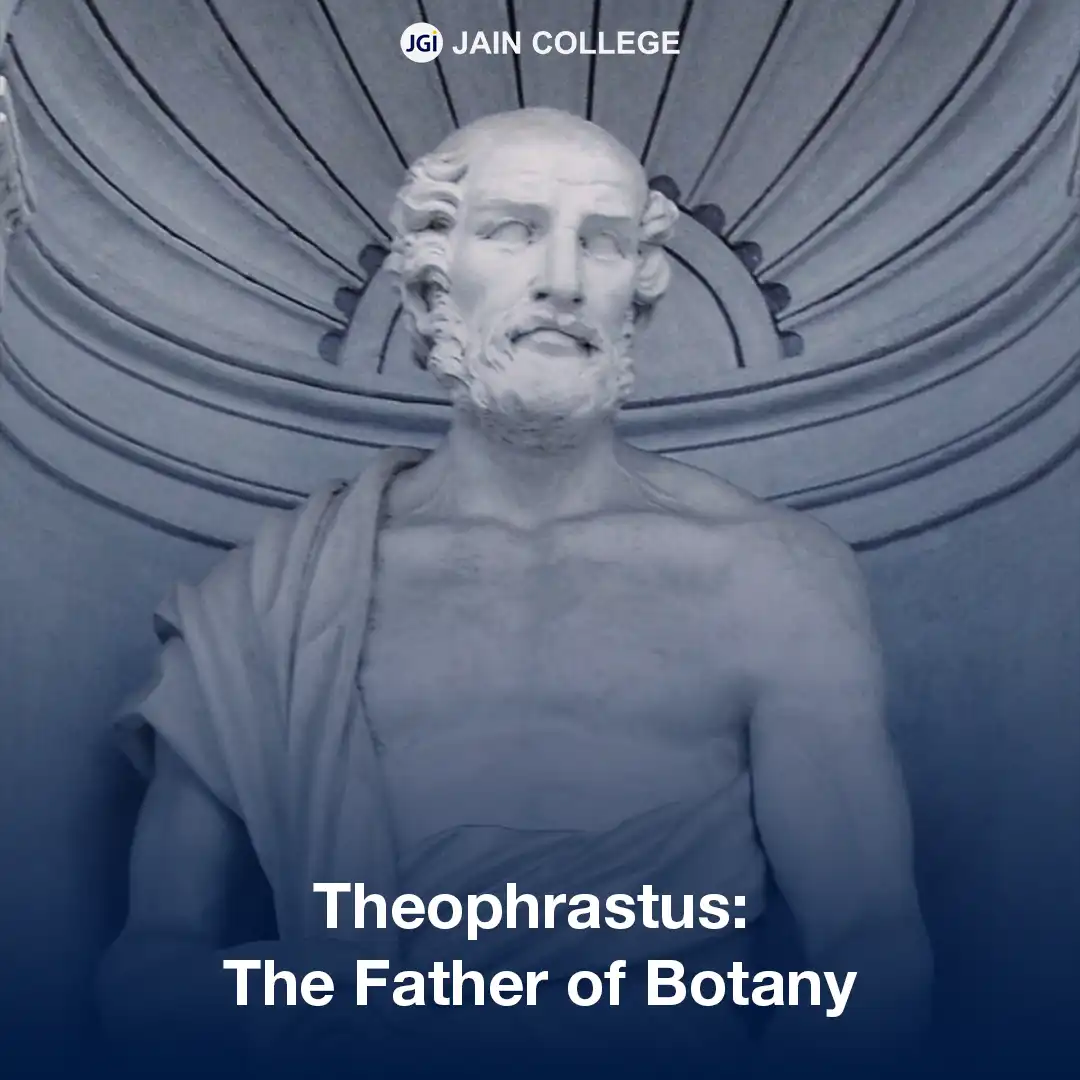
Theophrastus was a Greek philosopher and botanist born in 371 BCE on the island of Lesbos.
He developed a system for classifying plants into four groups according to their growth habits and stem structure, establishing the basis for modern plant taxonomy.
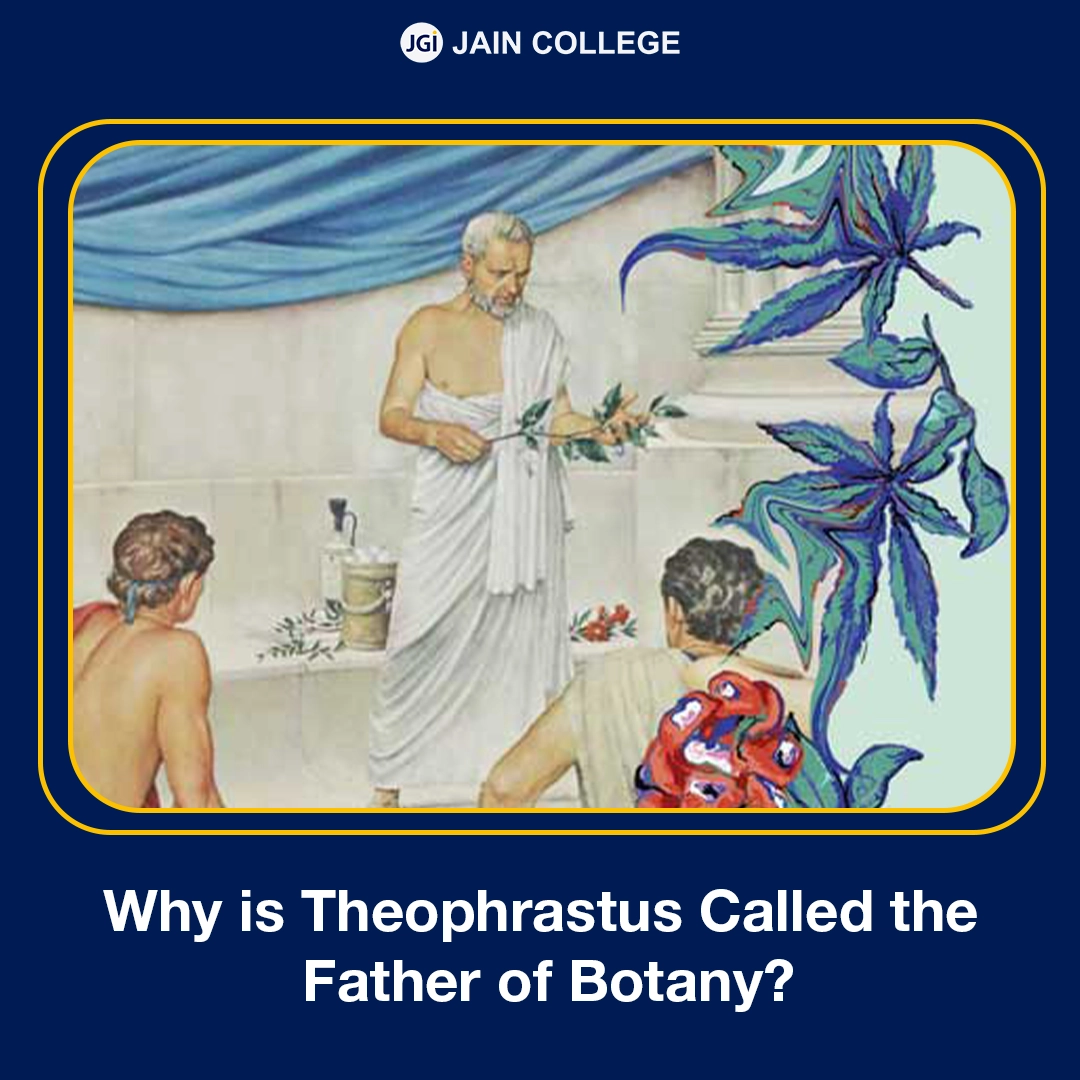
Theophrastus was a Greek philosopher; his writings were based on the classification of plants. He was a student of Plato and a friend of Aristotle.
He succeeded Aristotle as the head of the Peripatetic School at the Lyceum in Athens.
He led the school for more than three decades and wrote extensively on philosophy and the natural sciences.
Theophrastus, an ancient Greek philosopher and naturalist, is regarded as the Father of Botany for his systematic study of plant structure, growth, classification, and reproduction.
He was among the earliest scholars to systematically study plants using observation and classification. His work transformed plant study from practical knowledge into systematic scientific observation.
Theophrastus's approach was innovative for its time because he studied plants systematically through observation, classification, and documentation. While many ancient civilisations possessed extensive knowledge of plants and their uses, He was one of the first scholars to organise this knowledge into a structured framework.
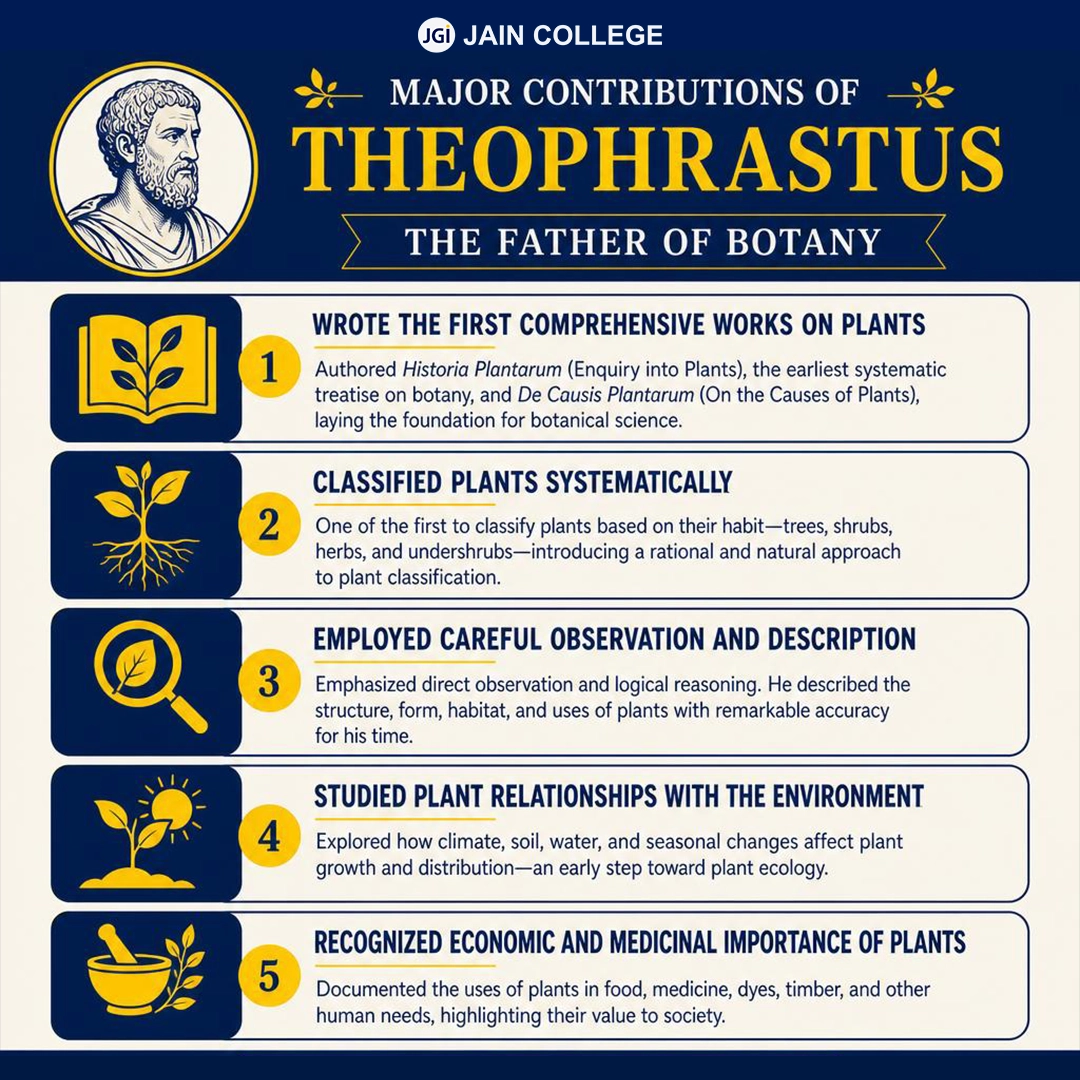
Theophrastus is known as the Father of Botany for several key reasons, including:
| Year (Approx.) | Event |
| 371 BCE | Born in Eresos on the island of Lesbos, Greece. His original name was Tyrtamus. |
| c. 350 BCE | Studied under Aristotle later in Athens. |
| 343–335 BCE | Worked closely with Aristotle and became one of his most distinguished students. |
| 335 BCE | When Aristotle founded the Lyceum in Athens, Theophrastus joined him as a leading scholar. |
| 322 BCE | Succeeded Aristotle as the head of the Lyceum, becoming one of the most influential philosophers and scientists of the Greek world. |
| c. 320–310 BCE | Conducted extensive studies on plants, their classification, growth, reproduction, and uses. |
| c. 315 BCE | Wrote Historia Plantarum, the first systematic botanical treatise. |
| c. 310 BCE | Wrote De Causis Plantarum, explaining plant growth, reproduction, and environmental influences. |
| 322–287 BCE | Led the Lyceum for about 35 years and produced more than 200 works on philosophy, botany, zoology, ethics, and natural science. |
| 287 BCE | Died in Athens at about 85 years of age. |
| Major Botanical Contributions:First scientific classification of plants into trees, shrubs, undershrubs, and herbs.Described approximately 500 plants speciesStudied plant reproduction, growth, habitats, and medicinal uses.Recognised the influence of climate and soil on plant distribution.Established botany as a separate branch of natural science. | |
Theophrastus (c. 371–287 BCE) was an ancient Greek philosopher, botanist, and naturalist. He was born in Eresos on the island of Lesbos. He studied at Plato's Academy in Athens before becoming a student and close associate of Aristotle.
Following Aristotle's death, Theophrastus succeeded him as the head of the Lyceum, one of the most influential philosophical schools in ancient Greece. During his leadership, he continued Aristotle's tradition of studying the natural world through careful observation and systematic investigation.
He wrote numerous works on philosophy and natural science, but he is best known for his botanical treatises, Historia Plantarum (Enquiry into Plants) and De Causis Plantarum (On the Causes of Plants). These works documented plant classification, growth, reproduction, habitats, and uses, laying the foundation for the scientific study of plants.
Through his systematic observations and classification of plant life, he established botany as a distinct field of study, earning lasting recognition as the founder of Botany.
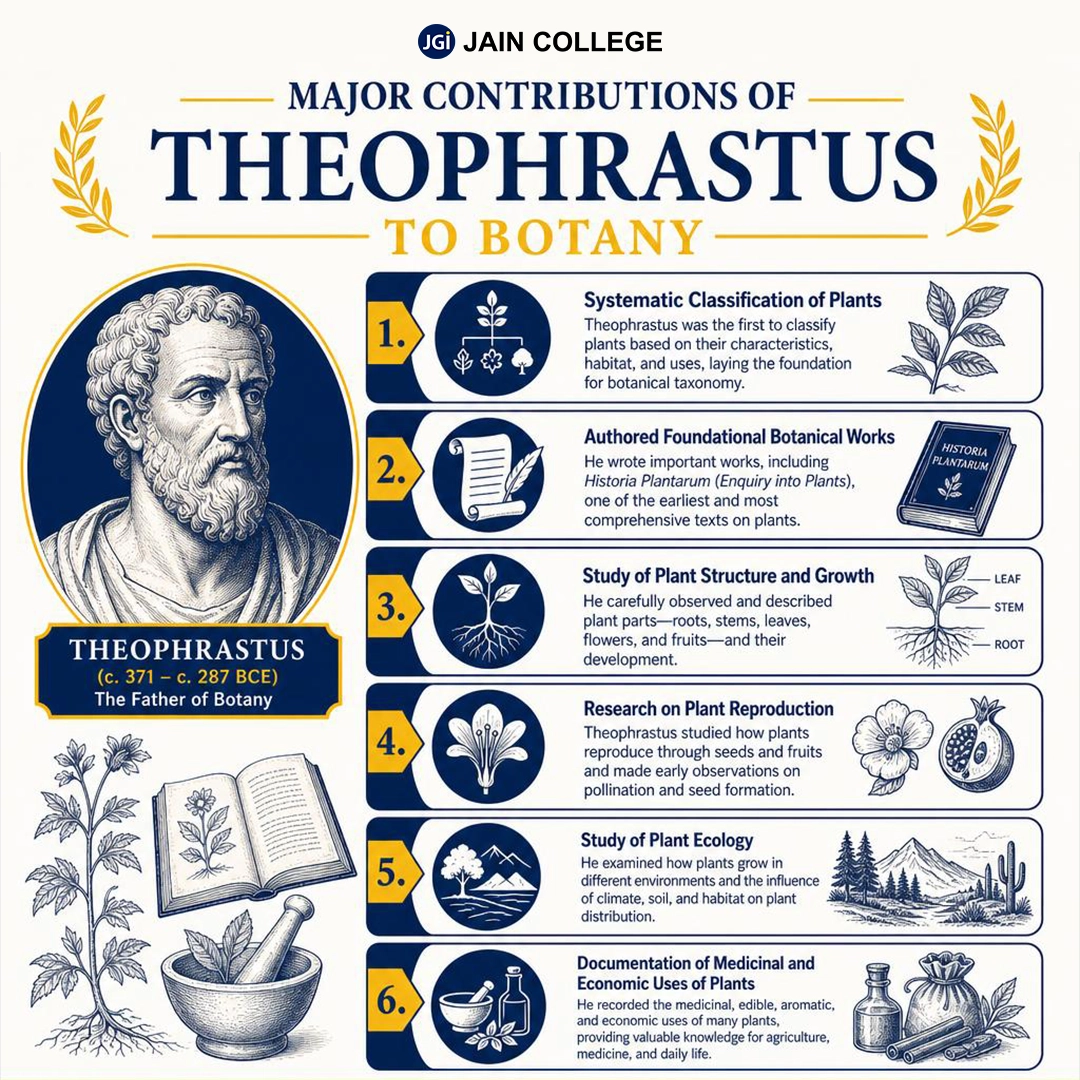
Theophrastus's works played a significant role in the early development of botany.
Theophrastus classified plants into four different groups: herbs, subshrubs, shrubs, and trees. He described approximately 500 plant species on the basis of habit in the book entitled "Historia". Plantarum".
Theophrastus's classification was based on observable characteristics such as growth habit and stem structure rather than evolutionary relationships.
Two of Theophrastus's botanical works have survived and are available in English translation:
Written around 300 BCE, these two foundational botanical treatises describe a wide range of topics, including plant classification, structure, growth, reproduction, cultivation, and the influence of environmental conditions on plants. Together, they laid the foundation for the scientific study of botany and remained authoritative references for many centuries.
Theophrastus regarded trees as the most important category in his classification system due to their size and prominence. He considered herbs to be among the simplest forms of plants in his classification system. He was aware of the fact that many cultivated plants do not breed true.
He described differences in plant growth habits, flowers, fruits, seeds, and reproductive characteristics, providing one of the earliest systematic accounts of plant diversity.
Here are some of Theophrastus's contributions to the field of botany:
| Systematic Classification of Plants:He was among the first to classify plants based on their characteristics.He grouped plants into categories such as trees, shrubs, undershrubs, and herbs. |
| Authored Foundational Botanical Works:Wrote Historia Plantarum, which described hundreds of plant species and their characteristics.Wrote De Causis Plantarum, which discussed plant growth, reproduction, and environmental influences. |
| Study of Plant Structure and Growth:Investigated how plants grow and developExamined different plant parts, including roots, stems, leaves, flowers, and fruits |
| Research on Plant Reproduction:Observed and documented methods of plant reproduction, including:PropagationSeed formation |
| Study of Plant Ecology:His observations provided the foundation for modern plant ecology.Noted how climate, soil, and environmental conditions affect plant growth and distribution. |
| Documentation of the Medicinal and Economic Uses of Plants:Recorded information about plants used for food, medicine, timber, and other practical purposes. |
| Overall Significance:Theophrastus's work provided the first organised scientific approach to studying plantsHis writings remained important references for botanists for nearly 1,500 years and helped establish botany as a distinct scientific discipline. |
| Contribution | Description | Key Details |
| Plant Classification | Developed one of the earliest systems for classifying plants based on their observable characteristics. | Classified plants into herbs, shrubs, subshrubs (undershrubs), and trees. |
| Botanical Literature | Authored the earliest scientific works on botany, documenting plant characteristics and their uses. | He wrote Historia Plantarum (Enquiry into Plants) and De Causis Plantarum (On the Causes of Plants). |
| Study of Plant Growth | Investigated the factors affecting plant growth and development. | Studied germination, reproduction, climate effects, and soil influence on plants. |
| Medicinal Plant Research | Documented the practical applications of plants in daily life. | Recorded the medicinal and economic uses of numerous plant species. |
| Plant Classification System | Classified plants based on their growth characteristics and life cycle. | Used growth habits, stem structure, and lifespan as classification criteria and identified annual, biennial, and perennial plants. |
| Scientific Legacy | He established one of the earliest scientific approaches to studying plants. | His classification system laid the foundation for the development of modern botany and plant taxonomy. |
Theophrastus classified all the plants as trees, shrubs, undershrubs, and herbs and distinguished between annual, biennial, and perennial durations.
His Classification System was one of the earliest to organise and understand the vast diversity of plant life on Earth.
Two of his botanical works have survived and are available in English translation:
Written around 300 BCE, these two foundational botanical treatises describe a wide range of topics, including plant classification, structure, growth, reproduction, cultivation, and the influence of environmental conditions on plants. Together, they laid the foundation for the scientific study of botany and remained authoritative references for many centuries.
Theophrastus classified plants primarily based on their growth habit and observable characteristics.
Herbs
Herbs are small plants with soft, non-woody stems that usually die back at the end of the growing season. Some examples include Basil, Mint, Coriander, Parsley, etc.
Shrubs
Medium-sized woody plants with multiple stems, usually shorter than trees. Some examples include Hibiscus, Rose, Bougainvillea, Azalea, Jasmine, etc.
Subshrubs
Small, low-growing shrubs, which are typically between one to two metres in height. Some examples include Lavender, Periwinkle, etc.
Trees
Large woody plants with a single main stem (trunk) that supports branches and leaves. Mango, Banyan, Neem, Oak, Pine, etc.
In the Enquiry into Plants,
In De Causis Plantarum, Theophrastus turns to plant physiology.
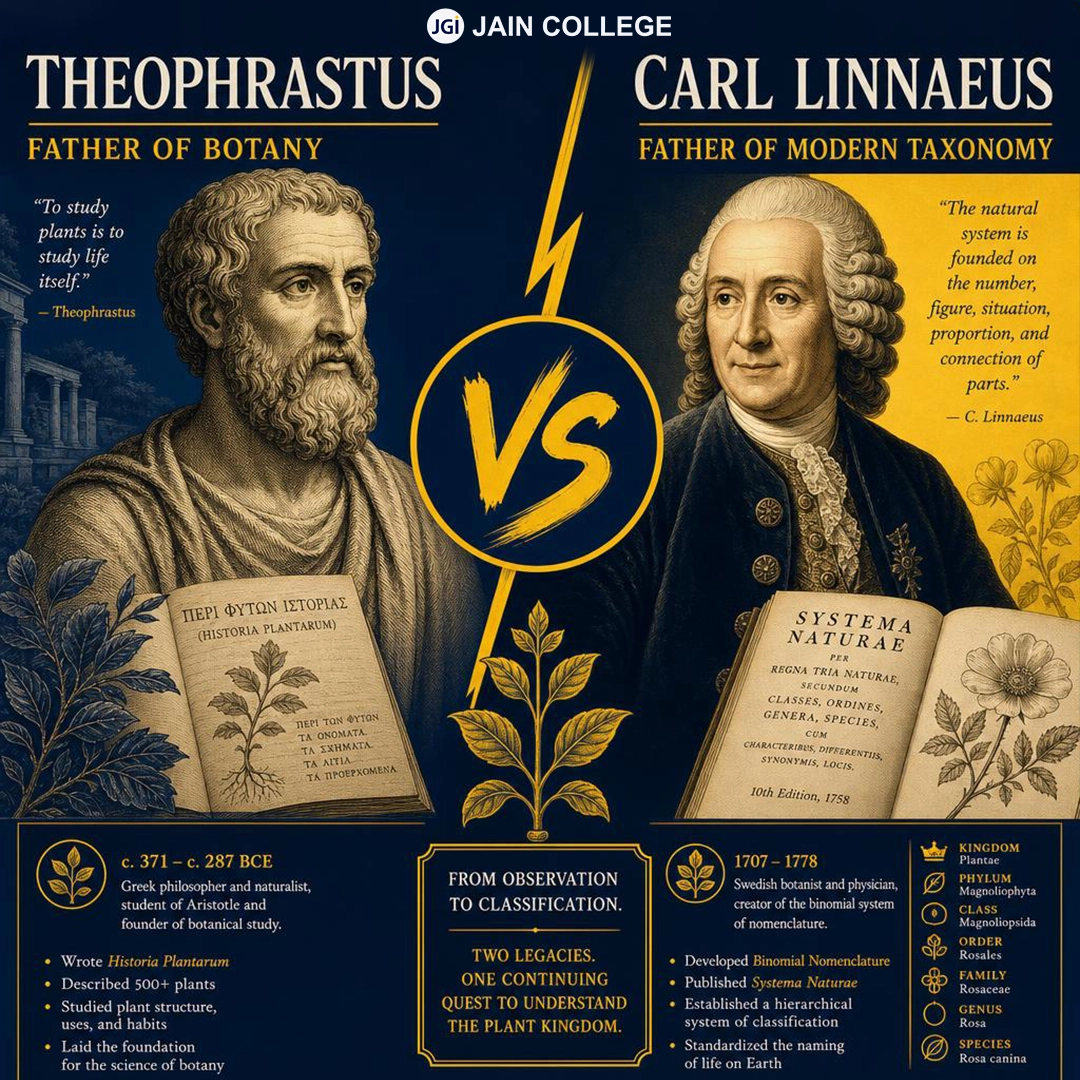
Theophrastus is known as the Father of Botany (study of plants).
Carl Linnaeus is known as the Father of Modern Taxonomy (classification and naming of organisms).
Here is the Father of Botany vs Father of Modern Taxonomy (Theophrastus Vs Carl Linnaeus)
| Aspect | Father of Botany | Father of Modern Taxonomy |
| Name | Theophrastus | Carl Linnaeus |
| Period | 371–287 BC | 1707–1778 CE |
| Known For | Known as the "Father of Botany" for his systematic study of plants. | Known as the "Father of Modern Taxonomy" for developing the modern system of classification and naming organisms. |
| Major Contributions | Authored Historia Plantarum and De Causis Plantarum, among the earliest scientific works on plants. | Introduced binomial nomenclature and the hierarchical classification of living organisms. |
| Methodology | Classified plants based on observable characteristics, such as growth habit, size, and structure. | Classified organisms using shared morphological characteristics and standardised scientific naming (binomial nomenclature). |
| Field of Work | Plant Science (Botany) | Classification of organisms (Taxonomy) |
| Legacy | Laid the foundation for the scientific study of plants. | Established the framework used worldwide for naming and classifying species. |
| Theophrastus is known as the Father of Botany.He lived from 371 BCE to 287 BCE.He was a successor at the Lyceum.He classified plants into trees, shrubs, undershrubs, and herbs.He authored Historia Plantarum and De Causis Plantarum.His work influenced botanical studies for more than 1,500 years. |
As mentioned earlier, Theophrastus, known as the Father of Botany, made several important discoveries that helped people understand plants scientifically. He studied plant growth, reproduction, and how plants respond to different environmental conditions, laying the foundation for the scientific study of botany.
The legacy of Theophrastus, Founder of Botany, continues to live on even after more than 2,000 years.
Visit more blogs on our website at JAIN PU College and learn more about the famous Indian scientists, famous personalities, literary authors, poets, and Kannada Jnanapeetha/Jnanpith winners.
Which renowned scientists and researchers inspire you the most?
Share your thoughts in the comments below.
Theophrastus is called the Father of Botany because he was the first scholar to systematically study and classify plants based on their characteristics, growth habits, and uses. His work laid the foundation for modern botanical science.
Theophrastus is known for his pioneering contributions to botany, particularly his systematic study and classification of plants. His observations and writings are widely regarded as laying the foundations of botany as a scientific discipline.
Theophrastus made several significant contributions to botany, including:
Theophrastus classified plants into four main categories based on their growth habits and structural characteristics:
Theophrastus wrote two of the earliest scientific books on plants:
Historia Plantarum is a botanical work by Theophrastus that describes plant classification, structure, habitats, and medicinal uses. It is regarded as one of the earliest scientific texts on botany.
De Causis Plantarum is a botanical work by Theophrastus that explains plant growth, reproduction, cultivation, and the environmental factors affecting plants.
Theophrastus described approximately 500 plant species in his botanical writings.
Botany is the scientific study of plants, including their structure, growth, reproduction, classification, ecology, and uses.
Botany is important because it helps scientists understand plant life, agriculture, medicine, biodiversity, ecosystems, and environmental conservation.
The major branches of botany include:
Plant taxonomy is the branch of botany that focuses on the discovery, identification, naming, and classification of plants.
Botany is the scientific study of plants, while taxonomy is the branch of biology that focuses on naming, identifying, and classifying living organisms.
Plant classification is the process of grouping plants based on similarities in their characteristics, structure, reproduction, and evolutionary relationships.
Carolus Linnaeus introduced the modern system of plant taxonomy through binomial nomenclature and standardised classification.
Carolus Linnaeus is known as the Father of Modern Taxonomy for developing binomial nomenclature and the modern classification system.
Julius von Sachs is known as the Father of Modern Botany because of his pioneering work in plant physiology and experimental botany.
Herbs are plants with soft, non-woody stems. They may be annual, biennial, or perennial. Examples include Basil, Mint, Coriander and Parsley.
Shrubs are medium-sized woody plants with multiple stems arising from the base. Examples include Rose, Hibiscus, and Bougainvillaea.
Subshrubs, also known as dwarf shrubs, are small woody plants with partially woody stems. Examples include lavender, periwinkle, and thyme.
Trees are large, perennial woody plants with a single main trunk supporting branches and leaves. Examples include maple and evergreen trees.

JAIN PU College, a part of the renowned JGI Group, is committed to empowering students with quality education.
Beyond academics, the college ensures its online content reflects the same standard of excellence. Every blog and article is meticulously vetted and proofread by subject matter experts to ensure accuracy, relevance, and clarity. From insightful educational topics to engaging discussions, JAIN PU College's content is crafted to inform, inspire, and add value to its readers, reflecting the institution's commitment to intellectual growth and innovation.
View all Blogs
