









The National River of India is the Ganga (Ganges). It was officially declared India’s national river on November 4, 2008, due to its cultural, spiritual, and ecological importance.
India, a land of diverse cultural heritage and natural beauty, is home to many majestic rivers. The Ganga (Ganges) holds a special place as the national river of India. Revered as a sacred entity, the Ganga is more than just a waterbody—it is a lifeline, a source of spiritual inspiration, and a crucial resource for millions.
Originating from the Gangotri Glacier in the Himalayas, the river flows through the plains of northern India, supporting agriculture, biodiversity, and human settlements along its course. Its significance extends beyond utility. It symbolises purity, continuity, and the interconnectedness of life.
The National River of India is the Ganga (Ganges). It was formally declared the national river on November 4, 2008, due to its immense cultural, spiritual, and ecological significance.
The Ganga is deeply interwoven with India’s history, spirituality, and economy. It provides water for drinking, agriculture, and industry while sustaining one of the most fertile regions in the world.
| Attribute | Details |
| National river | Declared on Nov 4, 2008 |
| Origin | Gangotri Glacier, Uttarakhand |
| Length | Approximately 2,525 km |
| States Covered | BiharJharkhandWest BengalUttarakhandUttar Pradesh |
| Basin Population | 400+ million |
| Major Tributaries | Yamuna, Gandak, Kosi, Son, Ghaghara |
| Delta | Sundarbans (largest delta system) |
The Ganga is not just a river; it is a powerful symbol of India’s heritage, spirituality, and ecological significance. It represents life, continuity, and sustainability for millions of people.
Here are some fascinating facts about the Ganga, the National River of India:
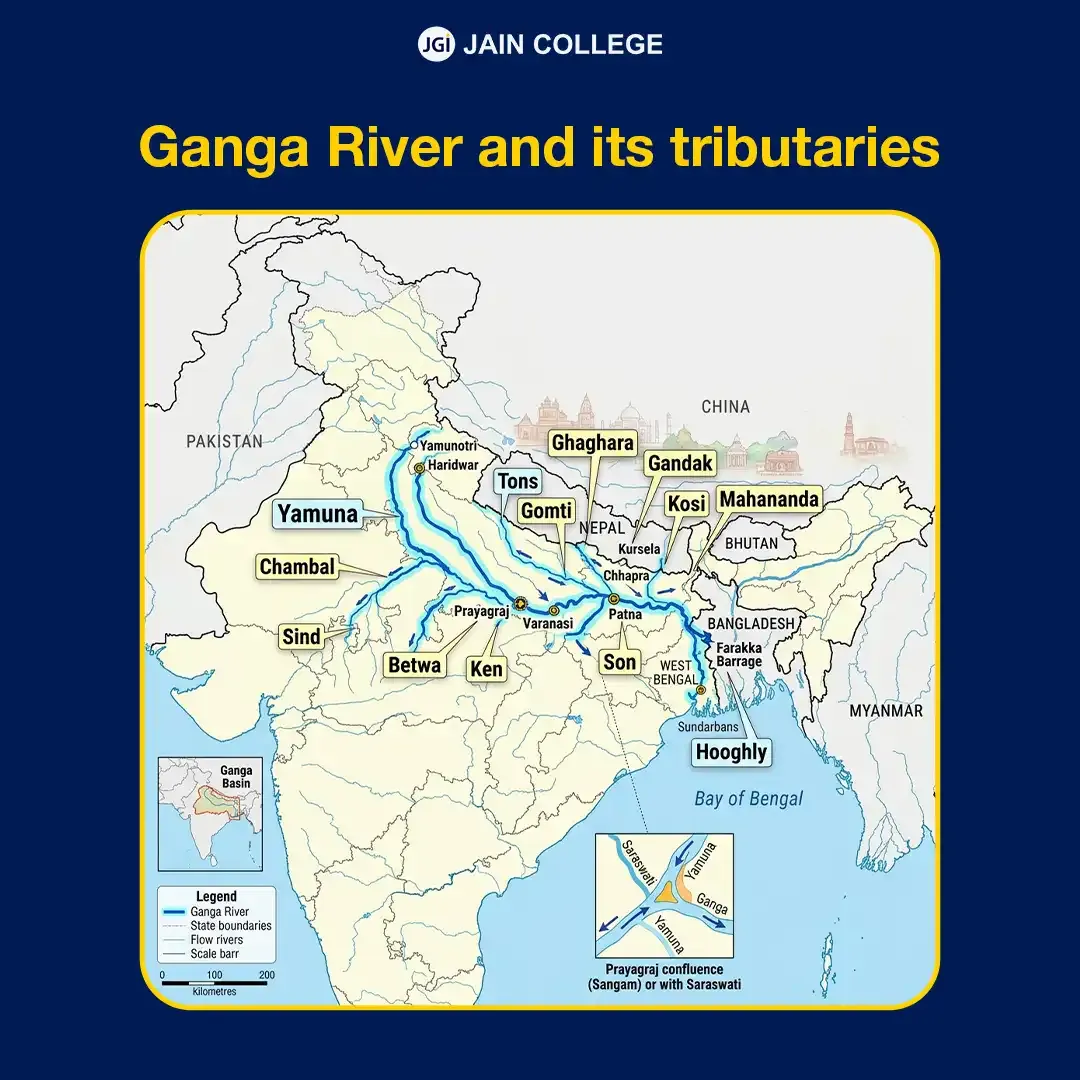
The Ganga River, declared the National River of India on November 4, 2008, has a rich history intertwined with India’s cultural, spiritual, and geographical identity.
Originating from the Gangotri Glacier in the Himalayas, it has been a cradle of civilisation for centuries.
Ancient texts, including the Vedas, Puranas, and Mahabharata, describe the Ganga as a celestial river brought to earth through the efforts of King Bhagiratha. This narrative underscores its divine origin and its role as a purifier of sins.
The Ganga, India's national river, is not just a geographical entity but a symbol of the country's past, present, and future. Preserving its sanctity and health is crucial for millions' well-being and safeguarding India’s heritage and ecological balance.
Over millennia, kingdoms and empires flourished along its banks, using its waters for sustenance and commerce. Historical cities like Varanasi, Haridwar, and Patna emerged as learning, trade, and spirituality centres. The river's connection to India's freedom movement was also significant, as Mahatma Gandhi saw it as a symbol of India's unity and purity.
| City | Why it is Known | Type of Relevance |
| Haridwar | Pilgrimage/ghats | Spiritual |
| Prayagraj | Sangam region, Kumbh context | Cultural |
| Varanasi | Ancient city/rituals | Spiritual & Historical |
| Patna | Major riverbank city | Economic |
| Kolkata region | Near delta ecosystem | Ecological |
The Ganga is not just a river but a symbol of India's spiritual ethos, ecological diversity, and socio-economic sustenance.
In Hinduism, the Ganga is worshipped as a goddess and is believed to cleanse sins and grant salvation. Pilgrims flock to its banks for rituals like bathing and the immersion of ashes, believing they lead to liberation (moksha).
The river and tributaries support diverse ecosystems, including endangered species like the Ganges River Dolphin. Its basin, one of the largest in the world, sustains millions of people and countless flora and fauna.
The Ganga plays a pivotal role in India’s agriculture, supporting fertile plains often called the “Granary of India". It provides water for irrigation, drinking, and industries, making it a livelihood lifeline.
Cities along the Ganga, such as Varanasi and Haridwar, are among the world's most ancient and continuously inhabited places. These cities are also hubs of art, literature, and religious practices.
Despite its profound significance, the Ganga faces critical threats such as pollution, over-extraction, and habitat destruction. To address these challenges, the Indian government launched the Namami Gange Programme in 2014 to clean and rejuvenate the river.
| Threat | What it Causes | What Helps |
| Untreated sewage | High pollution load | STPs + enforcement |
| Industrial discharge | Toxic contamination | Monitoring + penalties |
| Religious offerings/plastics | Solid waste | Collection systems |
| Over-extraction | Lower flows | Sustainable water policy |
| Habitat disruption | Biodiversity loss | Protected stretches |
The Ganga River was declared the National River of India on November 4, 2008, due to its unparalleled cultural, spiritual, and ecological significance to the nation. The reasons for this designation include:
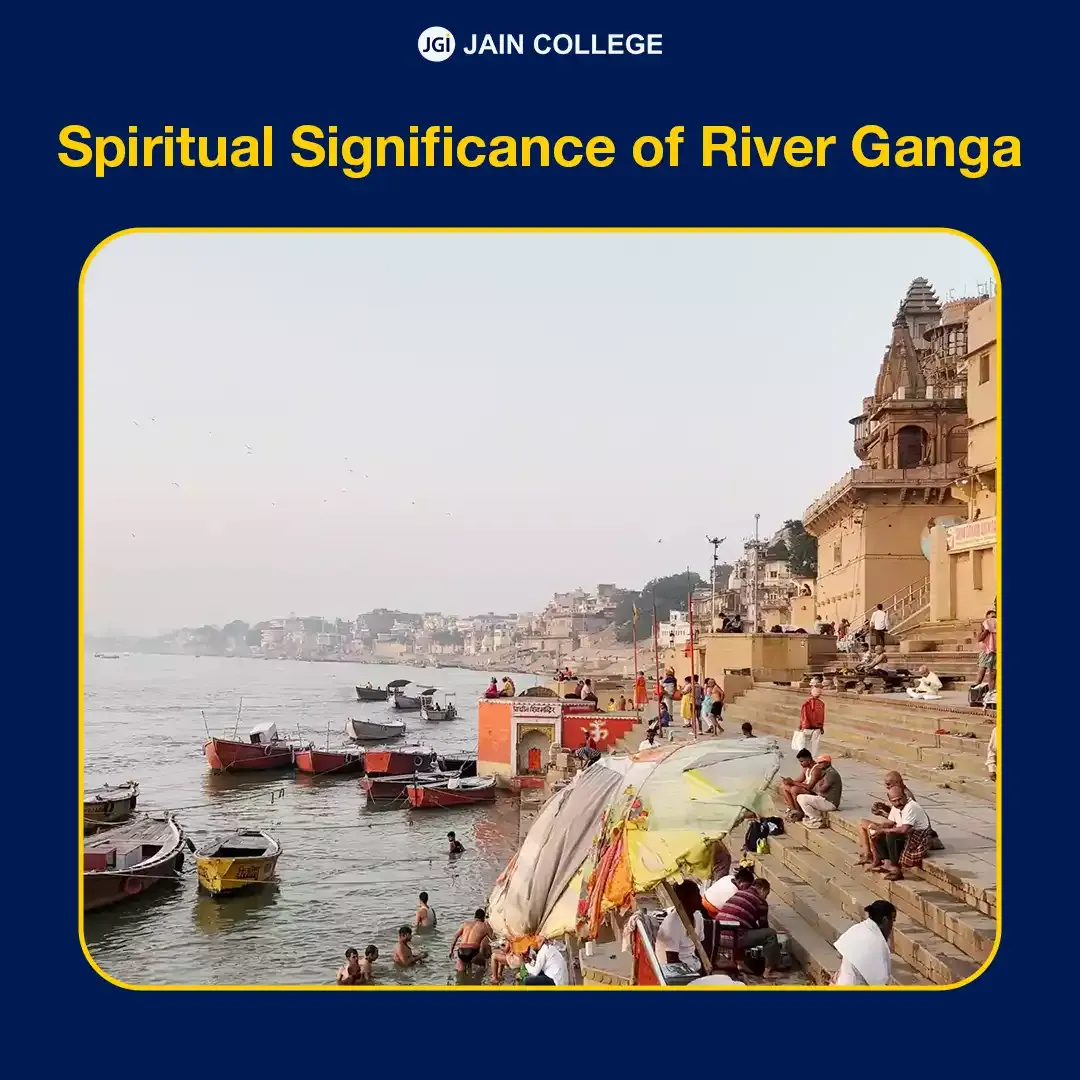
Cultural and Spiritual Importance
Historical Significance
Ecological Role
Economic Contribution
Symbol of Unity and National Identity
Conservation Focus
Top threats to the Ganga (and what helps):
Thus, the declaration of the Ganga as a national river recognises its extraordinary role in shaping India’s history, culture, and economy, and it reminds us of our collective responsibility to preserve and protect this vital resource for future generations.
Key takeaways
As the national river, it represents the unity and diversity of the nation. However, the river faces pollution and over-exploitation, threatening its sanctity and ecological balance.
Collective efforts are essential to preserving and rejuvenating the Ganga, ensuring that it continues to nurture life and inspire future generations. Reverence for the Ganga reminds us of our responsibility to protect and cherish the natural resources that sustain us.
Related Articles on National Symbols of India
Rani Lakshmibai is known as a popular woman freedom fighter of India before 1900. She played a crucial role in the revolt of 1857, which sparked the wave of freedom all over India.
Every year on 13th February, India celebrates National Women’s Day. This celebration honours the strength, courage, and remarkable contributions of women in every field of life.
Aruna Asaf Ali is known as the grand old lady of the independence movement.
Rani Didda is a woman who played a prominent role in shaping the political history of Kashmir in ancient times.
As of 2025, there are 78 women MPs in the Lok Sabha. Our nation will have at least 181 female MPs in the Lok Sabha if the bill is passed.
Kittur Rani Chennamma was one of the first women to lead an armed revolt against the British in India. She is revered as a national hero in Karnataka
Rani Lakshmi Bai was the queen of Jhansi, a northern state of India. Nicknamed Manikarnika, she was born in 1828 in a Maharashtrian family at Kashi.
Kamaladevi Chattopadhyay was a great feminist, a social reformer, and one of the bravest female freedom fighters in India.
Sarojini Naidu was a prominent Indian freedom fighter, political activist, and poet. She was known as the "Nightingale of India".
Vijaya Lakshmi Pandit was one of the most prominent lady freedom fighters of India. She became India’s first Ambassador to the Soviet Union and the first woman President of the United Nations General Assembly (1953)

JAIN PU College, a part of the renowned JGI Group, is committed to empowering students with quality education.
Beyond academics, the college ensures its online content reflects the same standard of excellence. Every blog and article is meticulously vetted and proofread by subject matter experts to ensure accuracy, relevance, and clarity. From insightful educational topics to engaging discussions, JAIN PU College's content is crafted to inform, inspire, and add value to its readers, reflecting the institution's commitment to intellectual growth and innovation.
View all Blogs








.webp)