








Internships help students build the confidence required to navigate real workplace challenges.
An internship is a structured, short-term work experience programme that allows students to:
Through internships, students gain valuable opportunities to apply classroom knowledge to practical, real-life situations. Thus, internships effectively bridge the gap between academic learning and industry expectations.
JAIN PU College is widely recognised as one of the PU Colleges in Bangalore, offering well-established academic programmes across multiple streams. The college provides specialised courses designed to prepare students for future success by broadening their perspectives, deepening their understanding, and encouraging critical thinking. Its student-focused approach to education helps learners develop academic excellence, confidence, and awareness in an intellectually engaging environment.
Internships are usually short-term, temporary work experiences. An internship provides hands-on training, mentoring, and exposure to real-world working environments. It is a form of experiential learning, which integrates theoretical knowledge acquired in the classroom with practical application and professional skills development.
Along with enhancing practical skills and experience, internships also strengthen students’ résumés and make professional connections in their chosen industry.
Internships provide students with the opportunity to gain valuable applied experience and build professional connections in professional fields they are considering for their careers. They also provide employers with the opportunity to guide and evaluate talent.
For companies and organisations, internships offer a cost-effective way to identify and recruit talented students, build strong relationships with academic institutions, and support workforce development. Most internship tasks involve professional responsibilities that provide students with valuable practical learning experience.
Internships offer a multitude of benefits that significantly enhance students' personal and professional development.
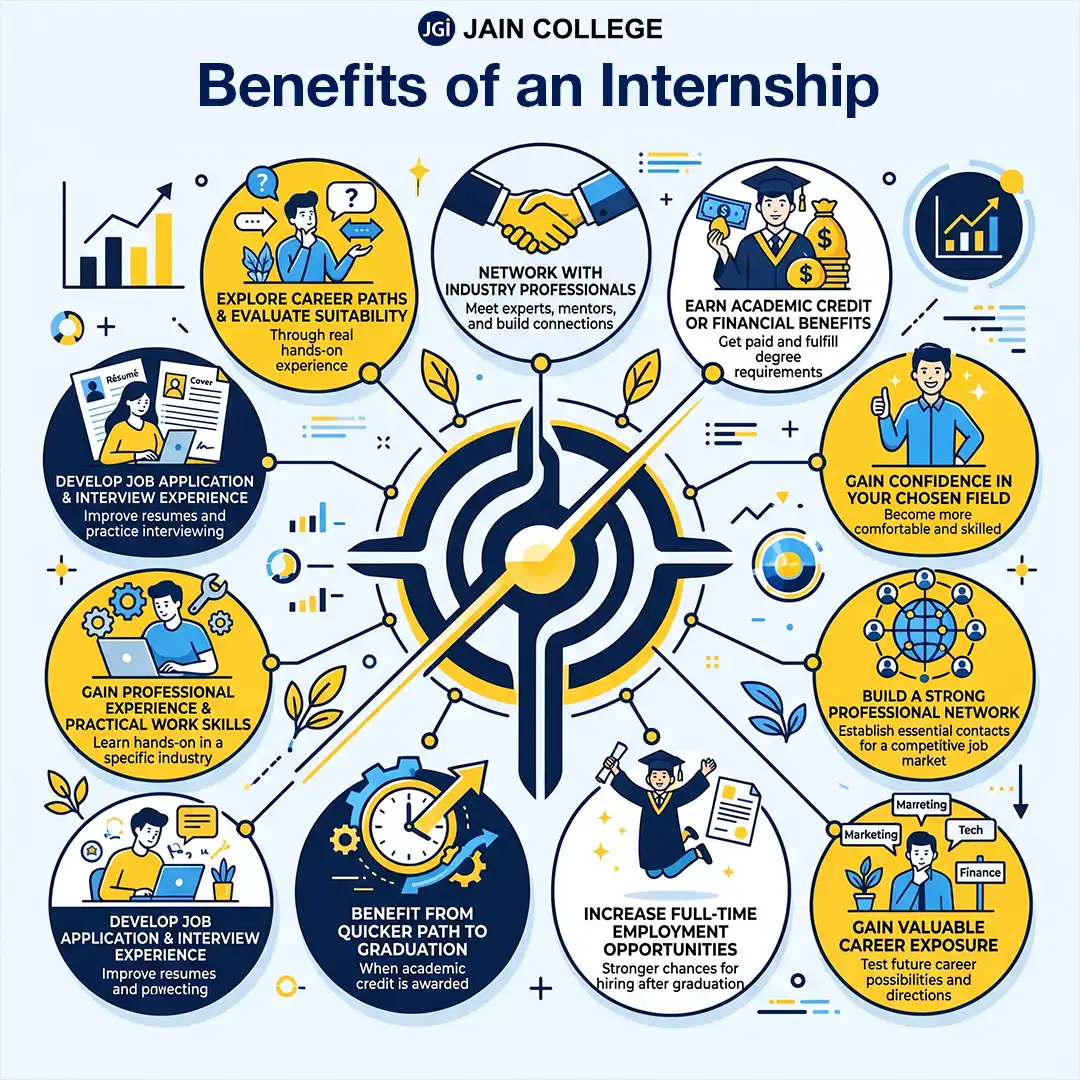
Internships provide essential real-world experience that connects academic knowledge with practical applications and helps students develop practical skills and gain industry exposure. By engaging in an internship, students gain hands-on exposure to their chosen field, allowing them to apply classroom knowledge in a professional setting.
Some of the benefits of an internship include:
Students can find internship opportunities across a wide range of industries, including finance, healthcare, technology, media, and government. They may work part-time or full-time and receive compensation, academic credit, or both.
The internship is open to students from all around the world. Placements are made based on the compatibility of students' interests and academic backgrounds with the needs of particular companies or organisations.
At the time of the internship, the intern must meet the following requirements:
Many companies offer internships for undergraduate and postgraduate students. These professional learning experiences can vary in duration, responsibilities, and compensation, benefiting both the employer and the intern.
Participating in an internship helps students gain practical exposure to a career field and improves their future job opportunities. By working with professionals from diverse backgrounds, students also develop collaboration, communication, and workplace skills.
Internships are valuable not only for employment but also for higher education applications. Candidates with practical experience are often preferred for programmes such as MBA, MS, and PhD admissions, as internships demonstrate industry exposure, initiative, and real-world understanding.
In addition, students preparing for competitive examinations can benefit from internships that show them how theoretical concepts apply in professional environments.
An internship provides students with the ideal opportunity to apply classroom knowledge in real-life situations.
An internship is a career-related work experience of limited duration that provides students with practical exposure. Internships help students gain confidence so that they can navigate workplace challenges. Thus, pursuing an internship helps students develop practical skills, improve workplace readiness, and enhance their employability in reputable organisations.
Overall, an internship provides students with practical learning experience while helping them develop interpersonal skills, build confidence, and understand professional work culture in different industries and organisations.
An internship offers real-world exposure, and based on performance, it can be converted into a permanent job.
Stay tuned to JAIN PU College blogs and explore more about internships and their value after graduation.
How did your first internship after graduation influence your career direction?
Share your thoughts in the comments below.
An internship is a short-term job experience in which a student performs pre-professional work to support the goals of an organisation.
An intern is a student or a fresher who works for a company or organisation to gain practical experience in a particular field or industry.
No. There is no particular job description of an intern
An intern typically assists with professional tasks related to their field of study, helping them gain practical experience, workplace exposure, and industry-related skills.
The duration of an internship typically ranges from a month to a year. This duration may vary with the industry or organisation
Companies hire students to gain valuable support for the business and its existing employees.
Some of the employer benefits of hiring students are

JAIN PU College, a part of the renowned JGI Group, is committed to empowering students with quality education.
Beyond academics, the college ensures its online content reflects the same standard of excellence. Every blog and article is meticulously vetted and proofread by subject matter experts to ensure accuracy, relevance, and clarity. From insightful educational topics to engaging discussions, JAIN PU College's content is crafted to inform, inspire, and add value to its readers, reflecting the institution's commitment to intellectual growth and innovation.
View all Blogs
