










Exam time can be a stressful experience for many students, particularly those studying in competitive academic environments.
Exam stress is a normal response to pressure. However, it becomes harmful when it affects sleep, focus, or confidence.
Students in PU colleges in Bangalore often juggle academic expectations, time pressure, and performance goals, making stress management an essential life skill during exam preparation.
The pressure to perform, the fear of failure, and the looming deadline can all cause immense stress.
Despite the pressure, it is essential to remain positive and focused on achieving the best possible results.
To manage stress during exam preparation, follow these basics: create a realistic study schedule, sleep for 7–9 hours, take regular breaks, practise relaxation techniques (deep breathing/meditation), and solve timed model papers to build exam confidence.
Stress is the mental and emotional strain caused by academic demands.
It can stem from factors such as fear of failure, high expectations, excessive workloads, and competitive environments.
While a little stress can be motivating, chronic stress during exam preparations can lead to serious mental health issues such as anxiety, depression, burnout, low energy, mood swings, unproductiveness, emotional instability, changes in eating and sleeping habits, and increased susceptibility to illnesses like headaches and phobias.
Preparing for examinations is not the only time when students experience stress.
It can also occur.
Here are some effective techniques for students to manage exam-related stress.
Preparing for examinations can be an overwhelming and stressful experience for many students. Here are some strategies to help students manage stress during their exam preparation:
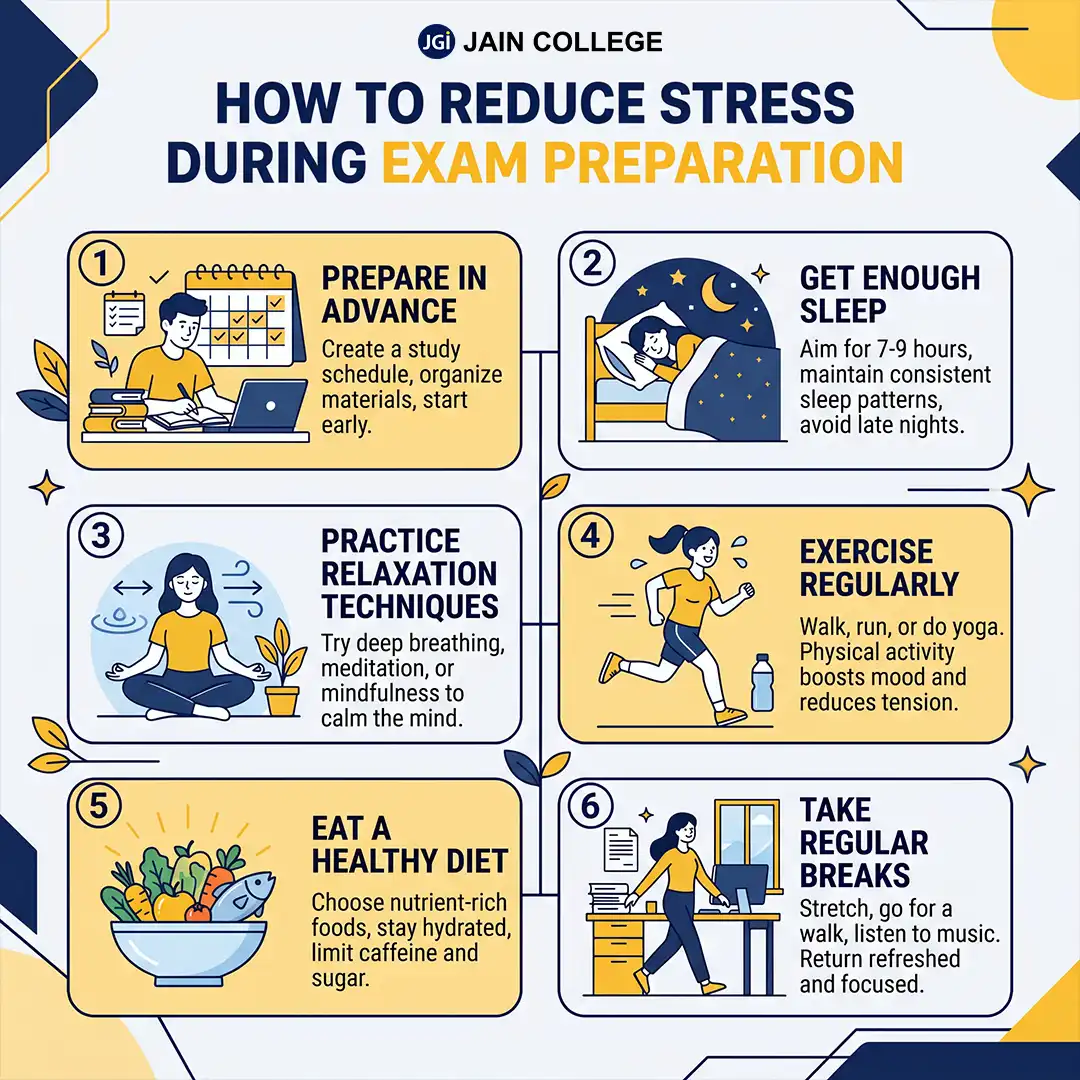
One of the main reasons for stress is feeling unprepared. Thus, students should prepare a perfect study schedule and stick to it. This practice helps them to complete the preparation on time and cover all the material before the exam.
Lack of sleep can increase stress levels and make it harder to concentrate. Adequate sleep of 7–9 hours is required to help the brain function at its best.
Deep breathing, meditation, and yoga are all techniques that can help students to reduce stress and anxiety.
Along with regular breaks and relaxation techniques, physical activity plays an important role in maintaining elevated stress levels. By exercising regularly, the body releases endorphins, which are natural mood boosters. Even a short walk or workout can help reduce stress levels.
A well-balanced or healthy diet is required to keep up the energy levels and reduce stress. Thus, students should include plenty of fruits, vegetables, and whole grains, which support energy levels, brain function, and immune health.
Studying continuously without beraks for long periods can lead to mental fatigue and reduced concentration.
Thus, taking short, regular breaks helps maintain focus, improves retention, and prevents burnout. Rather than slowing progress, breaks can make study sessions more effective and sustainable.
Stress is inevitable for any student during examinations.
Most students experience exam stress, pressure to perform, and fear of forgetting what they studied. This phenomenon is quite common among all students.
By implementing a few practical strategies, students can avoid stress and stay stress-free on the day of the examination.
Other than these practical strategies, students should also practice some Dos and Don'ts to start stress-free:
| Do’s | Don’ts |
| Focus on weak concepts | Avoid distractions |
| Prepare a revision timetable | Do not give up studying completely |
| Prioritise high-weightage topics | Do not stop learning new content entirely |
| Refer to summary notes and flashcards. | Avoid reading continuously without breaks |
| Practise previous years' question papers | Avoid having a heavy meal before the exam |
Examinations are not hurdles in life; they are stepping stones to greater progress.
By implementing a few practical strategies, students can approach their exams with a clear mind and a strong sense of self-belief. Here’s how:
If things go wrong in an exam, do not panic. Stay calm and try to recall the related concepts learned. Avoid wasting time on one question; move on to the next and return to it later if time permits.
Exams are important, but students' mental well-being matters more.
Thus, by planning smartly and early, practicing stress-relief techniques, and staying active, students can improve their well-being.
By sleeping well and building a positive mindset, students will learn how to stay calm during exams, remain relaxed, and feel confident before them.
Stay tuned to JAIN PU College blogs and explore more tips and tricks for managing stress during exam preparations.
Do you prefer studying early in the morning or late at night to reduce stress? Why?
Share your thoughts in the comments below.
Stress is the feeling of being under too much mental or emotional pressure.
When a student experiences excessive stress, it can impact their
The human brain can generally stay fully alert for about 40 to 60 minutes; after that, attention slowly drops. Thus, studying without breaks eventually stops the functioning of our brain, which may lead to stress and mental fatigue.
Some of the common factors that cause stress in students are:
Parents play an important role in managing students' stress by:

JAIN PU College, a part of the renowned JGI Group, is committed to empowering students with quality education.
Beyond academics, the college ensures its online content reflects the same standard of excellence. Every blog and article is meticulously vetted and proofread by subject matter experts to ensure accuracy, relevance, and clarity. From insightful educational topics to engaging discussions, JAIN PU College's content is crafted to inform, inspire, and add value to its readers, reflecting the institution's commitment to intellectual growth and innovation.
View all Blogs
