





Interested in some of the best skill-based Arts courses for creative careers in 2026? Courses such as UI/UX design, animation & VFX, graphic design, digital media production, and AR/VR sharpen skills and provide creative growth. Nirmala Sitharaman, Union Finance Minister of India, mentioned in her 2026 budget speech that the growing AVGC industry is projected to require two million professionals by 2030. This shift highlights why it is important to choose creative education where passion and career growth align. It is recommended to check the courses offered by some of the best Arts colleges in Bangalore to build a strong foundation. This blog explains which of the skill-based Arts courses in India in 2026 are relevant and how to choose the right course.
Skill-based Arts courses in India focus on practical learning, portfolio development, and industry-ready creative skills rather than traditional theory-heavy education. These programmes include university degrees such as Bachelor of Fine Arts (B.F.A.) and Bachelor of Vocation (B.Voc.), along with specialised diplomas and certifications in areas like graphic design, animation, visual communication, photography, fashion design, and digital media.
These courses prepare students for modern creative careers by combining classroom learning with live projects, workshops, internships, and industry-standard software training.
Conventional education usually emphasises theoretical knowledge; however, creative sectors need skilled individuals with hands-on experience. The skill-based courses assist in developing expertise by engaging students in projects, workshops, and internships. This approach helps create diverse portfolios with practical experience of designing, video editing, storytelling, or creating artworks. Today's students are not only required to be creative but also need understanding of AI tools, immersive media, animation software, and digital platforms.
Key benefits of Arts courses focused on skills:
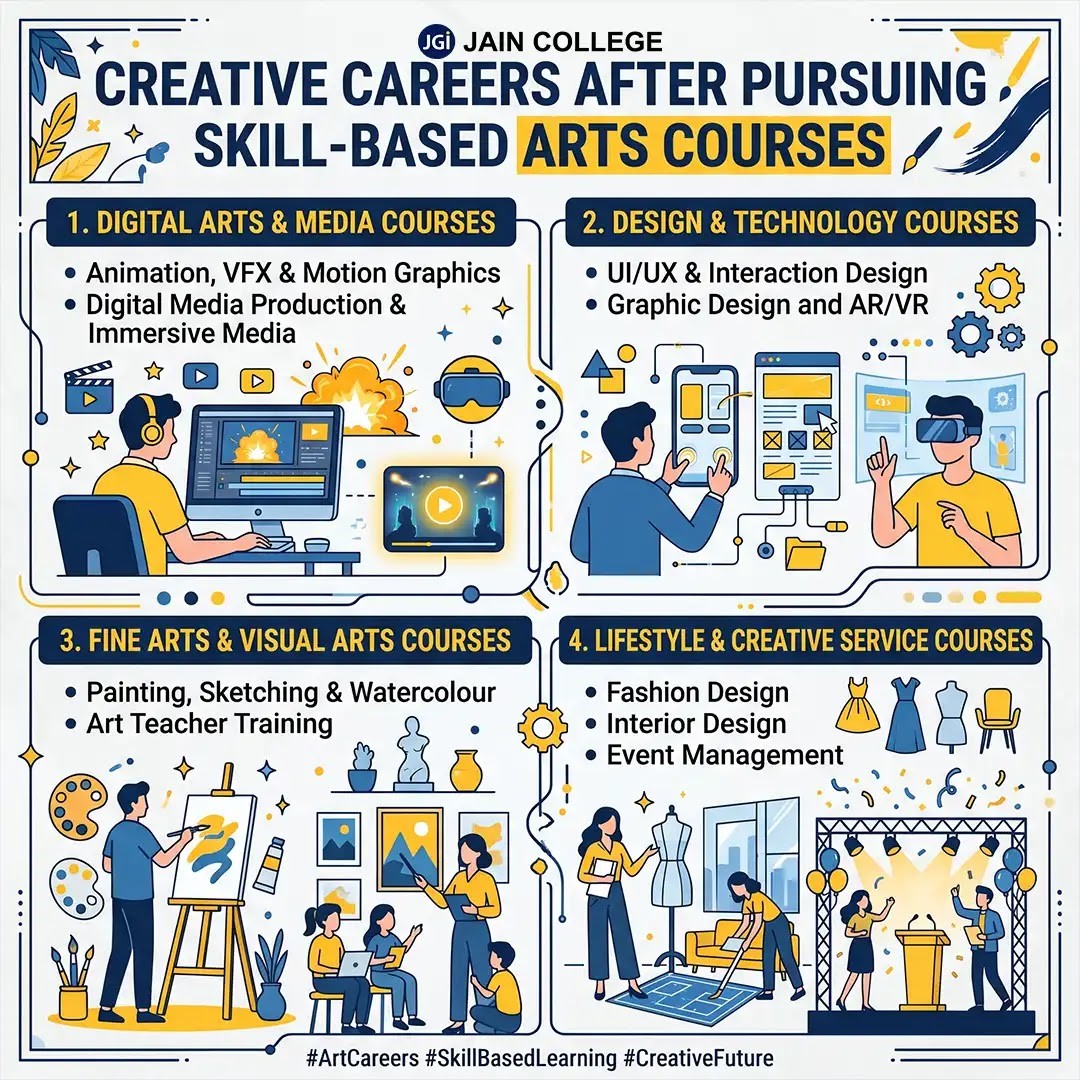
Courses in digital arts and media are best suited for those who want to pursue a career in the fields of filmmaking, gaming, storytelling, editing, and content creation. With the rise of OTT platforms, social media marketing, gaming studios, and digital advertisements, the demand for trained personnel in media professions is growing rapidly.
Animation & VFX specialisations are skill-based arts courses that deal with 2D animation, 3D modelling, compositing, motion graphics, and visual storytelling. Digital marketing relies heavily on motion graphics to create engaging videos for brands on social media platforms.
These courses have become career-driven since entertainment, advertising, and gaming businesses need visual designers and animators.
Skill-based courses in India related to immersive media cover virtual reality, augmented reality, and interactive stories. These courses include creative aspects such as photography, filmmaking, sound editing, content creation, and multimedia storytelling.
This is particularly relevant as many businesses adopt immersive media techniques to market their products and services, train employees, and educate and entertain customers.
Design and technology courses combine creativity with problem-solving and user-centred thinking. Students work on branding, interface design, digital products, and interactive systems.
UI/UX design focuses on improving how users interact with websites, apps, and digital products. Students learn wireframing, prototyping, typography, usability testing, and interface design through practical assignments and live projects.
This field has become popular because almost every company today requires digital platforms that are visually appealing and easy to navigate.
Graphic design education covers aspects like branding, typography, illustration, digital marketing, and communications. AR/VR education specialises in designing immersive experiences for the gaming, retail, healthcare, and educational sectors.
Key Features of Courses
The traditional curriculum for Fine Arts & Visual Arts includes training in observational skills, drawing, composition, painting, and portfolio creation. However, to keep the courses relevant for creative growth, several institutes integrate aspects of digital illustrations with the conventional approach of fine arts.
Diploma courses in painting, sketching, and watercolour focus on developing artistic skills and visual communication. In addition, these courses foster creativity and assist learners in creating professional portfolios. Furthermore, social media and other online platforms have enabled artists to promote and sell their artwork easily.
Course Features
Art Teacher Training programmes meet the demands of educational institutes and creative learning centres. This programme sharpens artistic skills while providing hands-on teacher training. As arts education becomes an essential part of schooling, there is a need for good art teachers who foster creativity among children.
Lifestyle and creative services are about aesthetics, branding, experience, and designs. A blend of artistic skills and practical work in areas like fashion, interior designing, and event planning makes these skill-based Arts courses ideal for creative growth.
Fashion design courses cover garment making, textiles, styling, fashion illustration, and trend prediction. These courses combine creative skills and manufacturing processes while teaching about fashion and branding. Current skill-based Arts courses about fashion design include digital fashion marketing, sustainable fashion, and luxury retail management.
Interior design courses include space planning, lighting, furniture design, and 3D visualisation. These skills help combine aesthetics and functionality. The need for interior designers has increased due to rapid urbanisation and infrastructural development.
This course revolves around event planning, experience building, production, sponsorship, and audience interaction. The curriculum develops organisational, communication, and creative execution skills.
Traditional arts courses today have started promoting cultural creativity by modifying it for commercial purposes. Students can choose career pathways in the arts that have connections to India's rich cultural background through training in manufacturing, craft arts, dance, and music.
Skill-based Arts courses in India are available in different formats, ranging from full-time degree programmes to short-term certifications. The table below compares programme types, duration, and focus areas to help students choose the right path based on their interests and career goals.
| Programme Type | Duration | Focus Areas |
| Bachelor of Fine Arts (B.F.A.) | 3–4 Years | Painting, Sculpture, Visual Communication, Applied Arts |
| Bachelor of Vocation (B.Voc.) | 3 Years | Animation, Graphic Design, Creative Skills |
| Diploma Programmes | 6 Months–2 Years | Photography, Fashion Design, UI/UX |
| Certification Courses | 3–12 Months | Software Tools, VFX, Design Skills |
| Course | Duration | Career Options |
| Animation & VFX | 1–3 Years | Animator, VFX Artist |
| UI/UX Design | 6 Months–4 Years | UX Designer, Product Designer |
| Graphic Design | 1–4 Years | Brand Designer, Illustrator |
| Fashion Design | 3–4 Years | Fashion Designer, Stylist |
| Interior Design | 2–4 Years | Interior Designer |
| Fine Arts | 1–4 Years | Artist, Art Educator |
| Event Management | 1–3 Years | Event Planner, Brand Coordinator |
Choosing the right skill-based Arts course depends on your interests, strengths, and long-term career goals. Before selecting a programme, evaluate the practical exposure, software training, internship opportunities, and industry relevance offered by the course.
Factors to consider before choosing a course:
Skill-based Arts courses in India help students balance their creativity and career growth. The courses in animation & VFX, UI/UX design, fine arts, fashion design, digital media, and AR/VR have become essential due to the growing dependence of industries on visual communication.
It is recommended to pursue such courses from some of the top Arts colleges in Bangalore, as their strong alumni base and industry relevance create a foundation for creative growth.
Which of the above-mentioned skill-based Arts courses did you find interesting, and which one would you like to pursue? Tell us more in the comments section.
UI/UX design, animation & VFX, and graphic design are currently among the highest-paying creative fields due to strong digital demand. However, salary depends on your portfolio, skills, and experience.
Skill-based courses focus more on practical expertise and portfolio development, making students more industry-ready for creative careers.
Yes. Courses such as UI/UX, AR/VR, graphic design, and digital media are closely connected with technology and digital product industries.
Not always. Strong portfolios, certifications, and practical experience often matter more than advanced academic qualifications in creative industries.
Yes. Many professionals in design, illustration, animation, and media work independently with clients globally through freelance platforms.

JAIN PU College, a part of the renowned JGI Group, is committed to empowering students with quality education.
Beyond academics, the college ensures its online content reflects the same standard of excellence. Every blog and article is meticulously vetted and proofread by subject matter experts to ensure accuracy, relevance, and clarity. From insightful educational topics to engaging discussions, JAIN PU College's content is crafted to inform, inspire, and add value to its readers, reflecting the institution's commitment to intellectual growth and innovation.
View all Blogs
