






Table of Contents
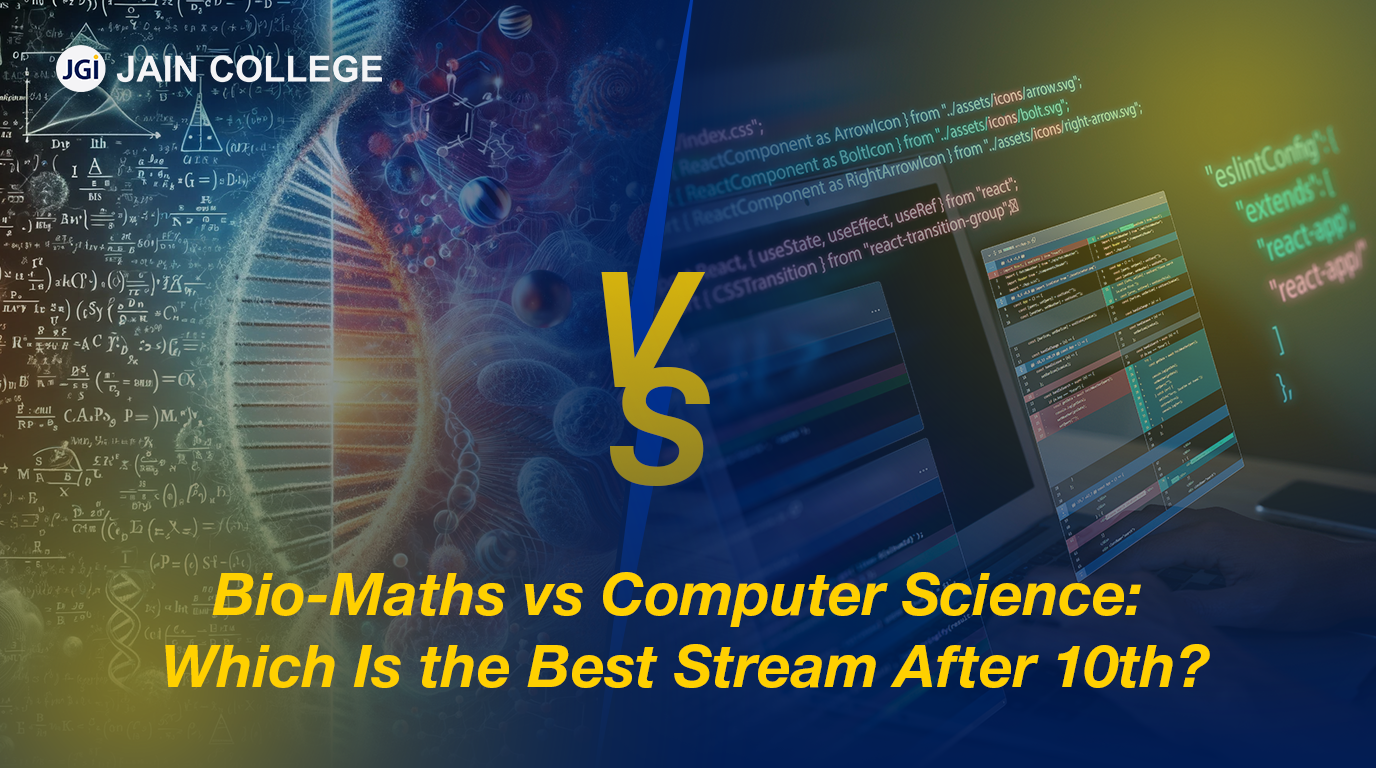
Biomath is an interdisciplinary field that uses mathematical models to analyse biological systems and processes.
Bio-Math, or Biomathematics, covers topics such as dynamical systems, equilibrium points, and autonomous systems, highlighting their importance for understanding biological behaviour and stability.
Biomathematics covers a wide range of activities at the interface between the mathematical
and biological sciences. The biomathematics programme focuses on building and using mathematical models to describe and analyse biological systems.
In today’s digital world, Computer Science is indispensable. It forms the backbone of modern technology and equips students with practical skills in coding, software development, algorithms, and data structures.
Computer science is essential for students who want to enhance their technical skills and stay up to date with the latest advancements in technology-driven industries.
Computer science is the study of computers and computational systems. It covers key areas such as algorithms, data structures, programming, and software development, along with the fundamental principles that make computers work. The field also includes designing efficient programmes and understanding how hardware and software interact to solve real-world problems.
Bio-Math may use computational methods to answer biological questions. Bio-Math and Computer Science are related but distinct disciplines.
Here are some key differences between Bio-Math and Computer Science:
| Bio-Math vs Computer Science | |
| Bio-Maths | Computer Science |
| Aims and Objectives | |
| Understanding biological systems using mathematics | Understanding computation and building software |
| Subjects | |
| Biology, advanced mathematics and modelling | Programming, algorithms and operating systems |
| Career Options | |
| Research, data modelling and mathematical analysis | Coding, designing and problem-solving |
| Career Fields | |
| Healthcare, research and biotechnology | Tech industry, software, ai and machine learning |
| Is Biology required? | |
| Yes | No, not necessarily |
| Are programming skills required? | |
| Sometimes for modelling or simulations | Yes |
These are some primary differences between Bio-Math and Computer Science.
There are various career options available after this course. Besides the core options, there are other jobs and career-orientated options that will lead to professional careers.
Here is a list of career options after Bio-Maths and Computer Science.
| Stream | Career Option | Common Course Path |
| Medical | Doctor (MBBS) | MBBS (via NEET) |
| Dental | Dentist (BDS) | BDS (via NEET) |
| Life Sciences | Biotechnologist | BSc/BTech Biotechnology |
| Pharmacy | Pharmacist | BPharm |
| Public Health | Public Health Analyst | BSc/MSc Public Health |
| Stream | Career Option | Common Course Path |
| Software | Software Engineer | BTech CSE / BCA |
| AI & ML | AI Engineer | BTech AI / ML |
| Cybersecurity | Cyber Security Analyst | BSc/BTech Cyber Security |
| Web | Web Developer | BSc IT / BCA |
| Gaming | Game Developer | BSc Game Design |
| Interdisciplinary Field | Career Option | Common Course Path |
| Bioinformatics | Bioinformatics Analyst | BSc/MSc Bioinformatics |
| Health Tech | Healthcare Data Analyst | BSc + Data Science |
| Computational Biology | Computational Biologist | MSc / PhD |
| Digital Health | Health IT Specialist | Health Informatics |
| Pharma Tech | Clinical Data Manager | Life Science + IT |
Summary
Students often feel confused when choosing the right higher secondary stream. When comparing Bio-Maths and Computer Science, it is important to understand their long-term impact on career options.
Bio-Maths is not a separate specialised discipline, but it is especially useful for students interested in emerging areas where biology and mathematics are combined.
Some popular career-related courses associated with Bio-Maths include:
These interdisciplinary fields use mathematical, statistical, and computational tools to solve biological and medical problems. There are many universities and research institutions that typically offer these specialities at the undergraduate and postgraduate levels.
Ultimately, the choice of stream or course after Class 10 should depend on the student’s interests, subject strengths, career goals, and personal learning style.
The student's interests, talents, and future goals will entirely determine the right choice after Class 10.
Bio-Math offers a blend of analytical and biological skills. Bio-Math is an excellent choice for those who are strongly interested in both biology and maths subjects. The Bio-Math course delivers a blend of biological and analytical skills, leading to career opportunities for those who aspire to choose a career in biotechnology, data-driven life sciences, medicine, research, and more.
Computer Science is a perfect choice for students who are fascinated by technology, programming, problem-solving, and building software systems. This course provides access to rapidly expanding tech sectors, including AI, cybersecurity, and software engineering, among others.
Stay tuned to JAIN PU College blogs for more articles related to biology, Computer Science and other related blog articles for class 11 students.
Yes. Students with Bio-Math can pursue select medical and allied health courses, subject to the eligibility criteria specified by universities and regulatory bodies.
Yes. Students can pursue B.Tech or B.Sc programmes after Class 12 with Bio-Math, depending on institutional eligibility requirements.
Among various options, B.Tech remains a popular and future-ready choice for students after Class 12 with Bio-Math.
In Bio-Math, mathematics plays a crucial role in biology by helping create mathematical models, measure biological variables, and predict natural and biological phenomena.
Yes. Bio-Math is an interdisciplinary field that applies mathematical models and analytical techniques to study biological systems and processes.
Yes. Bio-Math research involves collaboration between mathematicians and biologists and uses mathematical tools and techniques to model and understand biological processes.

JAIN PU College, a part of the renowned JGI Group, is committed to empowering students with quality education.
Beyond academics, the college ensures its online content reflects the same standard of excellence. Every blog and article is meticulously vetted and proofread by subject matter experts to ensure accuracy, relevance, and clarity. From insightful educational topics to engaging discussions, JAIN PU College's content is crafted to inform, inspire, and add value to its readers, reflecting the institution's commitment to intellectual growth and innovation.
View all Blogs
