





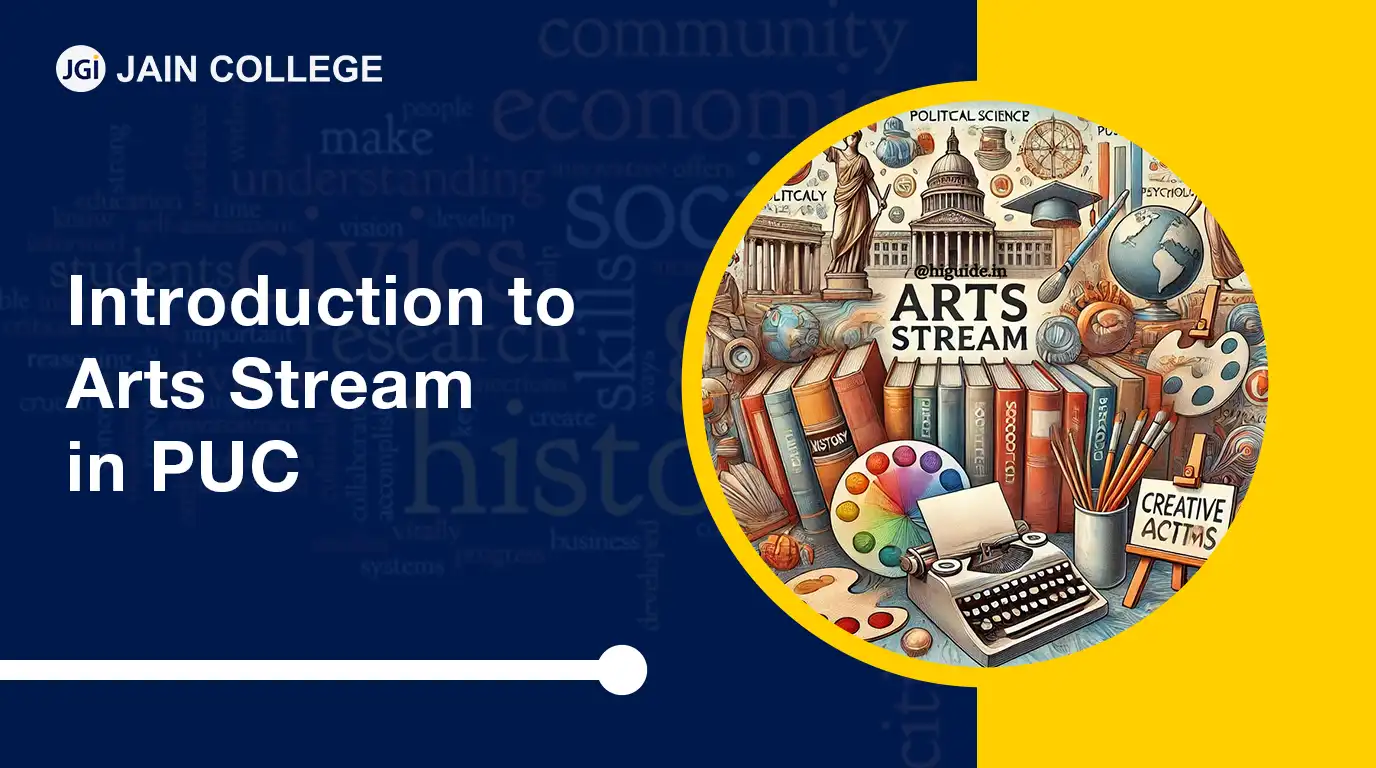
PUC, a Pre-University Course, is a two-year academic programme. It is developed to make the switch from school-level learning to undergraduate courses smoother. The arts stream in PUC offers subject combinations that help you understand society, people, and systems. The other PUC streams are focused on numbers and sciences, whereas PUC arts is about exploring different ideas and learning about different viewpoints. This blog will help you understand the importance of the PUC arts stream and career pathways after arts education.
The core subjects offered at PU arts colleges usually include English, a regional/foreign second language, Economics, Geography, History, Political Science, Psychology, and Sociology. These subject combinations help you develop skills in critical thinking, communication, and research. It ensures you have a foundation for occupations like law, journalism, research, education, policymaking, and civil services.
Top 7 Career Paths After PUC Arts:
In the past, Science and Commerce were considered more important than the Arts. That way of thinking has changed over the last couple of decades. In 2026, technological advancements have made abilities such as creativity, empathy, communication, and critical thinking more crucial than ever.
The Arts Stream in PUC develops the way you think strategically, understand interdisciplinary concepts, and approach problems from different perspectives to find a solution. This is how you can succeed in fields like management, education, law, journalism, and policymaking.
The PUC Arts Stream in India often includes two languages and social science subjects. Most of the top humanities colleges in Bangalore and other major cities have English as the first language and a regional or foreign language for the second option. You can choose from options like Kannada, Hindi, Marathi, Tamil, and Telugu, along with French or German.
The other subjects are Economics, Geography, History, Philosophy, Political Science, Psychology, Public Policy, and Sociology. These subject combinations encourage interdisciplinary learning. Public Policy and Economics, Psychology and Sociology, and History and Political Science all have a few common concepts.
| Combination | Subjects | Best for | Suggested UG Courses |
| HEP | History, Economics, Political Science | Civil services, policy, law | BA (Pol Sci/Eco), BA LLB |
| ESP | Economics, Sociology, Psychology | HR, social research, counselling track | BA Psych, BSW, BA Sociology |
| HSP | History, Sociology, Political Science | NGOs, governance, public admin | BA, BSW, Public Admin |
| HGP | History, Geography, Political Science | Urban planning, environment, geo studies | BA Geography, Environmental Studies |
You develop skills like logical argumentation through Political Science. Essays, case studies, and text interpretation in subjects like History and Sociology build research skills. Thanks to the focus on languages, you also learn critical reading, persuasive writing, and strong communication skills.
These subject combinations give you confidence in your ability to handle information. Over time, it nurtures your self-assurance and intellectual maturity—qualities that employers and academic institutions greatly respect.
One common misconception is that career choices in the arts are narrow. However, in 2026 the arts open doors to some of the most significant professions for you, such as public policy, academia, media, law, and civil services.
The idea that the arts are only for average students is another myth. In actuality, the arts require discipline, deep comprehension, and critical thinking.
If you love reading, writing, and engaging in discussions, the arts stream is the perfect choice for you. If you enjoy learning about the reasons behind human behaviour or the effects of government decisions on different sectors of society, the PUC arts stream will seem like a natural choice for future education.
If you are trying to compare science, commerce, and arts streams, please note that each has a different purpose. The science stream will create a strong base for STEM-related fields, whereas commerce will lay the groundwork for finance and business courses. Select the arts stream to dive into literature, an understanding of social structures, and insights into human behaviour.
You can pursue undergraduate degrees in the humanities, social sciences, law, education, and liberal arts after completing your PUC in Arts. You can also start preparing for competitive tests, like state-level administrative, defence, and civil service exams. Many universities offer guidance for competitive exams.
After undergraduate courses, you can find interesting careers in media, design, content strategy, human resources, and social research.
Today, the PUC arts stream is not a second choice but a thoughtful decision to shape your educational and professional journey. Upcoming careers in policy analysis, sustainability, social impact, and digital media demand skills developed through humanities subjects.
If you are ready to start your journey rooted in creativity, JAIN College’s arts and humanities programmes are the perfect choice for you. This is where education goes beyond textbooks with thoughtful coursework.
Which PUC Arts subject interests you most: History, Psychology, or Political Science? Comment below
Yes, the arts stream builds a strong foundation for various careers in administration, law, media, education, and research.
You develop critical thinking, communication, research, and analytical skills through the arts stream in PUC.
Yes, arts students can appear for competitive exams, as many arts subjects like Political Science, Economics, and History align well with civil services and other competitive examinations.
Choose the arts stream in PUC if you are interested in learning more about governance, economics, culture, and human behaviour.

JAIN PU College, a part of the renowned JGI Group, is committed to empowering students with quality education.
Beyond academics, the college ensures its online content reflects the same standard of excellence. Every blog and article is meticulously vetted and proofread by subject matter experts to ensure accuracy, relevance, and clarity. From insightful educational topics to engaging discussions, JAIN PU College's content is crafted to inform, inspire, and add value to its readers, reflecting the institution's commitment to intellectual growth and innovation.
View all Blogs
